When is Varalakshmi Vratam 2026 Celebrated?
Varalakshmi Vratam in 2026 will be observed on Friday, August 28, 2026. The festival is celebrated on the Friday preceding the full moon (Purnima) in the Hindu month of Shravana (Sravana Masam). It is one of the most auspicious days dedicated to Goddess Varalakshmi, a revered form of Goddess Lakshmi who is believed to bless devotees with wealth, health, prosperity, happiness, and family well-being.
On this sacred day, devotees wake up early, clean and decorate their homes, prepare a Kalash symbolizing Goddess Lakshmi, perform special pujas, recite the Varalakshmi Vrat Katha, and offer flowers, fruits, sweets, and traditional delicacies. Married women traditionally observe the vrat for the prosperity and longevity of their families, though anyone can worship Goddess Lakshmi with devotion.
Since the festival follows the Hindu lunar calendar, its date changes every year. Therefore, devotees are advised to confirm the local puja muhurat (auspicious timing) based on their city or region before performing the rituals.
Varalakshmi Vratam 2026 – At a Glance
-
Festival: Varalakshmi Vratam
-
Date: Friday, August 28, 2026
-
Hindu Month: Shravana (Sravana Masam)
-
Dedicated To: Goddess Varalakshmi (Goddess Lakshmi)
-
Main Observance: Worship, fasting, Kalash Puja, Vrat Katha, and prayers for prosperity and family well-being.
1.Introduction to Varalakshmi Vratam
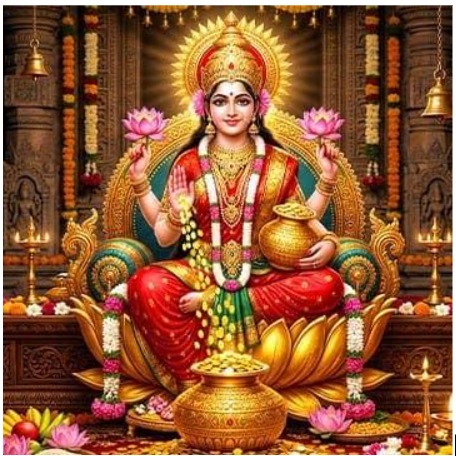
Varalakshmi Vratam is one of the most sacred and widely observed Hindu festivals dedicated to Goddess Varalakshmi, the divine form of Goddess Lakshmi who bestows prosperity, wealth, health, happiness, courage, wisdom, and overall well-being upon her devotees. The word “Vara” means boon or blessing, and “Lakshmi” refers to the Goddess of wealth, fortune, and abundance. Together, Varalakshmi signifies the compassionate Goddess who grants the sincere wishes of her devotees.
Celebrated with immense devotion, especially across the South Indian states of Andhra Pradesh, Telangana, Tamil Nadu, Karnataka, and parts of Kerala, Varalakshmi Vratam holds a special place in the hearts of devotees. Married women traditionally observe this sacred vratam for the well-being, prosperity, and longevity of their families, although today many unmarried women and devotees of all ages also participate in the worship to seek the divine grace of Goddess Lakshmi.
The vratam is observed on the Friday preceding the Full Moon (Purnima) during the holy month of Shravana (Sravana Masam). According to Hindu scriptures and ancient traditions, worshipping Goddess Varalakshmi on this auspicious day is considered equivalent to worshipping all the manifestations of Goddess Lakshmi. It is believed that sincere prayers offered on this day invite divine blessings, remove obstacles, and fill one’s home with peace, abundance, and spiritual prosperity.
The celebration begins with thorough cleaning and decoration of homes, followed by the installation of the sacred Kalasham, beautifully adorned with flowers, mango leaves, turmeric, kumkum, and a representation of Goddess Lakshmi. Devotees perform elaborate puja rituals, chant sacred mantras, recite the Varalakshmi Vratha Katha, offer traditional naivedyam, and seek the Goddess’s blessings with unwavering faith and devotion.
Beyond material prosperity, Varalakshmi Vratam reminds devotees of the importance of gratitude, charity (Dana), compassion, devotion, and righteous living. The festival beautifully reflects the timeless values of Sanatana Dharma, encouraging families to come together in prayer and celebrate the divine feminine energy that nurtures and sustains the universe.
At Veda Gayathri, we are committed to preserving the rich traditions of Hindu culture by providing authentic and easy-to-understand guidance on festivals, vratas, puja procedures, and sacred scriptures. Through this comprehensive guide on Varalakshmi Vratam 2026, devotees can learn about its significance, history, rituals, puja vidhi, fasting rules, sacred mantras, offerings, spiritual benefits, and much more, helping them observe this auspicious festival with devotion, knowledge, and reverence.
2. What is Varalakshmi Vratam?
Varalakshmi Vratam is a sacred Hindu observance dedicated to Goddess Varalakshmi, the benevolent form of Goddess Lakshmi who grants vara (boons) to her devotees. The word “Vara” means blessing or boon, while “Lakshmi” is the Goddess of wealth, prosperity, fortune, and auspiciousness. Therefore, Varalakshmi is revered as the divine Mother who fulfills the righteous wishes of those who worship Her with unwavering faith and devotion.
This auspicious vratam is observed on the Friday before the Full Moon (Purnima) in the holy month of Sravana Masam, a period considered highly sacred in Sanatana Dharma. Devotees believe that worshipping Goddess Varalakshmi on this day brings the blessings of all forms of Goddess Lakshmi, ensuring material prosperity as well as spiritual well-being.
Traditionally, married women perform the vratam for the health, happiness, prosperity, and longevity of their husbands and family members. However, in modern times, unmarried women, young girls, and even families collectively observe the vratam to seek the divine grace of Goddess Lakshmi for success, harmony, wisdom, and financial stability.
The worship begins with the installation of a beautifully decorated Kalasham (sacred pot), symbolizing the presence of Goddess Lakshmi. Devotees perform Sankalpam, invoke the Goddess through Avahanam, offer flowers, turmeric, kumkum, fruits, sweets, and chant sacred mantras. The Varalakshmi Vratha Katha is then recited, followed by Aarti and the distribution of prasadam.
According to Hindu beliefs, observing Varalakshmi Vratam with sincerity not only brings wealth and prosperity but also nurtures virtues such as gratitude, compassion, discipline, and devotion. The vratam reminds devotees that true prosperity is a harmonious balance of material abundance, spiritual wisdom, good health, and inner peace.
At Veda Gayathri, our mission is to help devotees understand the deeper meaning behind every Hindu festival and vratam. Through authentic guidance based on traditional scriptures, we strive to make sacred observances like Varalakshmi Vratam meaningful and accessible for every devotee.

3. Varalakshmi Vratam 2026 Date and Muhurat
Varalakshmi Vratam Date 2026
In 2026, Varalakshmi Vratam will be observed on Friday, 28 August 2026. The festival falls on the Friday preceding the Full Moon (Purnima) during the auspicious month of Sravana Masam, making it one of the most important days dedicated to Goddess Lakshmi.
The observance of this sacred vratam on a Friday holds special significance because Friday is traditionally associated with the worship of Goddess Lakshmi. Devotees believe that performing the vratam on this auspicious day invites divine blessings, prosperity, family harmony, good health, and spiritual growth.
Puja Muhurat
While the entire day is considered auspicious for worshipping Goddess Varalakshmi, the morning hours after sunrise are regarded as the most favorable time for performing the puja. Devotees generally begin the rituals after completing their morning bath and household purification.
Many families also consult the local Panchangam to determine the most suitable Shubha Muhurat, taking into account regional customs, sunrise timings, and other astrological considerations. Observing the vratam during an auspicious muhurat is believed to enhance the spiritual merit of the worship.
Best Time to Perform the Puja
The ideal time to perform Varalakshmi Vratam Puja is during the morning, after completing the daily purification rituals and before the afternoon. During this time, devotees install the sacred Kalasham, invoke Goddess Varalakshmi, perform Archana, offer Naivedyam, recite the Varalakshmi Vratha Katha, and conclude the worship with Aarti.
In some households, especially where family members gather after work, the puja may also be performed during the Pradosha Kala (early evening), provided it aligns with the family’s tradition and guidance from their family priest.
The most important aspect of the vratam is not merely the timing but the devotion, sincerity, and purity of heart with which the rituals are performed. Genuine faith and reverence are considered the greatest offerings to Goddess Varalakshmi.
At Veda Gayathri, we encourage devotees to follow their family’s customs while understanding the spiritual significance of every ritual. By combining tradition with knowledge, devotees can observe Varalakshmi Vratam 2026 in a way that is both authentic and spiritually fulfilling.
4. Significance of Varalakshmi Vratam
Varalakshmi Vratam is one of the most revered festivals dedicated to Goddess Lakshmi, the embodiment of wealth, prosperity, fortune, purity, and auspiciousness. More than a ritual for material blessings, this sacred observance symbolizes devotion, gratitude, righteous living, and the divine grace that sustains every aspect of life.
According to Hindu scriptures, Goddess Varalakshmi represents the compassionate form of Mahalakshmi who fulfills the sincere prayers of her devotees. It is believed that worshipping Her on this auspicious day is equivalent to worshipping all the divine manifestations of Goddess Lakshmi. These include Adi Lakshmi (Primordial Wealth), Dhana Lakshmi (Material Wealth), Dhanya Lakshmi (Food and Nourishment), Gaja Lakshmi (Royal Prosperity), Santana Lakshmi (Children and Family), Veera Lakshmi (Courage), Vijaya Lakshmi (Victory), and Vidya Lakshmi (Knowledge). By seeking Her blessings, devotees pray for complete prosperity in every sphere of life.
The festival also highlights the importance of family values, devotion, charity (Dana), compassion, humility, and self-discipline. Married women traditionally observe the vratam for the well-being and longevity of their husbands and the prosperity of their families. However, the deeper spiritual message extends to everyone—true wealth is not measured solely by material possessions but also by good health, noble character, wisdom, inner peace, and harmonious relationships.
Varalakshmi Vratam serves as a reminder that prosperity is a blessing that should be earned through honesty, hard work, devotion, and righteous actions. The rituals performed during the vratam encourage devotees to cultivate gratitude, share their blessings through acts of charity, and strengthen their faith in the Divine Mother.
Spiritually, the festival inspires devotees to surrender their worries, seek divine guidance, and embrace a life rooted in Dharma. The prayers, mantras, and offerings made during the puja help purify the mind, foster positivity, and deepen one’s connection with Goddess Lakshmi.

At Veda Gayathri, we believe that understanding the significance of Hindu festivals enriches the experience of celebrating them. Our goal is to preserve the timeless wisdom of Sanatana Dharma by providing authentic insights into sacred festivals like Varalakshmi Vratam, enabling devotees to perform every ritual with devotion, awareness, and reverence.
5. History and Origin of Varalakshmi Vratam
The history of Varalakshmi Vratam is deeply rooted in Hindu scriptures and ancient traditions. This sacred observance has been practiced for centuries and is mentioned in the Skanda Purana, one of the eighteen Mahapuranas. According to the scriptures, Lord Shiva Himself explained the greatness and spiritual significance of Varalakshmi Vratam to Goddess Parvati, emphasizing that those who observe this vratam with sincere devotion receive the blessings of Goddess Lakshmi in all aspects of life.
The origin of the vratam is associated with the belief that Goddess Lakshmi, the divine consort of Lord Vishnu, manifests as Varalakshmi, the granter of boons and prosperity. She blesses devotees with wealth, health, happiness, wisdom, courage, success, and spiritual fulfillment. Since Goddess Lakshmi is regarded as the embodiment of auspiciousness and abundance, worshipping Her on this sacred day is believed to remove obstacles and invite divine grace into one’s home.
The tradition of observing Varalakshmi Vratam has been passed down through generations, especially in South India. Families have preserved the rituals with great devotion, making the festival an integral part of their spiritual and cultural heritage. Women decorate their homes, prepare the sacred Kalasham, perform elaborate pujas, recite the Varalakshmi Vratha Katha, and pray for the welfare of their loved ones.
Although the festival is especially popular in Andhra Pradesh, Telangana, Tamil Nadu, Karnataka, and parts of Kerala, its spiritual message is universal. It teaches devotees that true prosperity is achieved not merely through material wealth but through righteousness (Dharma), devotion (Bhakti), compassion, gratitude, and selfless service.
Over the centuries, Varalakshmi Vratam has evolved into more than just a religious observance. It has become a celebration of faith, family unity, and devotion to the Divine Mother. The rituals encourage devotees to strengthen their spiritual practices, express gratitude for life’s blessings, and seek the guidance of Goddess Lakshmi for a prosperous and harmonious life.
At Veda Gayathri, we are dedicated to preserving the timeless traditions of Sanatana Dharma by sharing authentic knowledge from Hindu scriptures. Understanding the history and origin of festivals like Varalakshmi Vratam helps devotees appreciate the deeper spiritual meaning behind every ritual and observe them with greater faith and reverence.
6. Varalakshmi Vratam Story (Vratha Katha)
The Varalakshmi Vratha Katha is one of the most significant aspects of the festival and is traditionally recited during the puja. This sacred story, narrated in the Skanda Purana, explains the divine origin of the vratam and the immense blessings it bestows upon those who observe it with sincere devotion.
Long ago, there lived a pious and virtuous woman named Charumathi in the city of Kundina. She was devoted to her husband, respectful towards her elders, compassionate toward others, and unwavering in her faith. She performed her daily duties with humility and dedicated herself to worshipping the Divine with a pure heart.
Pleased by Charumathi’s devotion, Goddess Lakshmi appeared in her dream in the form of Varalakshmi. The Goddess instructed her to observe a special vratam on the Friday preceding the Full Moon during the sacred month of Sravana. She explained the rituals to be followed and assured Charumathi that anyone who performed the vratam with sincerity would receive blessings of prosperity, happiness, good health, and family well-being.
Upon waking, Charumathi shared the divine vision with her family and the women of her community. Together, they prepared for the vratam by cleaning their homes, decorating the puja area, installing the sacred Kalasham, offering flowers and fruits, chanting prayers, and worshipping Goddess Varalakshmi with deep devotion.
After completing the rituals, miraculous blessings filled their lives. Their homes prospered, their families enjoyed peace and happiness, and all hardships gradually disappeared. Witnessing these divine blessings, many others began observing the vratam, and the sacred tradition spread across generations.
The story of Charumathi teaches that the grace of Goddess Varalakshmi is attained through faith, humility, devotion, righteousness, and selfless living. It reminds devotees that while material prosperity is a blessing, the greatest wealth lies in cultivating virtues such as gratitude, compassion, integrity, and unwavering devotion to the Divine.
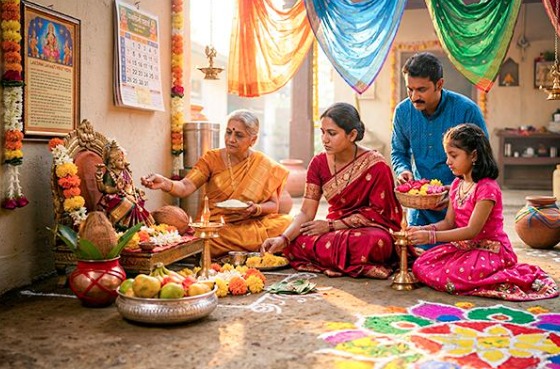
Even today, families recite the Varalakshmi Vratha Katha during the puja as a way of remembering the Goddess’s compassion and seeking Her blessings for prosperity, harmony, and spiritual growth.
At Veda Gayathri, we encourage devotees to understand not only the rituals but also the sacred stories behind Hindu festivals. These timeless narratives inspire faith and help preserve the spiritual wisdom of Sanatana Dharma for future generations.
7. Why is Goddess Varalakshmi Worshipped?
Goddess Varalakshmi is worshipped because She is believed to be the divine bestower of all forms of prosperity, happiness, protection, and spiritual well-being. The name “Varalakshmi” itself means “the Goddess who grants boons.” Devotees seek Her blessings to lead a life filled with abundance, harmony, wisdom, and divine grace.
In Hindu philosophy, Goddess Lakshmi is not merely the Goddess of material wealth. She represents every form of prosperity that contributes to a meaningful and balanced life. This includes good health, knowledge, courage, success, virtuous children, harmonious relationships, inner peace, and spiritual fulfillment. Therefore, worshipping Goddess Varalakshmi is considered a prayer for complete well-being rather than financial prosperity alone.
One of the primary reasons devotees observe Varalakshmi Vratam is to invoke the blessings of the Ashta Lakshmi, the eight divine manifestations of Goddess Lakshmi. Each form symbolizes a unique aspect of life:
- Adi Lakshmi – Spiritual strength and eternal blessings.
- Dhana Lakshmi – Wealth and financial prosperity.
- Dhanya Lakshmi – Food, nourishment, and agricultural abundance.
- Gaja Lakshmi – Royal prosperity, dignity, and success.
- Santana Lakshmi – Healthy children and family welfare.
- Veera Lakshmi – Courage, determination, and protection.
- Vijaya Lakshmi – Victory over challenges and obstacles.
- Vidya Lakshmi – Knowledge, education, and wisdom.
Devotees also worship Goddess Varalakshmi to express gratitude for the blessings they have already received. The vratam is an opportunity to strengthen one’s faith, practice charity, cultivate humility, and reaffirm the values of Dharma. By offering sincere prayers, devotees seek the Goddess’s guidance to overcome difficulties, remove negativity, and lead a righteous life.
Traditionally, married women perform the vratam for the prosperity, health, and longevity of their families. However, the worship of Goddess Varalakshmi is open to all devotees, regardless of age or marital status. Anyone who approaches Her with devotion and a pure heart can seek Her divine blessings.
The festival also serves as a reminder that true prosperity comes from living with honesty, compassion, gratitude, and devotion. Goddess Varalakshmi inspires devotees to use their blessings wisely, help those in need, and maintain harmony within their families and communities.
At Veda Gayathri, we believe that every Hindu festival carries profound spiritual teachings. Through authentic articles on festivals, vratas, mantras, and scriptures, we aim to help devotees understand why Goddess Varalakshmi is worshipped and how Her blessings can inspire a life of faith, prosperity, and inner peace.
These are excellent SEO-friendly sections for a comprehensive Varalakshmi Vratam blog. Here’s detailed content for each heading suitable for Veda Gayathri.
8. Forms of Goddess Lakshmi Worshipped During Varalakshmi Vratam
Varalakshmi Vratam is dedicated to Goddess Varalakshmi, who is believed to embody the blessings of all the eight divine manifestations of Goddess Lakshmi, collectively known as the Ashta Lakshmis. Each form represents a different aspect of prosperity and well-being. By worshipping Goddess Varalakshmi, devotees seek the combined blessings of all these forms for a happy, prosperous, and spiritually fulfilling life.
Adi Lakshmi (The Primordial Goddess)
Adi Lakshmi is the original and eternal form of Goddess Lakshmi. She represents spiritual wealth, inner peace, and liberation (Moksha). Devotees pray to Adi Lakshmi for divine wisdom, devotion, and freedom from worldly attachments.
Blessings:
- Spiritual growth
- Inner peace
- Devotion to God
- Protection from negativity
Dhana Lakshmi (Goddess of Wealth)
Dhana Lakshmi is the bestower of material wealth, financial stability, and prosperity. She blesses devotees with success in business, career growth, and abundance of resources.
Blessings:
- Financial prosperity
- Business success
- Wealth accumulation
- Economic stability
Dhanya Lakshmi (Goddess of Food and Nourishment)
Dhanya Lakshmi symbolizes agricultural abundance, grains, food, and nourishment. She ensures that families never face scarcity and are blessed with health and plentiful harvests.
Blessings:
- Food abundance
- Good harvests
- Health and nutrition
- Freedom from hunger
Gaja Lakshmi (Goddess of Royal Prosperity)
Gaja Lakshmi is depicted seated on a lotus with elephants showering her with water. She represents royal power, dignity, authority, and overall prosperity.
Blessings:
- Prosperity
- Fame
- Respect
- Social status
- Success in leadership
Santana Lakshmi (Goddess of Progeny)
Santana Lakshmi blesses couples with healthy children and ensures the welfare, happiness, and prosperity of future generations.
Blessings:
- Healthy children
- Family happiness
- Well-being of descendants
- Harmonious family life
Veera Lakshmi (Dhairya Lakshmi – Goddess of Courage)
Veera Lakshmi grants courage, strength, confidence, determination, and resilience to overcome life’s challenges.
Blessings:
- Courage
- Strength
- Confidence
- Protection during difficult times
Vijaya Lakshmi (Goddess of Victory)
Vijaya Lakshmi is worshipped for success in every endeavor, including education, career, competitions, and spiritual pursuits.
Blessings:
- Victory over obstacles
- Career success
- Academic excellence
- Achievement of goals
Vidya Lakshmi (Goddess of Knowledge)
Vidya Lakshmi bestows knowledge, intelligence, wisdom, creativity, and learning. Students and professionals often seek her blessings for academic and intellectual success.
Blessings:
- Knowledge
- Wisdom
- Education
- Intellectual growth
- Good decision-making
Why All Eight Forms Are Worshipped During Varalakshmi Vratam
Varalakshmi Vratam is unique because it is believed that worshipping Goddess Varalakshmi brings the blessings of all the Ashta Lakshmis simultaneously. Rather than seeking only material wealth, devotees pray for complete prosperity, including health, happiness, wisdom, courage, family harmony, spiritual progress, and success in every aspect of life.
9.Who Can Observe Varalakshmi Vratam?
Varalakshmi Vratam is one of the most sacred festivals dedicated to Goddess Lakshmi and can be observed by anyone with sincere devotion and faith. Although it is traditionally performed by married women, the vrata is open to all devotees seeking the blessings of the Divine Mother.
Married Women (Sumangalis)
Traditionally, married women observe Varalakshmi Vratam for the well-being, longevity, health, and prosperity of their husbands and family members. They pray for a harmonious household, financial stability, and continued divine grace.
Unmarried Girls
Young unmarried girls may also perform or participate in the vratam to seek the blessings of Goddess Lakshmi for a virtuous life partner, a happy married life in the future, and overall prosperity.
Men
While the vratam is predominantly observed by women, men may also worship Goddess Varalakshmi with devotion. In many households, husbands actively participate in the puja by assisting with preparations, chanting prayers, and offering worship.
Elderly Women
Senior women continue to observe the vratam as an expression of gratitude to Goddess Lakshmi and pray for the happiness, health, and prosperity of their children and grandchildren.
Families
Many families perform the puja together, making it a celebration of devotion, unity, and shared blessings. Children are often encouraged to participate so they can learn the traditions and spiritual significance of the festival.
Those Unable to Perform the Complete Vratam
Devotees who are unable to observe the full fasting rituals due to age, health, pregnancy, or other genuine reasons may simply offer prayers, chant Lakshmi mantras, read the Varalakshmi Vratam Katha, or visit a temple. Sincere devotion is considered more important than elaborate rituals.
10. Preparations for Varalakshmi Vratam
Preparations for Varalakshmi Vratam usually begin a day before the festival. Devotees clean and decorate their homes, arrange the puja items, and prepare the Kalash, creating a sacred atmosphere to welcome Goddess Lakshmi.
House Cleaning
Cleaning the home is considered an important spiritual practice before the vratam. A clean and organized house symbolizes purity and invites positive energy and divine blessings.
Common preparations include:
- Cleaning the entire house thoroughly
- Decorating the entrance with mango leaves (Toranam)
- Lighting lamps in the prayer room
- Arranging a dedicated space for the puja
A clean home is believed to be a welcoming abode for Goddess Lakshmi.
Kalash Preparation
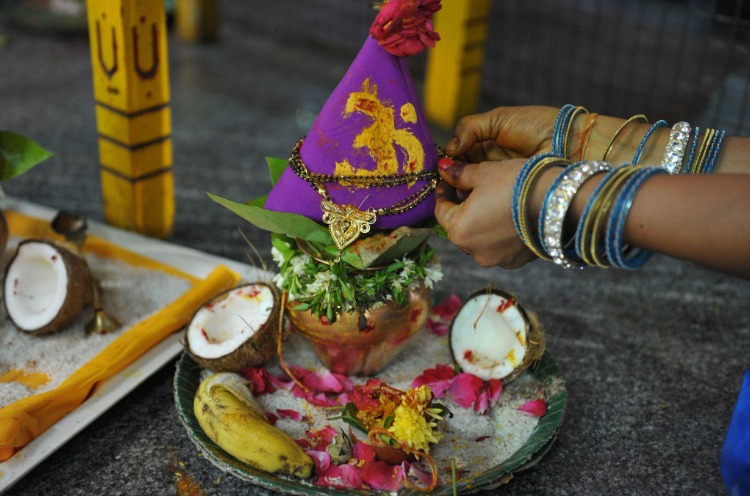
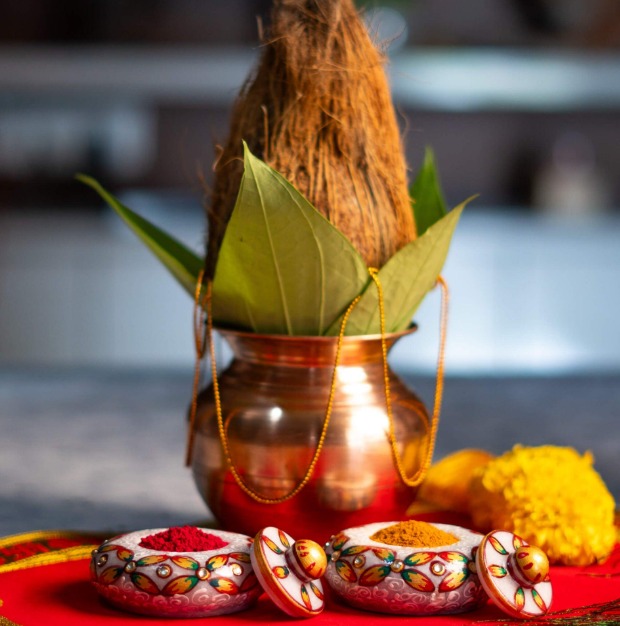
The Kalash is the central element of the Varalakshmi Vratam Puja and symbolizes the divine presence of Goddess Lakshmi.
The Kalash is usually prepared by:
- Filling a decorated metal pot with rice, water, coins, turmeric, or betel nuts.
- Placing mango leaves around the opening.
- Keeping a coconut smeared with turmeric on top.
- Decorating the Kalash with a Lakshmi face (Amman Face), flowers, jewelry, turmeric, and kumkum.
- Tying the sacred thread (Toram) around the Kalash.
The beautifully decorated Kalash represents Goddess Varalakshmi herself.
Puja Mandap Decoration
The area where the puja is performed is decorated beautifully to create a divine ambiance.
Common decorations include:
- Fresh flowers
- Banana stems
- Mango leaf toranas
- Traditional brass lamps
- Decorative cloth or silk fabric
- Floral garlands
- Diyas (oil lamps)
The beautifully decorated mandap reflects reverence and devotion toward Goddess Lakshmi.
Rangoli (Muggu/Kolam)
Drawing a Rangoli (known as Muggu in Telugu and Kolam in Tamil) at the entrance and near the puja area is considered highly auspicious. Traditional designs made with rice flour, colored powders, or flower petals symbolize prosperity, positivity, and the welcoming of Goddess Lakshmi into the home.
Popular Rangoli motifs include:
- Lotus flowers
- Conch (Shankha)
- Kalash
- Lakshmi’s footprints
- Geometric floral patterns
Many devotees also draw small footprints leading from the entrance to the puja room, symbolizing Goddess Lakshmi entering the home and bringing prosperity, happiness, and abundance.
11.Puja Samagri (Items Required)
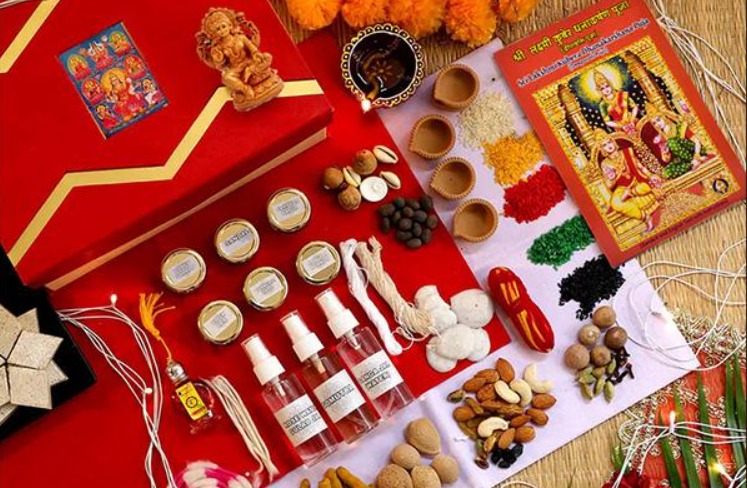
Performing the Varalakshmi Vratam with the required puja materials helps devotees complete the rituals according to tradition. While the exact items may vary based on regional customs, the following are commonly used during the puja.
Essential Puja Items
- Kalash (Silver, Brass, Copper, or Steel Pot)
- Coconut
- Mango Leaves
- Rice (Akshata and for Kalash base)
- Turmeric Powder
- Kumkum
- Sandalwood Paste (Chandan)
- Betel Leaves
- Betel Nuts
- Flowers and Flower Garlands
- Fresh Fruits
- Incense Sticks (Agarbatti)
- Camphor
- Cotton Wicks
- Ghee or Sesame Oil for Lamps
- Deepam (Oil Lamp)
- Panchapatra and Uddharani (Small Vessel and Spoon)
- Bell
- Lakshmi Idol or Decorated Kalash with Lakshmi Face
- New Saree or Vastram for Goddess Lakshmi
- Jewelry and Ornaments for Decoration
- Sacred Thread (Toram/Charadu)
- Banana Leaves (Optional)
Naivedyam (Food Offerings)
Offer homemade sattvic food prepared with devotion.
Common offerings include:
- Payasam (Kheer)
- Pongal
- Pulihora (Tamarind Rice)
- Sweet Pongal
- Boorelu
- Kudumulu or Modakam
- Laddu
- Coconut
- Bananas
- Other Seasonal Fruits
- Milk
- Curd
- Jaggery
- Butter
- Dry Fruits
Other Traditional Items
- Kumkum Bharani
- Mirror (Optional)
- Blouse Piece
- Bangles
- Turmeric Roots
- Kumkum Packets
- Flowers for Distribution
- Tambulam (Betel Leaves, Betel Nuts, Fruits)
Many devotees also prepare small gift packets containing turmeric, kumkum, bangles, fruits, and sweets to distribute to married women after the puja as a symbol of goodwill and blessings.
12. How to Perform Varalakshmi Vratam Puja at Home (Step-by-Step Puja Vidhi)
Varalakshmi Vratam Puja is performed with devotion, purity, and gratitude. Although customs vary slightly across regions, the following step-by-step procedure is commonly followed in South Indian households.
Morning Rituals
The day begins early in the morning with purification rituals.
Devotees generally:
- Wake up before sunrise.
- Take a holy bath.
- Wear clean or new traditional clothes.
- Clean the puja area.
- Light a lamp.
- Decorate the entrance with mango leaf toranas and Rangoli (Muggu/Kolam).
- Arrange all puja items before beginning the worship.
The atmosphere should be peaceful and filled with devotion.
Sankalpam
Sankalpam is the formal declaration of the vratam.
Holding water, flowers, and rice in the right hand, devotees pray to Goddess Varalakshmi and state their intention to perform the vratam for the well-being, prosperity, happiness, health, and spiritual growth of their family.
After the prayer, the water is gently released.
Kalasha Sthapana
The Kalash represents Goddess Varalakshmi herself.
Steps include:
- Spread rice on a wooden plank or plate.
- Place the decorated Kalash over the rice.
- Fill it with water, coins, turmeric, and other auspicious items.
- Arrange mango leaves around the opening.
- Place a turmeric-smeared coconut on top.
- Decorate the Kalash with a Lakshmi face, flowers, jewelry, and a saree or cloth.
The Kalash is then worshipped as the divine presence of Goddess Lakshmi.
Avahanam
Avahanam means respectfully inviting Goddess Lakshmi into the Kalash.
Devotees chant Lakshmi mantras while offering flowers, turmeric, kumkum, sandalwood paste, and Akshata, praying for the Goddess to bless the home with prosperity and happiness.
Lakshmi Puja
The main worship of Goddess Varalakshmi is then performed.
Offerings generally include:
- Turmeric
- Kumkum
- Sandalwood paste
- Flowers
- Garland
- Incense
- Deepam (Lamp)
- Fruits
- Coconut
- Betel leaves
- Betel nuts
Devotees chant:
- Sri Lakshmi Ashtottara Shatanamavali
- Sri Lakshmi Sahasranama
- Lakshmi Stotram
- Mahalakshmi Ashtakam
- Lakshmi Gayatri Mantra
Reading the Varalakshmi Vratam Katha is also an important part of the puja.
Archana
Archana is performed by offering flowers or Akshata while reciting the 108 or 1008 names of Goddess Lakshmi.
This ritual expresses devotion and gratitude while seeking divine blessings for health, wealth, success, wisdom, and family welfare.
Naivedyam
Offer the prepared food to Goddess Lakshmi with devotion.
Traditional offerings may include:
- Payasam
- Sweet Pongal
- Pulihora
- Boorelu
- Kudumulu
- Fruits
- Coconut
- Milk
- Butter
- Dry Fruits
After offering the food, devotees observe a few moments of silent prayer before distributing it as Prasadam.
Aarti
Light camphor or a ghee lamp and perform Aarti while singing Lakshmi Aarti or devotional hymns.
The Aarti symbolizes offering light to the Goddess and seeking her protection, blessings, and divine grace.
Family members usually participate together.
Pradakshina
Devotees perform three or more clockwise circumambulations around the puja setup while praying for prosperity, peace, and happiness.
Many women also tie the sacred Toram (thread) around their wrist after completing the puja as a symbol of Goddess Lakshmi’s blessings.
Vayanam (Offering to Married Women)
One of the most cherished traditions of Varalakshmi Vratam is Vayanam.
Married women offer Tambulam to other married women (Sumangalis), which generally includes:
- Betel Leaves
- Betel Nuts
- Turmeric
- Kumkum
- Bangles
- Blouse Piece
- Fruits
- Flowers
- Sweets
- Dakshina (Optional)
This exchange symbolizes sharing Goddess Lakshmi’s blessings and praying for mutual prosperity, marital happiness, and family well-being.
13. Varalakshmi Vratam Fasting Rules
Fasting is an important aspect of Varalakshmi Vratam and is observed as an act of devotion, discipline, and gratitude toward Goddess Lakshmi. The rules may vary depending on family traditions and individual health.
Types of Fasting
Many devotees choose one of the following fasting methods:
- Nirjala Vrat: Complete fast without food or water (observed only by those who are physically able).
- Phalaharam: Consuming only fruits, milk, and water.
- Sattvic Fast: Eating one simple meal without onion, garlic, eggs, or non-vegetarian food after the puja is completed.
- Partial Fast: Elderly devotees, pregnant women, nursing mothers, or those with medical conditions may observe a lighter fast according to their health.
General Fasting Guidelines
- Wake up early and take a holy bath.
- Maintain cleanliness of the body and surroundings.
- Wear traditional, clean clothes.
- Observe the fast with sincerity and devotion.
- Avoid consuming tamasic foods such as onion, garlic, alcohol, and non-vegetarian dishes.
- Spend time chanting Lakshmi mantras, reading sacred scriptures, or listening to devotional songs.
- Complete the puja before breaking the fast.
- Eat only the Prasadam and sattvic food offered to Goddess Lakshmi after the rituals.
Spiritual Importance of the Fast
The fast is not merely about abstaining from food; it is a practice of self-discipline, gratitude, and devotion. By observing the vratam with a pure heart, devotees seek the blessings of Goddess Varalakshmi for health, prosperity, family harmony, wisdom, success, and spiritual progress. The true essence of the fast lies in faith, righteous conduct, and sincere worship rather than the level of austerity observed.

14. Naivedyam (Offerings to Goddess Lakshmi)
Naivedyam is one of the most important parts of the Varalakshmi Vratam Puja. It is the sacred offering of food prepared with devotion and presented to Goddess Varalakshmi before it is consumed by the family. Offering Naivedyam symbolizes gratitude for the blessings of food, health, wealth, and abundance received from the Divine Mother.
The food should be prepared in a clean environment with a calm and prayerful mind. Traditionally, only sattvic (pure vegetarian) dishes are offered, without onion, garlic, eggs, or meat.
Traditional Naivedyam Items
Different regions follow different traditions, but the following offerings are commonly prepared:
Sweet Offerings
- Payasam (Kheer)
- Sweet Pongal (Chakkara Pongali)
- Boorelu (Poornalu)
- Kudumulu (Modakam)
- Laddu
- Kesari
- Rava Kesari
- Coconut Burfi
- Jaggery Pongal
Savory Offerings
- Pulihora (Tamarind Rice)
- Lemon Rice
- Curd Rice
- Ven Pongal
- Coconut Rice
Fruits
Fresh seasonal fruits are considered highly auspicious.
Common offerings include:
- Bananas
- Mangoes
- Apples
- Grapes
- Pomegranates
- Guava
- Oranges
- Sapota (Chikoo)
Other Sacred Offerings
- Fresh Coconut
- Milk
- Curd
- Butter
- Honey
- Sugar
- Jaggery
- Dry Fruits
- Betel Leaves
- Betel Nuts
Importance of Offering Naivedyam
Offering food to Goddess Lakshmi signifies surrender, gratitude, and humility. It reminds devotees that every blessing—including food, wealth, and good health—is a gift from the Divine.
After the offering, the Naivedyam becomes Prasadam, which is distributed among family members, relatives, neighbors, and guests. Sharing Prasadam is believed to spread Goddess Lakshmi’s blessings of prosperity, happiness, and harmony.
15. Flowers, Leaves, and Sacred Items Used in the Puja
Flowers and sacred leaves play an important role in Varalakshmi Vratam. They symbolize purity, beauty, prosperity, and devotion. Each offering carries spiritual significance and is believed to please Goddess Lakshmi.
Flowers Offered to Goddess Lakshmi
Fresh, fragrant flowers are preferred during the puja.
Common flowers include:
- Lotus (Most Auspicious)
- Jasmine (Mallige/Malle Puvvu)
- Marigold
- Rose
- Chrysanthemum
- Kanakambaram (Crossandra)
- Hibiscus (where traditionally accepted)
The Lotus is especially significant because Goddess Lakshmi is often depicted seated on a fully bloomed lotus, symbolizing purity, spiritual awakening, and prosperity.
Sacred Leaves Used in the Puja
Several sacred leaves are used during the rituals.
Mango Leaves
Fresh mango leaves are placed around the Kalash to symbolize life, fertility, abundance, and positive energy.
Betel Leaves
Betel leaves are offered along with betel nuts as a mark of respect and are also included in Tambulam given to married women after the puja.
Tulasi Leaves
While Tulasi is primarily associated with Lord Vishnu, many devotees offer Tulasi leaves during Lakshmi-Narayana worship, following their family traditions.
Sacred Items Used During the Puja
Several auspicious items are used while worshipping Goddess Varalakshmi.
Turmeric (Pasupu)
Represents purity, prosperity, auspiciousness, and divine feminine energy.
Kumkum
Applied to the Goddess and offered during the puja as a symbol of marital bliss, prosperity, and positive energy.
Akshata (Turmeric-Mixed Rice)
Used during Sankalpam, Archana, and while offering blessings.
Coconut
Represents purity, selfless surrender, and completeness. It is placed atop the Kalash and later offered as Prasadam.
Kalash
The decorated Kalash symbolizes the divine presence of Goddess Varalakshmi and is the central focus of the worship.
Deepam (Oil Lamp)
Lighting the lamp signifies the removal of ignorance and the arrival of divine wisdom, prosperity, and positivity.
Camphor
Burning camphor during Aarti symbolizes the complete surrender of the ego to the Divine.

Spiritual Significance
Every flower, leaf, and sacred item used during Varalakshmi Vratam carries symbolic meaning. Together, they represent purity, abundance, devotion, gratitude, and the welcoming of Goddess Lakshmi into the home. Offering these sacred items with sincerity is considered more important than the material value of the offerings.
16. Mantras and Slokas for Varalakshmi Vratam
Chanting sacred mantras and slokas during Varalakshmi Vratam enhances the spiritual atmosphere of the puja and helps devotees connect deeply with Goddess Lakshmi. These prayers invoke her blessings for wealth, health, wisdom, prosperity, family harmony, and spiritual growth.
Dhyana Sloka
The Dhyana Sloka is recited at the beginning of the puja to meditate upon Goddess Lakshmi and invoke her divine presence.
Dhyana Sloka (Sanskrit):
Padmasane Padmakare Sarva Lokaika Poojite
Narayanapriye Devi Suprita Bhava Sarvada॥
Meaning:
“O Goddess seated on the lotus, holding lotuses in Your hands, worshipped by all the worlds, beloved of Lord Narayana, kindly be pleased with us always and bless us with prosperity and happiness.”
Lakshmi Ashtottara Shatanamavali
The Lakshmi Ashtottara Shatanamavali is the recitation of the 108 sacred names of Goddess Lakshmi. During the Archana, devotees offer flowers or Akshata while chanting each name, seeking blessings for wealth, health, success, wisdom, and family well-being.
Benefits of Chanting
- Invokes the grace of Goddess Lakshmi.
- Removes obstacles to prosperity.
- Brings peace and happiness to the household.
- Enhances devotion and spiritual growth.
- Attracts abundance and positive energy.
Mahalakshmi Mantra
One of the most widely chanted mantras during Varalakshmi Vratam is the Mahalakshmi Mantra.
Mantra (Sanskrit):
Om Shreem Mahalakshmyai Namah॥
Meaning:
“I bow to Goddess Mahalakshmi, the embodiment of wealth, prosperity, auspiciousness, and divine grace.”
Benefits
- Attracts prosperity and abundance.
- Promotes peace and positivity.
- Removes financial obstacles.
- Enhances confidence and success.
- Strengthens devotion to Goddess Lakshmi.
Lakshmi Gayatri Mantra
The Lakshmi Gayatri Mantra is a powerful Vedic prayer seeking the wisdom, blessings, and divine guidance of Goddess Lakshmi.
Mantra (Sanskrit):
Om Mahalakshmyai Cha Vidmahe
Vishnu Patnyai Cha Dheemahi
Tanno Lakshmi Prachodayat॥
Meaning:
“We meditate upon Goddess Mahalakshmi, the consort of Lord Vishnu. May the Divine Goddess Lakshmi inspire and illuminate our minds with wisdom, prosperity, and righteousness.”
Benefits of Chanting the Lakshmi Gayatri Mantra
- Bestows wealth and prosperity.
- Improves wisdom and clarity of thought.
- Brings peace, harmony, and happiness.
- Removes negative energies and obstacles.
- Encourages spiritual progress and divine grace.
Best Time to Chant
The Lakshmi Gayatri Mantra is ideally chanted during the Varalakshmi Vratam Puja, especially during the main worship, Archana, or meditation. Devotees often recite it 11, 21, or 108 times, depending on their family tradition and available time. Regular chanting with faith and devotion is believed to invite the continuous blessings of Goddess Lakshmi into one’s life.
17. Varalakshmi Vratam Dos and Don’ts
Observing Varalakshmi Vratam with sincerity, purity, and devotion is considered more important than performing elaborate rituals. Following certain traditional practices helps devotees maintain the sanctity of the vratam and deepen their spiritual experience.
Dos During Varalakshmi Vratam
Wake Up Early
Begin the day during Brahma Muhurta or early morning, take a holy bath, and wear clean or new traditional clothes before starting the puja.
Maintain Cleanliness
Keep the home, especially the puja room, neat and clean. A clean environment symbolizes purity and is believed to invite Goddess Lakshmi into the home.
Perform the Puja with Devotion
Offer prayers with a calm and focused mind. Chant Lakshmi mantras, recite the Lakshmi Ashtottara Shatanamavali, and read the Varalakshmi Vratam Katha with faith.
Use Fresh Puja Items
Offer fresh flowers, fruits, leaves, and homemade sattvic Naivedyam. Fresh offerings reflect respect and devotion to the Goddess.
Light Lamps
Light ghee or oil lamps throughout the puja. The lamp symbolizes the removal of darkness, ignorance, and negativity while inviting divine light and prosperity.
Observe the Fast According to Your Ability
Follow the fasting rules based on your health and family traditions. Devotion and sincerity are more important than the strictness of the fast.
Offer Tambulam to Married Women
Distribute Tambulam (Vayanam) to married women by offering betel leaves, betel nuts, turmeric, kumkum, bangles, fruits, sweets, and a blouse piece. This tradition symbolizes sharing the blessings of Goddess Lakshmi.
Share Prasadam
Distribute the blessed food (Prasadam) among family members, relatives, friends, neighbors, and those in need as an act of gratitude and generosity.
Don’ts During Varalakshmi Vratam
Avoid Tamasic Food
Do not consume onion, garlic, eggs, meat, alcohol, or any intoxicating substances during the vratam.
Avoid Anger and Harsh Speech
Maintain a peaceful and positive mindset. Avoid arguments, gossip, harsh words, and negative thoughts throughout the day.
Do Not Neglect the Puja
Complete the puja with attention and devotion. Avoid rushing through the rituals or performing them without concentration.
Avoid Wasting Food
Prepare only the required quantity of Naivedyam and ensure that the Prasadam is respectfully distributed without wastage.
Avoid Wearing Unclean Clothes
Wear clean, modest, and traditional attire while performing the puja to maintain its sanctity.
Avoid Negative Activities
Refrain from actions that disturb mental peace or create negativity. Spend the day in prayer, chanting, reading scriptures, or listening to devotional songs.
Do Not Break the Fast Prematurely
If you are observing a fast, break it only after completing the puja and offering Naivedyam to Goddess Lakshmi, unless health concerns require otherwise.
The Essence of the Vratam
The true purpose of Varalakshmi Vratam lies in cultivating devotion, gratitude, humility, and righteous living. While following traditional customs is important, sincere faith and a compassionate heart are considered the greatest offerings to Goddess Lakshmi.
18. Benefits of Observing Varalakshmi Vratam
Varalakshmi Vratam is believed to bestow the combined blessings of the Ashta Lakshmis, the eight divine forms of Goddess Lakshmi. Devotees observe this sacred vratam seeking both material prosperity and spiritual fulfillment.
Invites Wealth and Prosperity
One of the primary blessings of Goddess Varalakshmi is financial stability and abundance. Devotees pray for success in their careers, businesses, and livelihoods, along with freedom from financial hardships.
Promotes Family Happiness
The vratam is performed for the well-being of the entire family. It is believed to strengthen relationships, promote harmony at home, and foster love, mutual respect, and unity among family members.
Blesses Married Life
Married women traditionally observe Varalakshmi Vratam for the health, longevity, and prosperity of their husbands. The worship also seeks lasting marital happiness and a peaceful household.
Grants Good Health
Devotees pray for physical, mental, and emotional well-being. Goddess Lakshmi’s blessings are believed to protect the family from illnesses and support a healthy, balanced life.
Bestows Success and Wisdom
By worshipping the Goddess with devotion, devotees seek success in education, career, business, and personal endeavors. Her blessings are also associated with wisdom, clarity of thought, and sound decision-making.
Removes Obstacles
Varalakshmi Vratam is believed to help overcome financial difficulties, family challenges, and other obstacles by invoking the divine grace of Goddess Lakshmi and promoting positive energy.
Encourages Charity and Compassion
The vratam inspires devotees to practice generosity by sharing food, offering Tambulam, and helping those in need. These acts of kindness cultivate humility and compassion.
Supports Spiritual Growth
Beyond material blessings, the observance encourages self-discipline, devotion, gratitude, and regular prayer. It helps devotees deepen their faith and strengthen their connection with the Divine.
Blessings of the Ashta Lakshmis
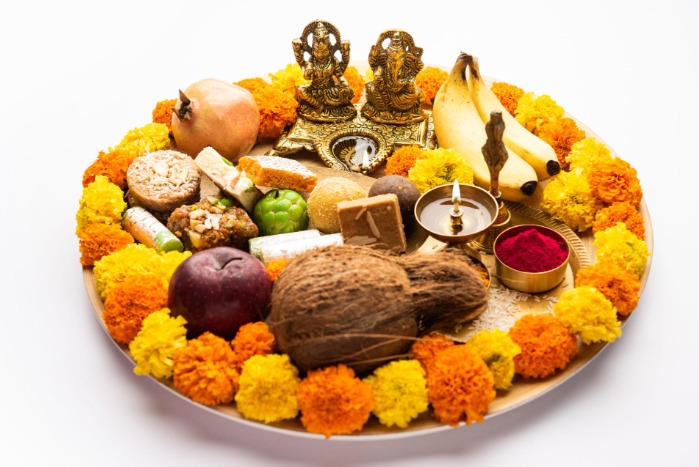
By worshipping Goddess Varalakshmi, devotees seek the combined blessings of:
- Spiritual Peace (Adi Lakshmi)
- Wealth (Dhana Lakshmi)
- Food and Nourishment (Dhanya Lakshmi)
- Prosperity and Status (Gaja Lakshmi)
- Healthy Children (Santana Lakshmi)
- Courage (Veera Lakshmi)
- Victory and Success (Vijaya Lakshmi)
- Knowledge and Wisdom (Vidya Lakshmi)
Inner Peace and Positive Living
The vratam encourages a lifestyle centered on gratitude, discipline, and devotion. These values promote inner peace, optimism, and contentment while strengthening trust in divine guidance.
19. Charity (Dana) and Seva During Varalakshmi Vratam
Charity (Dana) and selfless service (Seva) are integral to the observance of Varalakshmi Vratam. Hindu scriptures emphasize that worship becomes even more meaningful when accompanied by acts of kindness and generosity. Sharing one’s blessings with others is considered a way of expressing gratitude to Goddess Lakshmi.
Importance of Dana
Dana is regarded as a sacred act that reflects compassion, humility, and selflessness. Offering food, clothing, or financial assistance to those in need is believed to please Goddess Lakshmi and attract her continued grace.
Feeding the Needy (Anna Dana)
One of the highest forms of charity is Anna Dana, the donation of food. Devotees often prepare extra Prasadam or meals and distribute them to:
- The poor and needy
- Elderly people
- Orphanages
- Ashrams
- Pilgrims
- Temple visitors
Sharing food is considered a powerful expression of gratitude and compassion.
Offering Tambulam to Married Women
A cherished tradition during Varalakshmi Vratam is offering Tambulam (Vayanam) to married women.
Tambulam usually includes:
- Betel Leaves
- Betel Nuts
- Turmeric
- Kumkum
- Bangles
- Blouse Piece
- Fruits
- Flowers
- Sweets
- Dakshina (Optional)
This exchange symbolizes wishing one another prosperity, marital bliss, and the blessings of Goddess Lakshmi.
Donating Clothes and Essential Items
Many devotees donate useful items such as:
- Sarees
- Blankets
- School supplies
- Groceries
- Cooking utensils
- Footwear
These donations help support underprivileged families while promoting the spirit of generosity.
Supporting Temples and Religious Activities
Devotees may also contribute to temple activities by:
- Donating for daily pujas
- Sponsoring Annadanam
- Supporting temple maintenance
- Providing flowers, oil, or ghee for lamps
- Contributing toward religious and cultural programs
Such offerings are considered acts of devotion and service to the Divine.
Volunteering as Seva
Seva involves offering one’s time and effort without expecting anything in return. During Varalakshmi Vratam, devotees may:
- Help organize temple celebrations
- Assist in preparing or distributing Prasadam
- Participate in cleaning temples or community spaces
- Support charitable initiatives in their locality
Selfless service nurtures humility and strengthens community bonds.
The Spiritual Value of Charity
The essence of Dana and Seva lies not in the size of the offering but in the purity of intention. Acts of kindness performed with humility, compassion, and gratitude are believed to invoke the blessings of Goddess Varalakshmi. Along with prosperity, such selfless deeds cultivate inner joy, reduce attachment to material possessions, and inspire a life rooted in dharma and service.
20. Temples to Visit on Varalakshmi Vratam
Visiting a temple on Varalakshmi Vratam is considered highly auspicious. Many devotees begin the day with temple darshan or visit after completing the puja at home to seek the blessings of Goddess Lakshmi. Temples dedicated to Goddess Lakshmi, Lord Vishnu, and Goddess Mahalakshmi witness large gatherings of devotees during this sacred festival.
Sri Mahalakshmi Temple, Kolhapur (Maharashtra)
One of the most revered Shakti Peethas in India, the Sri Mahalakshmi Temple in Kolhapur is dedicated to Goddess Mahalakshmi. Devotees from across the country visit this temple to seek blessings for wealth, prosperity, and family well-being.
Ashtalakshmi Temple, Chennai (Tamil Nadu)
The Ashtalakshmi Temple is uniquely dedicated to the eight divine forms of Goddess Lakshmi (Ashta Lakshmis). It is one of the most popular pilgrimage destinations during Varalakshmi Vratam and attracts thousands of devotees every year.
Kanaka Mahalakshmi Temple, Visakhapatnam (Andhra Pradesh)
This famous temple is dedicated to Goddess Kanaka Mahalakshmi, the presiding deity of Visakhapatnam. Special pujas, alankarams, and devotional programs are conducted during Varalakshmi Vratam.
Sri Lakshmi Narayani Temple, Vellore (Tamil Nadu)
Popularly known as the Golden Temple, this magnificent shrine dedicated to Goddess Lakshmi Narayani is renowned for its stunning architecture and peaceful spiritual atmosphere.
Goddess Lakshmi Temples in Telangana
Many temples dedicated to Goddess Lakshmi and Lord Vishnu across Telangana celebrate Varalakshmi Vratam with special pujas, Lakshmi Homams, Kumkum Archana, and cultural programs. Temples in Hyderabad, Warangal, and nearby towns witness a large influx of devotees.
Local Lakshmi and Vishnu Temples
Even if you cannot visit a famous pilgrimage center, worshipping at your nearest Lakshmi, Mahalakshmi, Lakshmi Narayana, or Venkateswara temple is considered equally auspicious. Devotion and sincerity are valued more than the distance traveled.
Benefits of Temple Darshan
Visiting a temple on Varalakshmi Vratam is believed to:
- Receive the divine blessings of Goddess Lakshmi.
- Enhance peace, prosperity, and happiness.
- Strengthen faith and devotion.
- Participate in sacred rituals and collective prayers.
- Experience the festive spiritual atmosphere.
21. Varalakshmi Vratam Celebrations in South India
Varalakshmi Vratam is celebrated with immense devotion across South India. Although the core rituals remain similar, each state has its own customs, traditions, and cultural practices that make the festival unique.
Andhra Pradesh
In Andhra Pradesh, Varalakshmi Vratam is one of the most important festivals observed by married women.
Celebrations Include:
- Cleaning and decorating homes.
- Drawing beautiful Muggu (Rangoli).
- Decorating the Kalash with a Lakshmi face.
- Performing Lakshmi Ashtottara Archana.
- Reading the Varalakshmi Vratha Katha.
- Preparing traditional sweets such as Boorelu, Pulihora, Kudumulu, and Payasam.
- Offering Tambulam (Vayanam) to married women.
- Visiting nearby Lakshmi and Vishnu temples.
The festival is celebrated as a joyous occasion filled with devotion, family gatherings, and the sharing of Prasadam.
Telangana
In Telangana, families observe Varalakshmi Vratam with traditional rituals passed down through generations.
Common Traditions:
- Decorating homes with mango leaf toranas.
- Drawing colorful Muggu.
- Special Kumkum Archana for Goddess Lakshmi.
- Chanting Lakshmi Sahasranama and Lakshmi Gayatri.
- Preparing festive Naivedyam.
- Inviting relatives and neighbors for the puja.
- Distributing Tambulam and Prasadam.
Many temples conduct collective Lakshmi Puja and cultural programs, creating a vibrant devotional atmosphere.
Tamil Nadu
Varalakshmi Vratam is one of the grandest festivals celebrated in Tamil Nadu.
Special Customs:
- Women wear silk sarees and traditional jewelry.
- The Kalash is beautifully decorated with an Amman Face.
- Kolam designs are drawn at the entrance.
- Women tie the sacred yellow thread (Charadu) after the puja.
- Lakshmi Ashtottara and Mahalakshmi Stotram are recited.
- Sumangali Pooja is performed in many homes.
- Traditional dishes such as Kozhukattai, Payasam, Vadai, and Sweet Pongal are prepared.
The exchange of Tambulam among married women is an important social and spiritual tradition.
Karnataka
In Karnataka, Varamahalakshmi Vrata is observed with deep reverence and enthusiasm.
Popular Practices:
- Elaborate decoration of the Goddess.
- Performing Kalasha Sthapana.
- Chanting Vedic hymns and Lakshmi Stotras.
- Offering flowers, fruits, sweets, and coconuts.
- Visiting Mahalakshmi and Vishnu temples.
- Distributing Prasadam to family and neighbors.
Many women gather in groups to perform the puja together, sing devotional songs, and celebrate the festival with a strong sense of community.
Common Spirit Across South India
Despite regional variations, the essence of Varalakshmi Vratam remains the same—expressing gratitude to Goddess Lakshmi and praying for health, prosperity, happiness, family harmony, and spiritual well-being. The festival beautifully combines devotion, tradition, charity, and togetherness.

22. Frequently Asked Questions (FAQs)
1. When is Varalakshmi Vratam celebrated?
Varalakshmi Vratam is observed on the Friday preceding the full moon (Purnima) in the Hindu month of Shravana (Sravana Masam). The exact date varies each year according to the lunar calendar.
2. Can unmarried women observe Varalakshmi Vratam?
Yes. Although the vratam is traditionally observed by married women, unmarried women may also perform or participate in the puja to seek the blessings of Goddess Lakshmi for a virtuous life partner, prosperity, good health, wisdom, and overall well-being.
3. Can the puja be performed at home?
Yes. Varalakshmi Vratam is most commonly performed at home. With proper preparation, devotion, and the required puja materials, devotees can perform the rituals according to their family traditions. Many families also choose to visit a nearby Lakshmi or Vishnu temple after completing the puja.
4. What are the fasting rules?
The fasting rules vary according to family customs and individual health. Some devotees observe a complete fast, while others consume fruits, milk, or a single sattvic meal after the puja. Elderly devotees, pregnant women, nursing mothers, and those with medical conditions may observe a simpler fast. The emphasis is on sincere devotion rather than strict austerity.
5. Which Naivedyam is offered to Goddess Lakshmi?
Traditional Naivedyam includes sweets and sattvic dishes such as Payasam, Sweet Pongal, Pulihora, Boorelu, Kudumulu (Modakam), fruits, coconut, milk, curd, butter, jaggery, and dry fruits. The offerings may vary according to regional and family traditions.
6. What is the significance of the Kalash?
The Kalash is the central symbol of Varalakshmi Vratam and represents the divine presence of Goddess Lakshmi. Decorated with mango leaves, a coconut, flowers, and a Lakshmi face, it signifies prosperity, abundance, purity, and the life-giving power of the Divine Mother.
7. Is reading the Varalakshmi Vratam Katha necessary?
Yes. Reading or listening to the Varalakshmi Vratam Katha is an important part of the observance. The sacred story explains the origin and significance of the vratam and inspires devotees to perform the puja with faith and devotion.
8. Can I perform the puja if I miss the Muhurat?
While performing the puja during the recommended Muhurat is considered auspicious, it is not mandatory. If unavoidable circumstances arise, the puja may be performed later in the day with sincere devotion, as genuine faith is considered more important than perfect timing.
23. Conclusion
Varalakshmi Vratam is much more than a traditional festival—it is a sacred celebration of faith, gratitude, prosperity, and divine feminine energy. Dedicated to Goddess Varalakshmi, this auspicious observance brings together families in prayer, strengthens spiritual values, and inspires acts of charity, devotion, and compassion.
By worshipping Goddess Varalakshmi with sincerity, devotees seek the combined blessings of the Ashta Lakshmis for wealth, health, wisdom, courage, family harmony, success, and spiritual progress. From preparing the Kalash and chanting sacred mantras to offering Naivedyam, observing the fast, and sharing Tambulam and Prasadam, every ritual carries profound spiritual significance.
Whether performed at home or in a temple, the true essence of Varalakshmi Vratam lies in a pure heart, unwavering faith, and selfless service. May Goddess Varalakshmi bless every home with peace, abundance, good health, happiness, and everlasting prosperity.
Varalakshmi Devi Kataksham be upon you and your family always. 

Type your paragraph here