Introduction
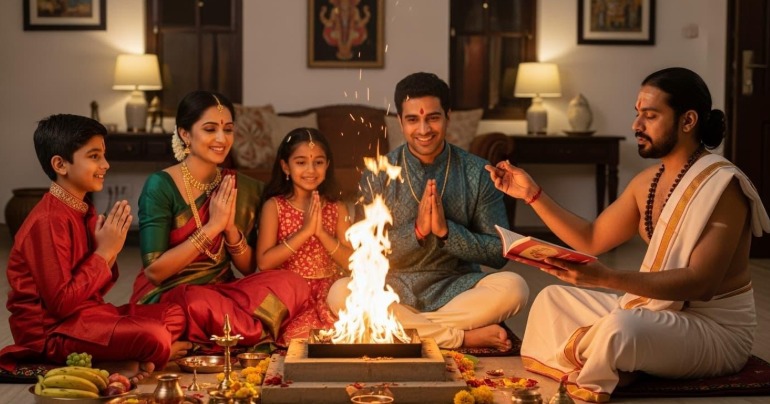
Sudarshana Homam is a powerful Hindu Vedic ritual performed to invoke the divine blessings of Lord Sudarshana, the personification of the Sudarshana Chakra associated with Lord Vishnu. The ritual is traditionally performed for protection, removal of negative influences, overcoming obstacles, and promoting peace, prosperity, and spiritual well-being.
The word Sudarshana comes from the Sanskrit words Su and Darshana, broadly conveying the idea of an auspicious or excellent vision. In Hindu tradition, the Sudarshana Chakra represents divine protection, righteousness, and the destruction of forces that obstruct spiritual and material well-being.
At Veda Gayathri, traditional Vedic rituals and homams are performed with appropriate mantras, procedures, and devotional practices according to the requirements of the individual or family. A Sudarshana Homam can be conducted for various purposes, including protection, removal of obstacles, peace at home, and spiritual purification.
Whether performed at home, during an important occasion, or as part of a larger religious ceremony, Sudarshana Homam is considered an important Vedic ritual for seeking the grace and protection of Lord Vishnu.
What Is Sudarshana Homam?
Sudarshana Homam is a sacred fire ritual dedicated to Lord Sudarshana, associated with the divine discus or Sudarshana Chakra of Lord Vishnu.
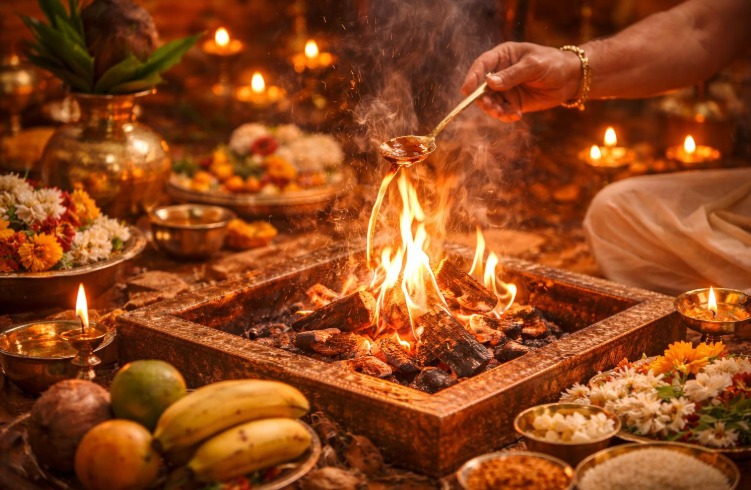
During the homam, offerings are made into the sacred fire while priests recite prescribed Vedic mantras and perform various ritual steps. The sacred fire (Agni) is traditionally regarded as the medium through which offerings are presented to the divine.
The ritual generally includes:
- Sankalpam
- Ganapati Puja
- Kalasha Sthapana
- Invocation of deities
- Sudarshana Mantra chanting
- Homam
- Purnahuti
- Prasadam and blessings
The exact procedure can vary depending on the tradition, purpose, location, and priest conducting the ceremony.
Significance of Sudarshana Homam
The Sudarshana Chakra occupies an important position in Vaishnava traditions. It is associated with Lord Vishnu’s divine power, protection, righteousness, and the removal of obstacles.
Sudarshana Homam is therefore traditionally performed with the intention of seeking divine protection and removing negative influences.
The ritual is believed by devotees to support:
- Protection from negative influences
- Removal of obstacles
- Peace and harmony
- Spiritual purification
- Positive energy
- Success in important undertakings
- Family well-being
- Mental and emotional peace
- Removal of fear and uncertainty
- Overall prosperity
These are religious beliefs and traditional interpretations, rather than scientifically established effects.
Why Is Sudarshana Homam Performed?
Families may choose to perform Sudarshana Homam for different religious and personal reasons. The purpose is generally stated during the Sankalpam, where the devotee expresses the intention behind performing the ritual.
Some commonly cited reasons include:
Protection From Negative Influences
Sudarshana Homam is traditionally associated with divine protection. Devotees may perform the homam when they feel that their home or family requires spiritual protection.
Removal of Obstacles
The ritual may be performed before or during important stages of life when a person wishes to seek divine blessings for overcoming difficulties.
Peace and Harmony
Families may perform the homam with the intention of creating a peaceful and spiritually positive atmosphere at home.
Spiritual Purification
The sacred fire, mantra chanting, and ritual offerings are traditionally viewed as forms of spiritual purification.
Success in Important Activities
Some devotees perform Sudarshana Homam before important events, new ventures, professional activities, or other significant undertakings.

Benefits of Sudarshana Homam
The benefits traditionally associated with Sudarshana Homam are primarily spiritual and devotional.
1. Divine Protection
One of the most commonly cited purposes of Sudarshana Homam is seeking the protective blessings of Lord Sudarshana.
2. Removal of Negative Energy
According to traditional belief, the homam can help purify the surroundings and remove negative influences.
3. Removal of Obstacles
Devotees may perform the ritual to seek blessings when facing repeated obstacles in personal, professional, or family matters.
4. Peace of Mind
Prayer, mantra chanting, meditation, and participation in a sacred ritual may provide devotees with a sense of calm and spiritual comfort.
5. Family Well-Being
Families may perform Sudarshana Homam as a collective prayer for the welfare, harmony, and prosperity of household members.
6. Spiritual Growth
Regular devotion and participation in Vedic rituals can become part of an individual’s spiritual practice.
7. Positive Environment
The ritual creates an environment centered around prayer, chanting, devotion, and religious observance.
Who Can Perform Sudarshana Homam?
Sudarshana Homam can generally be performed by individuals, couples, families, or organizations depending on the purpose of the ceremony.
It may be performed for:
- Individuals seeking divine blessings
- Married couples
- Families
- New homeowners
- Business owners
- People starting a new venture
- Devotees of Lord Vishnu
- Families observing special religious occasions
The specific eligibility, procedure, and requirements may differ according to the sampradaya, regional customs, family traditions, and priestly guidance.
When Is the Best Time to Perform Sudarshana Homam?
There is no single universally applicable date for every Sudarshana Homam. The appropriate time can depend on the devotee’s purpose and the family’s religious tradition.
A priest may consider factors such as:
- Tithi
- Nakshatra
- Vara
- Muhurtham
- Panchangam
- Individual horoscope, when relevant
- Purpose of the ritual
- Family tradition
For specific occasions, devotees may choose an auspicious day after consulting a qualified priest.
Can Sudarshana Homam Be Performed at Home?
Yes, Sudarshana Homam can be conducted at home when suitable arrangements are available.
The homam requires a clean and appropriate space for the sacred fire and sufficient ventilation. Families should also follow the instructions provided by the priest regarding the preparation of the ritual area.
Sudarshana Homam Procedure
The exact procedure may vary according to the Vedic tradition followed by the priest. A typical ceremony may include the following stages.
1. Preparation of the Ritual Space
The location where the homam will be performed is cleaned and prepared. A suitable place is selected for the homa kundam.
2. Sankalpam
The priest performs the Sankalpam, stating the intention behind conducting the ceremony.
The Sankalpam may include details concerning the devotee, family, location, purpose, and desired blessings.
3. Ganapati Puja
Lord Ganesha is traditionally worshipped before many Hindu rituals because devotees seek His blessings for the removal of obstacles and successful completion of the ceremony.
4. Kalasha Sthapana
A sacred Kalasha may be established as part of the ritual. The Kalasha represents auspiciousness and divine presence.
5. Invocation of Lord Vishnu and Sudarshana
The priest invokes Lord Vishnu and Lord Sudarshana through prescribed mantras and prayers.
6. Sudarshana Mantra Chanting
Specific Sudarshana mantras are recited according to the ritual tradition being followed.
7. Homam
Offerings are made into the sacred fire while the relevant mantras are chanted.
The offerings and mantras depend on the specific form of Sudarshana Homam being performed.
8. Purnahuti
The ceremony concludes with Purnahuti, the final and complete offering into the sacred fire.
9. Prasadam
After completion of the homam, devotees receive prasadam and seek the blessings of the priest and the deities.
Sudarshana Homam Pooja Items
The required materials can differ depending on the specific ritual tradition and priest. Commonly used items may include:
- Homa kundam
- Kalasha
- Coconut
- Mango leaves
- Flowers
- Turmeric
- Kumkum
- Sandalwood
- Incense
- Camphor
- Ghee
- Rice
- Fruits
- Betel leaves
- Betel nuts
- Sacred thread
- Dry fruits
- Homa samagri
- Darbha grass
- Wooden sticks used for the homam
- Other materials specified by the priest
It is recommended to obtain the exact pooja-material list from the priest before the ceremony because the requirements can vary.
Sudarshana Homam Mantras
Mantra chanting forms an important part of Sudarshana Homam.
One well-known Sudarshana mantra is traditionally recited as:
“Om Sudarshanaya Vidmahe
Mahajwalaya Dhimahi
Tanno Chakrah Prachodayat.”
Different traditions may use additional Sudarshana mantras, stotras, and Vedic passages.
The pronunciation and sequence of mantras are important in traditional Vedic rituals. Therefore, devotees who are unfamiliar with the mantras may participate by following the priest’s guidance rather than attempting the complete ritual independently.
Importance of the Sudarshana Chakra
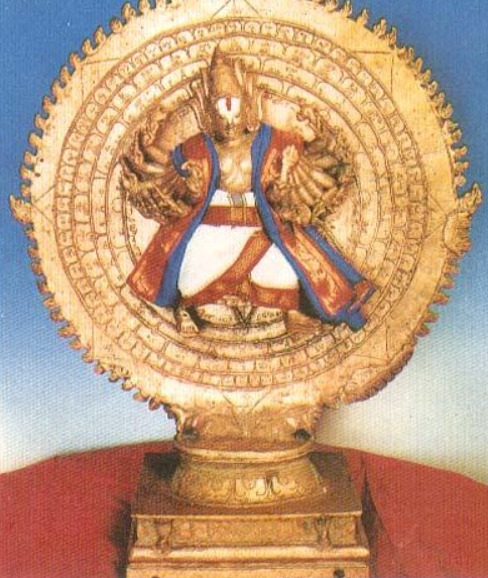
The Sudarshana Chakra is one of the prominent divine attributes associated with Lord Vishnu.
It is traditionally represented as a powerful divine discus. In Hindu iconography and scriptures, it represents divine authority and the protection of Dharma.
The Chakra is commonly associated with:
- Divine protection
- Righteousness
- Destruction of obstacles
- Removal of negative forces
- Spiritual strength
- Cosmic order
For devotees, Sudarshana Homam provides an opportunity to express devotion toward Lord Vishnu and seek the protective grace associated with the Sudarshana Chakra.
Sudarshana Homam for Protection
Protection is one of the major reasons devotees choose to perform Sudarshana Homam.
In traditional Hindu belief, Lord Sudarshana is associated with the removal of harmful and negative influences. Families may therefore conduct the homam when seeking spiritual protection for their household.
Some devotees perform the ritual:
- Before moving into a new house
- During difficult periods
- Before important events
- During family ceremonies
- For spiritual purification
- As a prayer for household welfare
The homam should be understood as a religious practice rather than a substitute for professional medical, legal, financial, or other practical assistance when such assistance is needed.
Sudarshana Homam for Removing Obstacles
Life can involve professional, financial, family, and personal challenges. From a religious perspective, devotees may perform Sudarshana Homam to seek divine support during such periods.
The ritual allows devotees to:
- Pray for clarity
- Seek divine blessings
- Express faith
- Perform spiritual practices
- Begin important activities with devotion
Many families combine the ritual with practical efforts to address the underlying challenges they are facing.
Sudarshana Homam for Home and Family
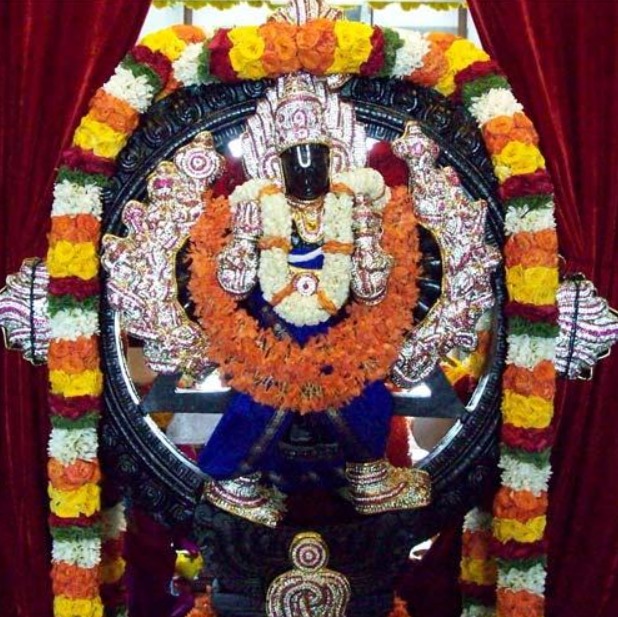
A home is traditionally considered more than a physical structure in Hindu culture. It is a place where family members pray, celebrate festivals, and maintain religious traditions.
Sudarshana Homam may be performed at home as a family prayer for:
- Peace
- Protection
- Harmony
- Prosperity
- Spiritual well-being
- Positive beginnings
Families may choose to participate in the homam together and receive prasadam after the completion of the ceremony.
Sudarshana Homam Before Moving Into a New House
Many Hindu families perform various poojas and homams before or after moving into a new home.
Depending on the family’s requirements, Sudarshana Homam may be included alongside ceremonies such as:
- Gruhapravesham
- Vastu Shanti Puja
- Ganapati Homam
- Lakshmi Ganapathi Homam
- Navagraha Shanti Puja
- Griha Shanti Puja
The combination of rituals is not fixed and should be determined according to the family’s traditions and the priest’s guidance.
Difference Between Sudarshana Homam and Ganapati Homam
Both are important Vedic fire rituals, but they have different primary devotional focuses.
Sudarshana Homam | Ganapati Homam |
Dedicated to Lord Sudarshana | Dedicated to Lord Ganesha |
Associated with Lord Vishnu | Associated with Lord Ganesha |
Traditionally performed for protection and purification | Traditionally performed for removing obstacles |
Uses Sudarshana-related mantras | Uses Ganesha-related mantras |
Focuses on divine protection and Sudarshana Chakra | Focuses on auspicious beginnings and obstacle removal |
In some ceremonies, both may be performed together depending on the purpose of the ritual.
Difference Between Sudarshana Homam and Narasimha Homam
Sudarshana Homam and Narasimha Homam are both associated with Vaishnava traditions but have distinct devotional focuses.
Sudarshana Homam focuses on Lord Sudarshana and the divine Sudarshana Chakra.
Narasimha Homam focuses on Lord Narasimha, the man-lion incarnation of Lord Vishnu.
Both rituals have their own mantras, procedures, and traditional purposes.
The appropriate ritual depends on the devotee’s intention and religious tradition.
Sudarshana Homam for Business and Professional Success
Some business owners and professionals perform Sudarshana Homam when beginning a new venture or during periods when they wish to seek divine blessings.
The ceremony may be performed for:
- A new business
- Office inauguration
- New project
- Expansion of an existing business
- Professional milestones
- Important business decisions
While religious rituals can be meaningful expressions of faith, business success also depends on planning, market conditions, financial management, customer needs, and other practical factors.
Sudarshana Homam for Spiritual Purification
Fire rituals hold an important place in many Hindu traditions.
The sacred fire is associated with purification and transformation. Through offerings, prayers, and mantra chanting, devotees engage in a spiritual practice intended to create an atmosphere of devotion and positive intention.
Sudarshana Homam can therefore be performed as part of a family’s broader spiritual routine.
How to Prepare for Sudarshana Homam
Proper preparation helps the ceremony proceed smoothly.
Before the Homam
Devotees may:
- Clean the house and ritual area
- Arrange the required pooja materials
- Confirm the date and muhurtham
- Discuss the purpose with the priest
- Prepare suitable traditional clothing
- Maintain personal cleanliness
- Follow any fasting or dietary instructions provided by the priest
On the Day of the Homam
Participants should arrive or be ready before the scheduled time.
The priest will generally explain where participants should sit and how they should participate in the various stages of the ritual.
What Should You Wear for Sudarshana Homam?
Traditional and clean clothing is generally preferred for Hindu religious ceremonies.
Men may traditionally wear:
- Dhoti
- Kurta
- Traditional attire
Women may traditionally wear:
- Saree
- Salwar suit
- Other clean traditional clothing
The specific dress requirements can vary by family tradition and temple or priestly practice.
Can Sudarshana Homam Be Performed for a Specific Intention?
Yes. The purpose of a Vedic ritual is generally expressed during the Sankalpam.
A devotee may state an intention such as seeking blessings for:
- Family welfare
- Peace
- Protection
- A new beginning
- Business
- Education
- Professional growth
- Spiritual development
The priest can guide the devotee regarding the appropriate Sankalpam and ritual procedure.
How Long Does Sudarshana Homam Take?
The duration depends on the specific form of the homam, number of mantras, additional poojas, and the tradition being followed.
A shorter ceremony may take less time, while a more elaborate ritual involving additional recitations and ceremonies may take several hours.
Therefore, it is best to confirm the expected duration with the priest when scheduling the homam.
How Many People Can Attend Sudarshana Homam?
There is generally no universal fixed number of attendees.
A small family can conduct the ritual, while larger groups may also participate when space and arrangements permit.
If the homam is conducted in a home, the number of participants should be considered based on:
- Available space
- Fire safety
- Seating arrangements
- Ritual requirements
- Priest’s instructions
Importance of Choosing an Experienced Priest
A Vedic homam involves specific procedures, mantras, offerings, and ritual sequences. Choosing an experienced priest can help ensure that the ceremony follows the intended tradition.
Before arranging the ceremony, families can discuss:
- Purpose of the homam
- Date and muhurtham
- Required materials
- Number of participants
- Location
- Duration
- Additional poojas
- Prasadam arrangements
At Veda Gayathri, devotees can seek guidance for traditional poojas and homams according to their religious requirements and occasion.
Sudarshana Homam at Veda Gayathri
At Veda Gayathri, traditional Hindu rituals are approached with attention to Vedic procedures, devotional practices, and the specific requirements of devotees.
For families planning a Sudarshana Homam, appropriate guidance can help determine the ritual requirements, pooja materials, muhurtham, and arrangements needed for the ceremony.
Whether the purpose is seeking divine protection, family welfare, spiritual purification, or blessings for a new beginning, the ritual can be organized according to the devotee’s requirements and traditional practices.
Veda Gayathri aims to help families preserve and participate in meaningful Vedic traditions while making the ceremony easier to organize.
Frequently Asked Questions About Sudarshana Homam
What is Sudarshana Homam?
Sudarshana Homam is a Vedic fire ritual dedicated to Lord Sudarshana, associated with Lord Vishnu’s Sudarshana Chakra. Devotees traditionally perform it to seek divine protection, purification, peace, and removal of obstacles.
What are the main benefits of Sudarshana Homam?
Traditionally, devotees associate Sudarshana Homam with divine protection, removal of negative influences, overcoming obstacles, spiritual purification, peace, and family well-being.
Can Sudarshana Homam be performed at home?
Yes. It can be performed at home when a suitable ritual space and necessary arrangements are available.
How long does Sudarshana Homam take?
The duration varies depending on the procedure, number of mantras, and additional rituals included in the ceremony.
What items are required for Sudarshana Homam?
Common items include a homa kundam, ghee, flowers, fruits, rice, coconut, Kalasha items, homa samagri, sandalwood, camphor, and other materials specified by the priest.
Can Sudarshana Homam be performed before Gruhapravesham?
It may be included as part of ceremonies associated with a new home, depending on the family’s tradition and priest’s guidance.
Is Sudarshana Homam only for Vaishnavites?
The ritual is particularly associated with Lord Vishnu and Vaishnava traditions, but devotees from different Hindu traditions may choose to perform it as an expression of devotion.
Can couples perform Sudarshana Homam?
Yes, couples may participate in the ceremony. The priest can provide instructions regarding the Sankalpam and participation.
What is the Sudarshana Chakra?
The Sudarshana Chakra is the divine discus traditionally associated with Lord Vishnu. It is symbolically connected with protection, righteousness, and divine power.
Is Sudarshana Homam suitable for a new business?
Some devotees perform it when starting a new business or important professional activity to seek divine blessings. The ritual can be combined with practical planning for the new venture.
Conclusion
Sudarshana Homam is a significant Vedic fire ritual dedicated to Lord Sudarshana and associated with the divine Sudarshana Chakra of Lord Vishnu. Traditionally, devotees perform this homam to seek divine protection, spiritual purification, removal of obstacles, peace, prosperity, and family well-being.
From the Sankalpam and Ganapati Puja to Sudarshana mantra chanting, homam, and Purnahuti, every stage of the ceremony has a meaningful place within the traditional ritual framework.
For families planning a Sudarshana Homam, selecting an appropriate muhurtham, preparing the required pooja materials, and consulting an experienced priest can help ensure that the ceremony is conducted according to the desired tradition.
With Veda Gayathri, families can seek guidance and arrangements for traditional poojas and homams, making it easier to observe important spiritual traditions with devotion and understanding.