Introduction
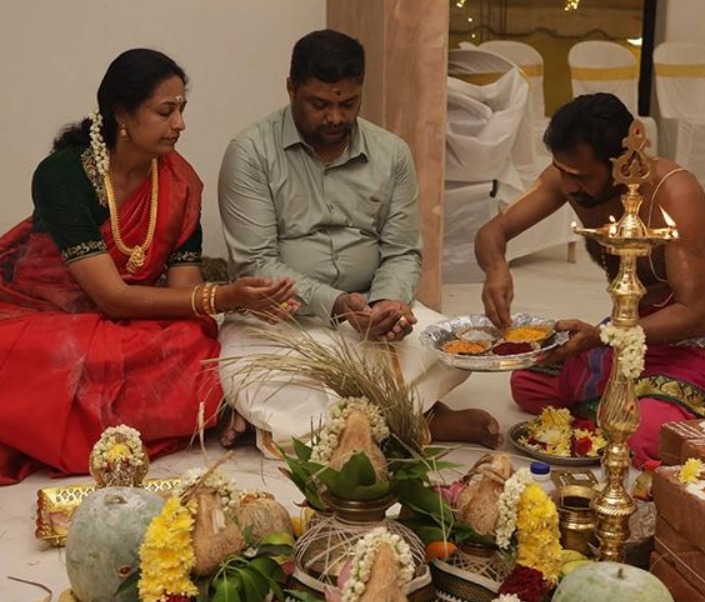
Gruhapravesham rituals traditionally include Ganesh Pooja, Kalasha Pooja, Vastu Pooja, Navagraha Pooja, Homam, milk boiling, and other spiritual practices. The exact rituals may vary depending on the family tradition, region, priest, and Muhurtham selected for the ceremony.
Veda Gayathri helps families connect with traditional spiritual practices and plan important occasions with devotion and clarity. From understanding the significance of auspicious rituals to preparing for important ceremonies, Veda Gayathri provides useful guidance for families celebrating meaningful Hindu traditions.
This complete guide explains the important Gruhapravesham rituals and traditions step by step, helping you understand what usually happens before, during, and after the housewarming ceremony.
What Is Gruhapravesham?
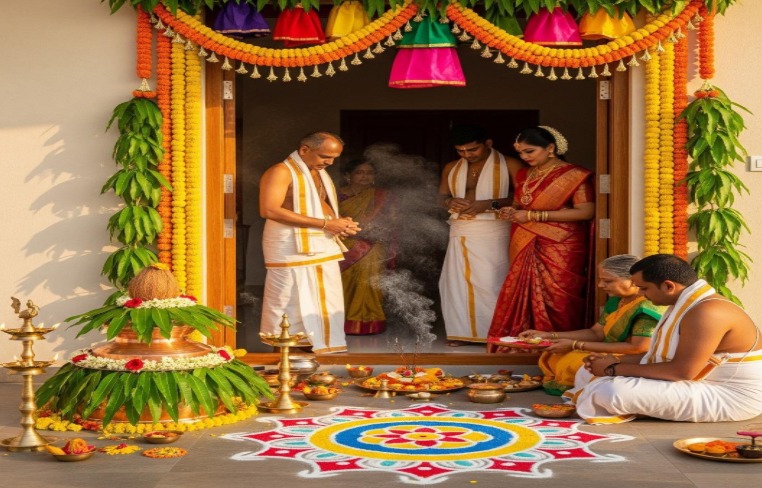
The word Gruhapravesham comes from two Sanskrit-derived terms: “Gruha,” meaning house or home, and “Pravesham,” meaning entering. Therefore, Gruhapravesham refers to the traditional ceremony performed when a family enters a new home.
The ceremony is generally performed after the construction of a new house or before moving into a newly purchased home. Families may perform it before bringing their belongings into the house or before beginning regular life in the new residence.
The main purpose of Gruhapravesham is to begin life in the new home with prayers and positive intentions. Families seek blessings for peace, health, prosperity, happiness, and harmony.
Depending on regional customs, the ceremony may include several different Poojas and rituals. Some families perform a simple housewarming Pooja, while others conduct an elaborate ceremony involving multiple priests and Homams.
Why Are Gruhapravesham Rituals Important?
A home is considered more than just a physical structure in Hindu tradition. It is a place where family members live, worship, celebrate festivals, build relationships, and create memories.
Gruhapravesham provides an opportunity to begin this new chapter with prayers and traditional practices. Each ritual has its own symbolic significance.
Ganesh Pooja is traditionally associated with seeking blessings for an auspicious beginning and removing obstacles. Vastu-related rituals are performed as part of the traditional practice of harmonizing the home with Vastu principles. Kalasha worship represents purity and auspiciousness, while Homam is performed as a sacred fire ritual accompanied by mantras.
Together, these practices create a spiritually meaningful beginning for the family.
Choosing an Auspicious Gruhapravesham Muhurtham
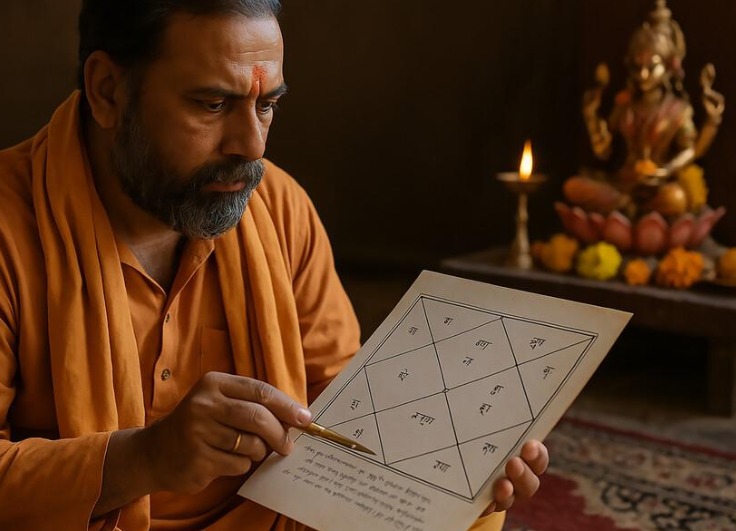
One of the first steps in planning a Gruhapravesham ceremony is selecting an auspicious Muhurtham, or time considered suitable for beginning an important activity.
Traditionally, priests or astrologers consider elements of the Panchangam while selecting the Muhurtham. These may include Tithi, Nakshatra, Vara, Yoga, Karana, Lagna, and other astrological considerations.
The exact Muhurtham can vary based on:
- Location of the house
- Birth details of the homeowners
- Family traditions
- Type of house
- Panchangam followed
- Availability of the priest
- Local customs
Families should consult a knowledgeable priest or qualified Panchangam expert when selecting the final Gruhapravesham date and time.
Preparing the House Before Gruhapravesham
The house should generally be cleaned and prepared before the ceremony. A clean environment is considered important for conducting religious rituals.
Before Gruhapravesham, families may:
- Thoroughly clean the entire house
- Clean the entrance and Pooja area
- Arrange the kitchen
- Prepare the main doorway
- Decorate the entrance with flowers or traditional decorations
- Place mango leaves and a Toranam at the entrance
- Prepare the Pooja room
- Arrange required vessels and Pooja materials
- Keep drinking water and other necessities ready
- Complete important electrical and plumbing work
- Ensure the house is ready for occupation
It is better to finish major construction and repair work before the ceremony so that the family can focus on the rituals without unnecessary interruptions.
Cleaning and Purifying the Home
Cleaning the home is one of the basic preparations before Gruhapravesham. Traditionally, the house may also be ritually purified before the ceremony.
Depending on family customs, water mixed with items considered auspicious may be sprinkled around the house while prayers or mantras are recited.
Some families use Gangajal or other traditionally sacred water for purification. The priest may also perform specific purification rituals according to the family’s tradition.
The purpose is not simply physical cleanliness but also to symbolically prepare the home for a fresh beginning.
Decorating the Main Entrance
The main entrance has an important place in traditional Indian housewarming ceremonies. Families often decorate it before the Gruhapravesham.
Common decorations include:
- Mango leaf Toranam
- Flower garlands
- Rangoli or Muggu
- Diyas
- Turmeric and Kumkum
- Traditional symbols
- Decorative Kalasha
A beautiful Rangoli or Muggu can be created near the entrance to make the house look festive and welcoming.
Families may also place flowers and traditional decorations around the doorway.
Preparing the Gruhapravesham Pooja Area
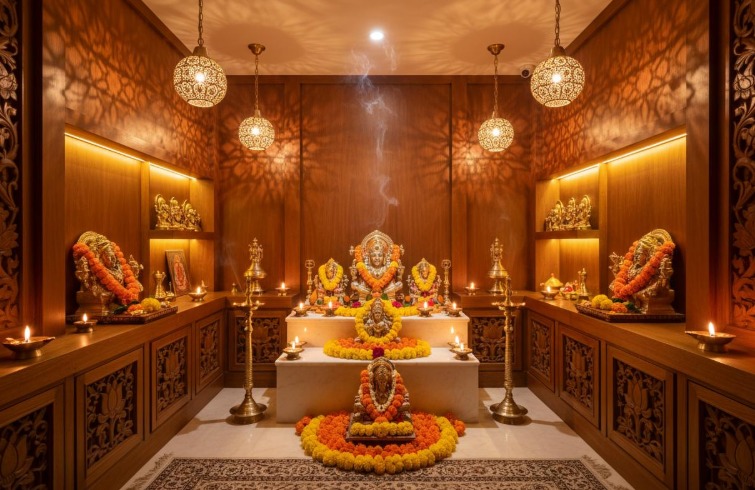
A clean and suitable location should be selected for the Pooja. The priest usually guides the family regarding the direction and arrangement of the Pooja setup.
The Pooja area may contain:
- A clean cloth
- Pooja platform
- Idols or pictures of deities
- Kalasha
- Coconut
- Mango leaves
- Flowers
- Fruits
- Betel leaves
- Betel nuts
- Turmeric
- Kumkum
- Akshata
- Incense sticks
- Camphor
- Oil or ghee lamps
- Pooja vessels
- Homam materials, if required
The exact requirements depend on the rituals planned for the ceremony.
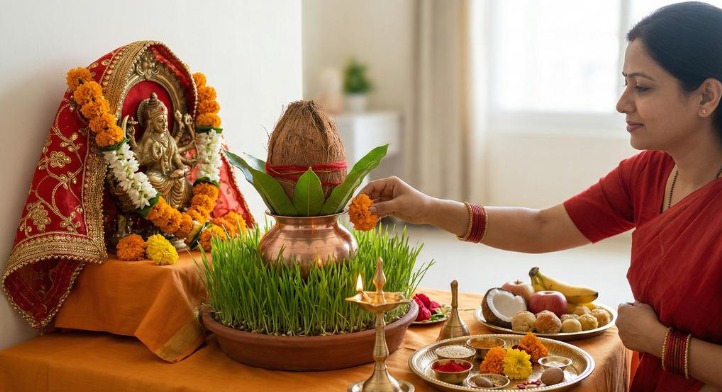
Step 1: Entering the Home at the Auspicious Time
The actual Gruhapravesham begins when the family enters the house at the selected Muhurtham.
Traditionally, the homeowners may enter the house carrying auspicious items such as a Kalasha, lamp, or other objects according to their family customs.
The priest guides the family through the entry ritual and the prayers that accompany it.
Some traditions recommend that the couple or family members performing the main ceremony enter first, followed by other family members.
The important aspect is to follow the Muhurtham and the customs prescribed by the family’s priest.
Step 2: Ganesh Pooja
Ganesh Pooja is commonly performed at the beginning of Gruhapravesham.
Lord Ganesha is traditionally worshipped before important activities because he is associated with auspicious beginnings and the removal of obstacles.
During Ganesh Pooja, the priest may invoke Lord Ganesha through mantras, offer flowers and other traditional offerings, and perform the required worship.
The family participates in the prayers and seeks blessings for a smooth beginning in their new home.
Step 3: Punyahavachanam and Purification Rituals
Punyahavachanam is a traditional purification ritual that may be performed during Gruhapravesham depending on regional and family customs.
The ritual involves prayers and the sanctification of the surroundings using traditionally prepared sacred water.
The priest recites appropriate mantras and performs the ritual according to the prescribed procedure.
It is intended to symbolically purify the house and create an auspicious atmosphere before the remaining Poojas.
Step 4: Kalasha Pooja
The Kalasha is an important symbol in many Hindu religious ceremonies.
A traditional Kalasha may be filled with water and decorated with mango leaves and a coconut. Turmeric, Kumkum, flowers, and other auspicious materials may also be used.
The Kalasha represents abundance, purity, and auspiciousness in many Hindu traditions.
During Gruhapravesham, Kalasha Pooja may be performed as part of the housewarming ceremony. The priest invokes divine blessings through the prescribed mantras and rituals.
Step 5: Vastu Pooja
Vastu Pooja is another important ritual associated with Gruhapravesham.
The ritual is traditionally performed to honor Vastu Purusha and seek blessings for harmony and well-being within the home.
The priest may perform specific prayers, offerings, and rituals based on the house and the family’s tradition.
Vastu Pooja is especially associated with the belief that the physical environment and arrangement of a home should be approached with balance and harmony.
Step 6: Navagraha Pooja
Some families include Navagraha Pooja as part of their Gruhapravesham ceremony.
Navagraha refers to the nine celestial entities traditionally worshipped in Hindu astrology and religious practice.
The Pooja may involve invoking the Navagrahas through mantras and offerings.
Whether Navagraha Pooja is necessary depends on the priest’s guidance, family tradition, and the specific Muhurtham selected for the housewarming.
Step 7: Homam or Havan
Homam, also known as Havan, is a sacred fire ritual commonly performed during elaborate Gruhapravesham ceremonies.
A fire is prepared according to traditional procedures, and offerings are made into it while the priest chants prescribed mantras.
Different types of Homams may be performed depending on the family’s tradition and the purpose of the ceremony.
The sacred fire is an important element of many Hindu rituals and symbolizes purification, devotion, and the offering of prayers.
Families should follow the priest’s instructions regarding the materials required for the Homam.
Step 8: Milk-Boiling Ceremony
One of the most recognizable Gruhapravesham traditions is boiling milk in the new kitchen.
The family places a vessel containing milk on the stove and allows it to boil. Traditionally, allowing the milk to rise and overflow is considered an auspicious symbol associated with abundance and prosperity.
This simple ritual is often one of the most memorable moments of the housewarming ceremony.
The milk may later be used as part of the family’s offerings or distributed according to their customs.
Step 9: Lakshmi Pooja
Some families perform Lakshmi Pooja during or after the Gruhapravesham ceremony.
Goddess Lakshmi is traditionally worshipped as the deity associated with prosperity, abundance, and well-being.
The Pooja may include flowers, fruits, turmeric, Kumkum, lamps, and other traditional offerings.
Families pray for prosperity and happiness in their new home.
The exact procedure varies depending on regional customs and the priest conducting the ceremony.
Step 10: Offering Naivedyam
Food offerings, known as Naivedyam, are commonly prepared for the deities during the ceremony.
The type of Naivedyam varies by family and region. It may include:
- Fruits
- Sweets
- Payasam
- Coconut
- Cooked rice preparations
- Traditional sweets
- Other homemade offerings
The priest guides the family regarding what should be offered during the Pooja.
After the offering, the food may be distributed as Prasadam among family members and guests.
Step 11: Lighting the Lamps
Lighting lamps is an important part of many Hindu ceremonies.
During Gruhapravesham, families may light oil or ghee lamps in the Pooja area and other appropriate places in the home.
The lamp is traditionally associated with light, auspiciousness, and the removal of darkness.
Families may continue lighting a lamp in their Pooja room as part of their daily spiritual routine after moving into the house.
Step 12: Entering the Kitchen and Beginning Cooking
After the main Pooja and milk-boiling ceremony, families may begin using the kitchen.
The first cooking activity in the new home can be a meaningful tradition. Some families prepare a sweet dish such as Payasam or another traditional food.
The first meal prepared in the new house may be shared with family members and guests.
This tradition symbolizes beginning everyday family life in the new home.
Step 13: Seeking Blessings From Elders
After the main rituals, younger family members traditionally seek blessings from parents, grandparents, elders, and other respected family members.
Elders may bless the family and wish them happiness, health, prosperity, and peace in their new home.
This part of Gruhapravesham highlights the importance of family relationships and traditions.
Step 14: Distributing Prasadam
After the Pooja, Prasadam may be distributed among family members, relatives, friends, and guests.
Depending on the family’s arrangements, a meal may also be served after the ceremony.
Many families consider sharing food with others an important part of celebrating an auspicious occasion.
Traditional Gruhapravesham Items
Preparing the required materials in advance makes the ceremony easier to manage.
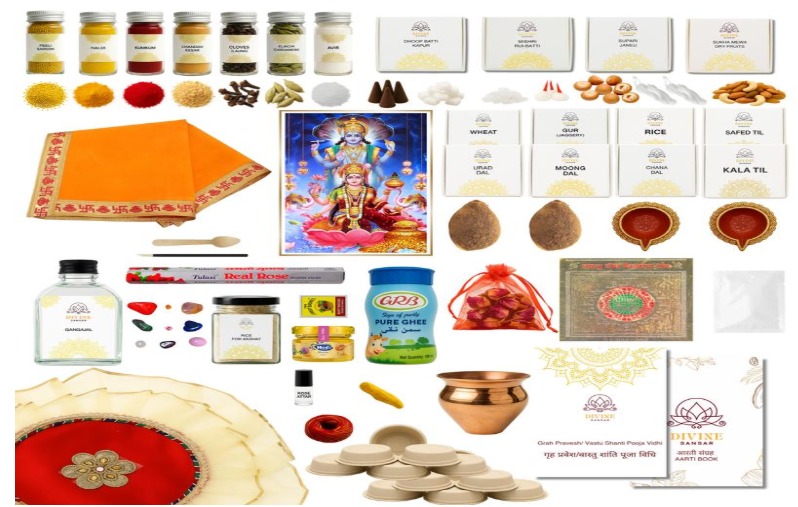
Common Gruhapravesham Pooja items include:
- Kalasha
- Coconut
- Mango leaves
- Turmeric
- Kumkum
- Akshata
- Rice
- Flowers
- Flower garlands
- Fruits
- Betel leaves
- Betel nuts
- Camphor
- Incense sticks
- Cotton wicks
- Oil or ghee
- Pooja plates
- Water vessels
- Sacred thread
- New cloth
- Lamps
- Ganesh idol or picture
- Other items recommended by the priest
The exact list can differ depending on the rituals selected.
It is always useful to request a written Pooja-items list from the priest several days before the ceremony.
Traditional Food for Gruhapravesham
Food is an important part of most Indian celebrations, and Gruhapravesham is no exception.
Families may prepare traditional vegetarian dishes for the occasion. The menu can depend on regional traditions, family preferences, and the number of guests.
Common options may include:
- Rice
- Dal
- Vegetable curries
- Sambar
- Rasam
- Pulihora
- Payasam
- Traditional sweets
- Curd
- Papad
- Pickles
The food served during the ceremony is often prepared with care and offered as part of the celebration.
Clothing and Traditional Customs
Families may choose traditional or festive clothing for Gruhapravesham.
Women may wear sarees, traditional dresses, or other festive clothing, while men may choose traditional attire such as a Dhoti and Kurta depending on regional customs.
The homeowners performing the main rituals may be advised by the priest regarding specific clothing or colors, if applicable to their family tradition.
The most important aspect is to wear clean and comfortable clothing suitable for participating in the ceremony.
Gruhapravesham Traditions After the Ceremony
The spiritual practices do not necessarily end immediately after the main Pooja.
Some families continue certain traditions after moving into the house, such as:
- Lighting a lamp every day
- Performing daily prayers
- Keeping the Pooja room clean
- Offering Naivedyam
- Celebrating festivals at home
- Maintaining cleanliness at the entrance
- Observing family-specific spiritual practices
These traditions can help the family maintain a sense of continuity after the housewarming ceremony.
What Should Be Done Before Gruhapravesham?
A simple preparation checklist can make the ceremony easier.
Before the event, make sure you:
- Finalize the Muhurtham
- Confirm the priest
- Get the Pooja-items list
- Clean the house
- Complete major repairs
- Prepare the Pooja area
- Arrange flowers and decorations
- Purchase fruits and coconuts
- Arrange milk for the boiling ritual
- Prepare Naivedyam ingredients
- Organize Homam materials
- Inform relatives and guests
- Arrange seating
- Plan food and Prasadam
- Keep drinking water available
- Keep towels and cleaning materials ready
- Confirm the ceremony timings with the priest
Preparing everything one or two days in advance can reduce stress on the ceremony day.
Common Mistakes to Avoid During Gruhapravesham
Even with careful planning, families can sometimes overlook small details.
Some common issues include:
- Waiting until the last minute to purchase Pooja items
- Not confirming the Muhurtham with the priest
- Forgetting specific items requested for the Homam
- Leaving construction work unfinished
- Not cleaning the Pooja area
- Preparing too many activities for the same time
- Not keeping sufficient space for the priest and family
- Forgetting arrangements for elderly guests
- Not confirming the food arrangements
- Changing the ritual sequence without consulting the priest
A simple checklist can help avoid most of these problems.
Gruhapravesham for a Newly Constructed House
When entering a newly constructed house, Gruhapravesham may be performed after construction is substantially completed and the home is ready for occupation.
Families may pay particular attention to:
- Completion of construction
- Electrical connections
- Water supply
- Kitchen readiness
- Pooja room preparation
- Cleaning
- Main entrance decoration
- Vastu-related rituals
- Muhurtham
- Pooja arrangements
The priest can provide guidance regarding the appropriate sequence based on the family’s tradition.
Gruhapravesham for a Purchased House
Gruhapravesham can also be performed when a family purchases an existing house or apartment.
The ceremony may be adapted to the condition and history of the property.
Families may clean and prepare the home before performing the Pooja. Depending on tradition, purification and Vastu-related rituals may also be included.
The exact procedure should be discussed with the priest because the rituals can vary from one family and situation to another.
Regional Differences in Gruhapravesham Rituals
Gruhapravesham traditions are not exactly the same throughout India.
Families from Andhra Pradesh, Telangana, Karnataka, Tamil Nadu, Kerala, Maharashtra, North India, and other regions may follow different customs.
Differences may occur in:
- Pooja sequence
- Mantras
- Food offerings
- Decoration
- Entry traditions
- Kalasha customs
- Homam
- Milk-boiling practices
- Clothing
- Muhurtham selection
Therefore, there is no single universal Gruhapravesham procedure that every Hindu family must follow.
Following the family’s traditional practices under the guidance of a knowledgeable priest is generally the most appropriate approach.
Gruhapravesham Day Checklist
On the day of the ceremony, keep the following checklist handy:
- House cleaned
- Pooja area arranged
- Kalasha ready
- Coconut available
- Mango leaves available
- Flowers arranged
- Fruits purchased
- Betel leaves and nuts ready
- Turmeric and Kumkum ready
- Rice and Akshata ready
- Lamps and oil/ghee ready
- Camphor and incense available
- Milk arranged
- Homam materials ready
- Naivedyam prepared
- Decorations completed
- Priest confirmed
- Muhurtham confirmed
- Family members informed
- Guests and food arrangements confirmed
Keeping the checklist printed or saved on a phone can make it easier to verify everything before the ceremony begins.
Frequently Asked Questions About Gruhapravesham Rituals
What is the main purpose of Gruhapravesham?
Gruhapravesham is a traditional housewarming ceremony performed when entering a new home. Families perform prayers and rituals seeking blessings for peace, prosperity, happiness, and well-being.
Which Poojas are commonly performed during Gruhapravesham?
Ganesh Pooja, Kalasha Pooja, Vastu Pooja, Navagraha Pooja, Lakshmi Pooja, and Homam may be included depending on family tradition and priestly guidance.
Why is milk boiled during Gruhapravesham?
Boiling milk until it rises and overflows is traditionally viewed as a symbol of abundance and prosperity in the new home.
Is Vastu Pooja necessary for every Gruhapravesham?
Vastu Pooja is commonly included in many housewarming ceremonies, but the exact rituals depend on family traditions and the guidance of the priest.
Can Gruhapravesham be performed in an apartment?
Yes. Families can perform a suitable Gruhapravesham ceremony when moving into an apartment. The rituals can be adapted to the available space and the family’s customs.
What should be done before the Gruhapravesham ceremony?
The house should generally be cleaned and made ready for occupation. The Muhurtham, priest, Pooja materials, decorations, food, and guest arrangements should also be finalized.
Who should enter the house first during Gruhapravesham?
Traditions differ. In many families, the homeowners performing the ceremony enter first at the auspicious Muhurtham, following the instructions of the priest.
Can the Gruhapravesham rituals vary by region?
Yes. Different regions and families follow different customs, rituals, mantras, foods, and traditions.
Conclusion
Gruhapravesham is a meaningful Hindu tradition that combines prayers, rituals, family customs, and the joy of beginning life in a new home. From selecting an auspicious Muhurtham and preparing the house to performing Ganesh Pooja, Kalasha Pooja, Vastu Pooja, Homam, and the traditional milk-boiling ceremony, every step adds significance to the housewarming celebration.
While the exact Gruhapravesham rituals and traditions may vary according to region, family customs, and priestly guidance, the central idea remains the same: beginning a new chapter of life with devotion, gratitude, and positive intentions.
Veda Gayathri aims to make traditional Hindu practices easier for families to understand and follow. By preparing the home, Pooja materials, Muhurtham, and family arrangements in advance, you can make your Gruhapravesham ceremony peaceful, organized, and memorable.