Introduction to Gruhapravesham Pooja
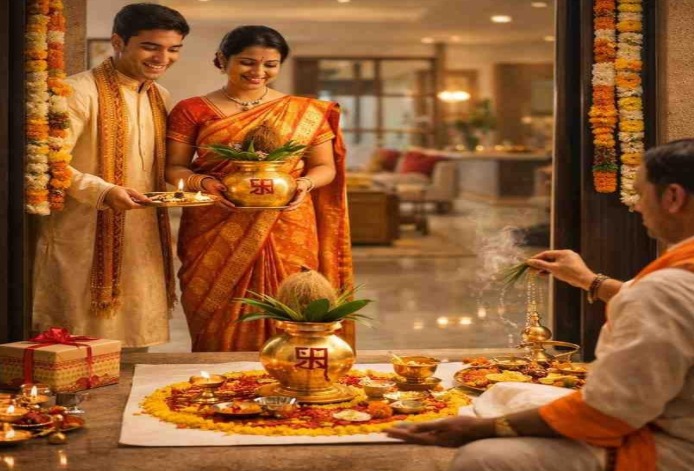
Moving into a new home is one of the most important and memorable milestones in a family’s life. In Hindu tradition, Gruhapravesham Pooja, also known as Griha Pravesh Pooja, is performed before entering a newly constructed or newly purchased house. The ceremony is considered an auspicious beginning and is traditionally performed to seek divine blessings for peace, prosperity, happiness, and harmony in the new home.
The word Gruhapravesham combines “Gruha,” meaning home, and “Pravesham,” meaning entry. Therefore, Gruhapravesham refers to the auspicious entry into a new house. The ceremony may include Ganesh Pooja, Vastu Pooja, Kalasha Sthapana, Homam, Navagraha Pooja, and other rituals depending on family traditions and regional customs.
At Veda Gayathri, we share information about Hindu traditions, Poojas, festivals, auspicious occasions, and spiritual practices. Understanding the significance and procedure of Gruhapravesham can help families prepare for this important ceremony with devotion and confidence.
What Is Gruhapravesham Pooja?
Gruhapravesham Pooja is a traditional Hindu housewarming ceremony performed when a family enters a home for the first time. It is commonly conducted for newly constructed houses, newly purchased properties, or homes that have undergone major reconstruction or renovation.
The main purpose of the ceremony is to seek blessings for the new household and begin life in the home on an auspicious note. Different communities and regions follow different procedures, so the exact rituals performed during Gruhapravesham can vary.
A typical ceremony may involve prayers to Lord Ganesha, purification rituals, Kalasha Sthapana, Vastu-related prayers, Homam, and other traditional rituals. The family may also enter the house at a selected Gruhapravesham Muhurat, or auspicious time.
Why Is Gruhapravesham Pooja Important?
A new home represents a fresh beginning for a family. Traditionally, Hindus consider it important to seek divine blessings before beginning regular life in a new house. Gruhapravesham Pooja provides an opportunity for the family to pray for happiness, health, prosperity, peace, and protection.
The ceremony is also connected with the traditional belief that a home should be purified and prepared before the family begins living there. Vastu-related rituals are often included as part of this process.
Beyond its religious significance, Gruhapravesham is also a celebration that brings family members, relatives, friends, and well-wishers together. It marks the beginning of many new memories in the house.
When Should Gruhapravesham Pooja Be Performed?
Choosing an auspicious date and time is an important part of traditional Gruhapravesham preparations. Families generally consult a priest or astrologer to identify a suitable Gruhapravesham Muhurat according to the Hindu Panchangam.
The selection of the Muhurat may take several factors into consideration, including Tithi, Nakshatra, weekday, Yoga, Karana, and Lagna. In some traditions, the birth details of the house owner may also be considered.
There is no single Gruhapravesham date that is suitable for every family or every location. The auspicious timing may vary according to the regional Panchangam and family traditions. Therefore, it is advisable to consult a knowledgeable priest before finalizing the date and time.
Which Months Are Considered Auspicious for Gruhapravesham?
Certain Hindu months are traditionally considered favorable for housewarming ceremonies. Depending on the regional calendar and family tradition, months such as Magha, Phalguna, Vaishakha, and Jyeshtha may be considered suitable for Gruhapravesham.
However, the suitability of a month alone does not determine the final Muhurat. Tithi, Nakshatra, Lagna, Panchangam considerations, and other traditional factors may also be taken into account.
Families should therefore avoid selecting a Gruhapravesham date solely based on a general online list. A priest can help identify a suitable Muhurat based on the family’s customs and the location of the new house.
How to Prepare for Gruhapravesham Pooja?
Proper preparation can make the Gruhapravesham ceremony peaceful and well organized. Before the ceremony, the major construction and finishing work should ideally be completed. The entire house should be thoroughly cleaned and the rooms should be ready for use.
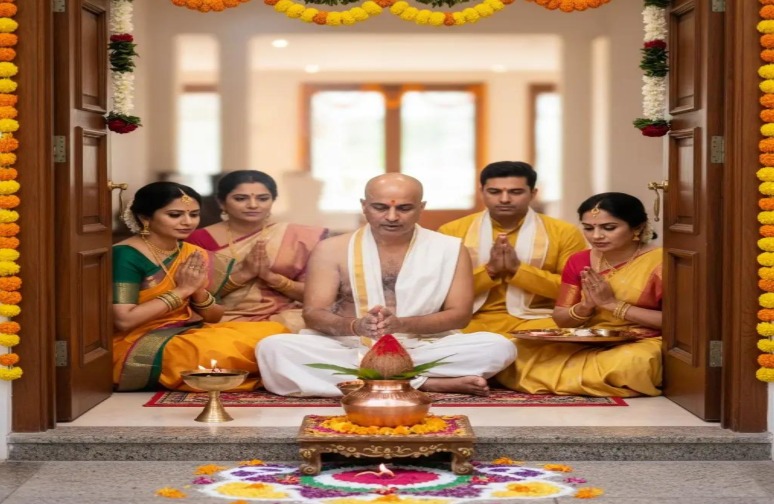
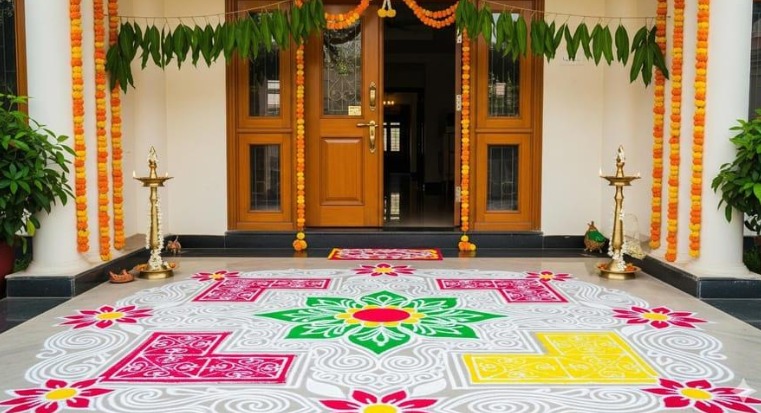
The entrance can be decorated with flowers, mango leaves, torans, Rangoli, or Muggu according to family tradition. The Pooja area should be cleaned and enough space should be arranged for the priest, family members, Kalasha, Pooja materials, and Homam if it is part of the ceremony.
It is also important to confirm the priest, Pooja timings, guest arrangements, food, and required materials in advance. Preparing everything one or two days before the ceremony can help avoid unnecessary stress on the main day.
Gruhapravesham Pooja Samagri List
The exact Gruhapravesham Pooja Samagri list can vary depending on the rituals selected by the family and priest. Some commonly required items include turmeric, kumkum, rice, Akshata, sandalwood, flowers, garlands, incense sticks, camphor, cotton wicks, lamps, oil or ghee, fruits, coconuts, betel leaves, betel nuts, sweets, and dry fruits.
For Kalasha-related rituals, families may need a copper or brass Kalasha, water, mango leaves, coconut, turmeric, kumkum, rice, and flowers.
If a Homam is performed, additional materials such as Homa wood, ghee, Samidha, Havan Samagri, grains, sesame seeds, dried coconut, and other materials may be required.
Since the requirements differ between ceremonies, it is best to obtain the final Pooja Samagri list directly from the priest conducting the Gruhapravesham Pooja.
Gruhapravesham Pooja Procedure
The exact Gruhapravesham Pooja procedure varies according to regional and family traditions. A typical ceremony may begin with Sankalpam, in which the purpose of the Pooja is formally stated.
Prayers to Lord Ganesha may be performed at the beginning of the ceremony. Ganesh Pooja is traditionally performed before important activities as a prayer for an auspicious and smooth beginning.
Purification rituals such as Punyahavachanam may then be performed. Kalasha Sthapana may also form an important part of the ceremony. The Kalasha is prepared using water and other traditional materials and is treated as an auspicious element during the Pooja.
Vastu Pooja may be performed to seek blessings for the home and its occupants. Some families may also perform Navagraha Pooja and Homam depending on their traditions.
Finally, the family enters the house during the selected Gruhapravesham Muhurat. The exact order of rituals should be followed according to the instructions of the priest.
Importance of Ganesh Pooja During Gruhapravesham
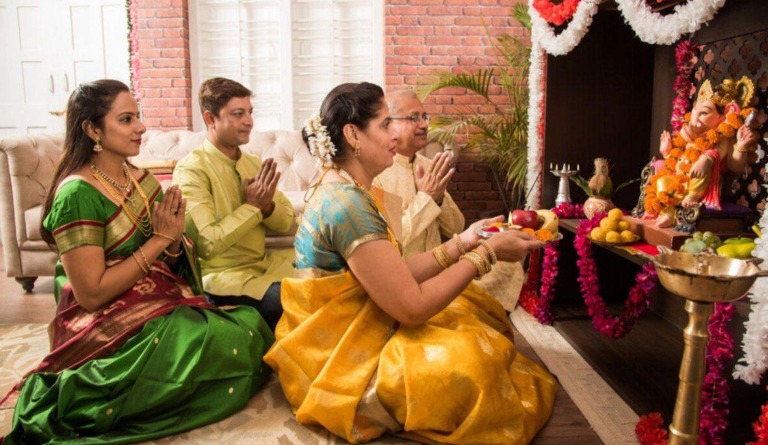
Lord Ganesha is traditionally worshipped before beginning important activities. For this reason, Ganesh Pooja is commonly included in Gruhapravesham ceremonies.
The family seeks blessings for an auspicious beginning and a smooth transition into the new home. Ganesha is traditionally associated with wisdom, auspiciousness, and the removal of obstacles.
The Pooja may include offerings of flowers, fruits, sweets, turmeric, kumkum, and other materials according to the family’s tradition.
Importance of Vastu Pooja During Gruhapravesham
Vastu Pooja is an important part of many traditional housewarming ceremonies. It is performed as a prayer for harmony, peace, protection, and a positive environment within the home.
Vastu Shastra has traditionally been associated with principles concerning the design and arrangement of living spaces. During Gruhapravesham, Vastu-related rituals may be performed according to the family’s customs and the priest’s guidance.
The specific Vastu rituals and mantras can vary between traditions, so families should follow the procedure recommended for their ceremony rather than relying only on generalized information.
Role of Kalasha in Gruhapravesham Pooja
The Kalasha is an important ritual object in many Hindu ceremonies. During Gruhapravesham, a Kalasha may be prepared using water, mango leaves, coconut, turmeric, kumkum, and other traditional materials.
The Kalasha is commonly associated with auspiciousness, abundance, and divine presence. It may be used during the Pooja and can also be carried or placed in an appropriate location during the house-entry ritual according to family customs.
The priest conducting the ceremony can explain the appropriate placement and procedure for the Kalasha.
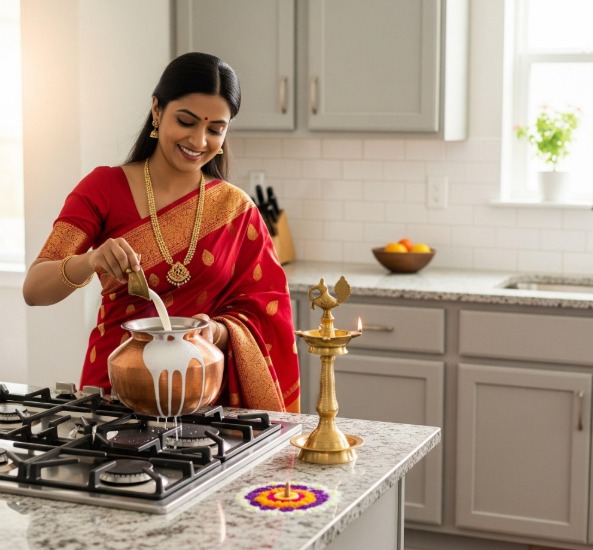
Why Is Milk Boiled During Gruhapravesham?
Boiling milk in the new kitchen is one of the most recognizable traditions associated with a Hindu housewarming ceremony. The milk is traditionally allowed to rise and overflow from the vessel.
The overflowing milk is commonly regarded as a symbol of abundance, prosperity, happiness, and growth. It also represents the beginning of cooking and daily household activities in the new home.
The exact procedure can vary between families and regions, but the tradition remains an important part of many Gruhapravesham ceremonies.
Gruhapravesham and Homam
Homam, also known as Havan, may be performed during Gruhapravesham depending on family tradition and the priest’s guidance. A sacred fire is prepared, and specific mantras are chanted while offerings are made into the fire.
Different types of Homams may be performed depending on the purpose of the ceremony. The priest determines the appropriate procedure and materials.
Homam forms an important spiritual component of many Hindu ceremonies and is often included as part of the housewarming ritual.
How to Decorate Your Home for Gruhapravesham
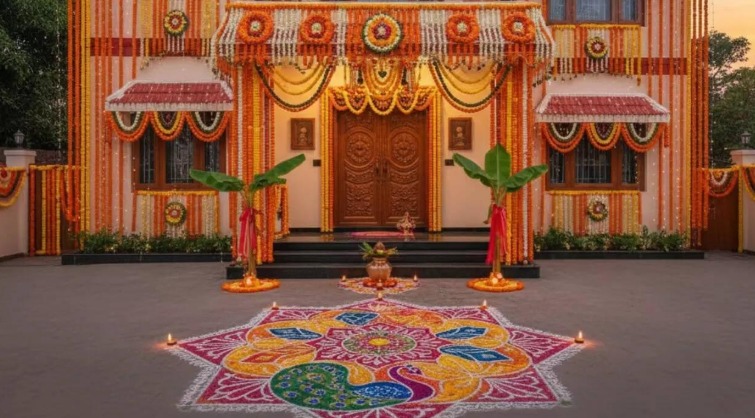
Decorating the home adds a traditional and festive atmosphere to the Gruhapravesham ceremony. The main entrance can be decorated with a traditional toran made from mango leaves, flowers, or other decorative materials.
Rangoli or Muggu can be created near the entrance using traditional patterns. Designs featuring flowers, lamps, Kalasha, lotus motifs, or geometric patterns can make the entrance look welcoming.
Fresh flowers and garlands can also be used around the Pooja area. Diyas may be placed at appropriate locations according to family tradition.
The decorations do not need to be elaborate. A clean, simple, and traditional setup can create a beautiful atmosphere for the housewarming ceremony.
What Should You Wear for Gruhapravesham Pooja?
Traditional clothing is commonly preferred for Gruhapravesham Pooja. Women may choose sarees, traditional dresses, or other comfortable ethnic clothing, while men may wear a dhoti, kurta, or traditional attire.
The most important consideration is to wear clean and comfortable clothing suitable for participating in the Pooja.
Some families may have specific clothing traditions for religious ceremonies. In such cases, family customs should be followed.
Gruhapravesham for a Newly Constructed House
Gruhapravesham is commonly performed when a newly constructed house is ready for occupation. Before the ceremony, the major construction and finishing work should ideally be completed.
The family should check that electricity, water, plumbing, doors, windows, kitchen facilities, and other essential requirements are functional.
The house should be thoroughly cleaned before the Pooja. The Pooja area should be prepared, and all required materials should be arranged.
Once the preparations are complete, the family can perform the Gruhapravesham ceremony at the selected Muhurat and begin their life in the new home.
Gruhapravesham for a Purchased House
A housewarming ceremony can also be performed when moving into a previously owned or newly purchased property. Families may perform suitable purification and house-entry rituals according to their traditions.
Before the ceremony, it is practical to clean the property, complete necessary repairs, check electrical and plumbing systems, and prepare the kitchen and Pooja area.
The family can then consult a priest regarding the appropriate Gruhapravesham procedure and Muhurat.
Gruhapravesham Pooja Food and Prasadam
Food and Prasadam are important parts of many Hindu celebrations. After the Gruhapravesham Pooja, families may prepare traditional dishes and offer suitable food as Naivedyam.
Depending on regional customs, the menu may include rice, dal, vegetable curries, Pulihora, Pongal, Payasam, sweets, fruits, and other traditional dishes.
The food arrangements can be planned according to the number of guests. Some families prefer a traditional vegetarian meal, while others may follow their own family customs.
Gruhapravesham Pooja Invitation
Gruhapravesham is often celebrated with family members, relatives, friends, and well-wishers. A traditional invitation can include the family’s name, new house address, date, Pooja time, Gruhapravesham Muhurat, and meal or Prasadam details.
Digital invitations are also increasingly popular. A simple invitation featuring a Kalasha, Lord Ganesha, flowers, or traditional motifs can be shared through messaging applications and social media.
Inviting loved ones allows them to participate in the family’s important milestone and share their blessings.
Gruhapravesham Pooja Checklist
Planning the ceremony with a checklist can make the process easier. Before Gruhapravesham, confirm the auspicious date and time, priest, Pooja materials, decorations, food arrangements, and guest list.
The house should be cleaned and major work should be completed. Electricity and water should be available, and the kitchen should be ready if milk boiling is part of the ceremony.
On the day of the ceremony, keep all Pooja materials together and arrange the Pooja area before the priest arrives. The family can then participate in the rituals without having to search for materials during the ceremony.
Things to Do Before Gruhapravesham
Before entering a new house, families should complete all important practical preparations. Cleaning the home is one of the most important steps.
The Pooja room or Pooja area should be cleaned and prepared. The kitchen should have the necessary utensils and ingredients for the milk-boiling ritual if it is being performed.
The priest should be informed about the final arrangements, and all Pooja materials should be checked against the required list.
It is also useful to inform guests about the correct arrival time, particularly when the main Gruhapravesham ritual is scheduled for a specific Muhurat.
Things to Keep in Mind During Gruhapravesham
Families following traditional practices should carefully follow the Muhurat and the procedure recommended by their priest. It is better to discuss all rituals and requirements beforehand rather than making last-minute changes.
The ceremony should be conducted in a clean and peaceful environment. Guests should also be informed about the important timings so that the main rituals can take place without unnecessary interruptions.
Because customs vary significantly between regions and families, there is no single procedure that applies to everyone. Respecting the family’s own tradition is an important part of the ceremony.
What to Do After Gruhapravesham Pooja?
After completing the housewarming ceremony, the family can begin settling into the new home. Many families continue their spiritual practices by lighting a lamp, maintaining the Pooja area, offering prayers, and celebrating festivals together.
Keeping the home clean and creating a peaceful environment can also help the family enjoy their new living space.
For many families, Gruhapravesham is not simply a one-day event. It represents the beginning of a new chapter filled with hopes, memories, family gatherings, celebrations, and everyday life.
Frequently Asked Questions About Gruhapravesham Pooja
What is Gruhapravesham Pooja?
Gruhapravesham Pooja is a traditional Hindu housewarming ceremony performed before or during the family’s entry into a new home. It is performed to seek blessings for peace, prosperity, happiness, and harmony.
When should Gruhapravesham be performed?
It is traditionally performed at an auspicious Muhurat selected according to the Hindu Panchangam and the family’s customs.
What Poojas are performed during Gruhapravesham?
The ceremony may include Ganesh Pooja, Punyahavachanam, Kalasha Sthapana, Vastu Pooja, Navagraha Pooja, Homam, and other rituals depending on the family’s tradition.
What items are needed for Gruhapravesham Pooja?
Common items include turmeric, kumkum, rice, flowers, fruits, coconut, Kalasha, mango leaves, camphor, incense, lamps, ghee, and other materials specified by the priest.
Can Gruhapravesham be performed for a purchased house?
Yes. Families may perform suitable housewarming and purification rituals when moving into a purchased home.
Why is milk boiled during Gruhapravesham?
Boiling milk until it overflows is a traditional practice commonly associated with abundance, prosperity, happiness, and the beginning of household activities.
Is Vastu Pooja necessary during Gruhapravesham?
Vastu Pooja is included in many traditional Gruhapravesham ceremonies, but the exact rituals depend on family and regional customs.
Can Gruhapravesham be performed after renovation?
Yes. Families may perform appropriate house-entry rituals after significant renovation or reconstruction according to their traditions and priest’s guidance.
Who performs Gruhapravesham Pooja?
A priest knowledgeable in the family’s religious tradition generally conducts the ceremony and guides the family through the rituals.
Conclusion
Gruhapravesham Pooja is a meaningful Hindu tradition that marks the beginning of life in a new home. From selecting an auspicious Gruhapravesham Muhurat and cleaning the house to performing Ganesh Pooja, Vastu Pooja, Kalasha Sthapana, Homam, and the traditional milk-boiling ceremony, each part of the occasion has its own cultural and spiritual significance.
The exact rituals, dates, mantras, and procedures may differ according to regional traditions, family customs, and the guidance of the priest. Therefore, families should follow the practices appropriate to their tradition.
With proper preparation, the blessings of elders, and the presence of family and loved ones, Gruhapravesham can become a beautiful and memorable beginning to life in a new home. Veda Gayathri provides information about Hindu Poojas, festivals, auspicious occasions, traditions, and spiritual practices to help families understand and celebrate these important moments.
4 Responses