Introduction
Ganesh Puja is one of the most widely performed Hindu worship ceremonies dedicated to Lord Ganesha, the beloved elephant-headed deity traditionally associated with wisdom, auspicious beginnings and the removal of obstacles. Devotees worship Lord Ganesha before beginning important activities, ceremonies, journeys, educational pursuits, businesses and other significant events.
Ganesh Puja can be performed as a simple daily prayer at home or as an elaborate ritual during festivals such as Ganesh Chaturthi and Diwali. During Ganesh Chaturthi, devotees may perform a detailed Shodashopachara Puja, which consists of sixteen traditional forms of worship.
For families seeking to perform traditional Hindu rituals, Veda Gayathri provides puja services that help devotees conduct ceremonies with appropriate rituals, mantras and devotional practices.
What Is Ganesh Puja?
Ganesh Puja is a traditional Hindu worship ceremony dedicated to Lord Ganesha. It can be performed for different devotional purposes and on different occasions.
A typical Ganesh Puja may include:
- Ganapati Dhyana
- Sankalpam
- Avahanam
- Pratishthapanam
- Padya and Arghya offerings
- Abhishekam
- Vastra offering
- Gandham and Kumkum
- Flowers and Durva grass
- Dhoopam and Deepam
- Naivedyam
- Mantra chanting
- Aarti
- Prasadam
The exact procedure can vary according to regional customs, family traditions and the type of Ganesh Puja being performed.
Who Is Lord Ganesha?
Lord Ganesha is one of the most widely worshipped deities in Hindu traditions. He is traditionally associated with:
- Wisdom
- Knowledge
- Auspicious beginnings
- Success in undertakings
- Removal of obstacles
- Good fortune
- Discernment
- Learning
His elephant head is often interpreted symbolically as representing wisdom and intelligence, while his large ears are traditionally associated with attentive listening.
Ganesha is also known by numerous names, including:
- Ganapati
- Vinayaka
- Vighneshwara
- Vighnaraja
- Ekadanta
- Lambodara
- Siddhivinayaka
- Gajanana
Significance of Ganesh Puja
Ganesh Puja has an important place in Hindu religious traditions.
Lord Ganesha is commonly worshipped at the beginning of pujas and other auspicious ceremonies. Devotees traditionally seek his blessings before undertaking important activities.
The ceremony represents:
- Beginning an activity with devotion
- Seeking wisdom and clarity
- Praying for an unobstructed path
- Expressing gratitude
- Invoking auspiciousness
- Maintaining spiritual discipline
Ganesh Puja can therefore be both a standalone ceremony and an introductory part of larger Hindu rituals.
Why Do People Perform Ganesh Puja?
People perform Ganesh Puja for many traditional and devotional reasons.
Seeking Blessings Before New Beginnings
Ganesh Puja is commonly performed before starting a new activity, project, business or important phase of life.
Educational Pursuits
Students and families may worship Lord Ganesha before examinations, educational milestones or the beginning of a new academic journey.
Business and Career
Business owners may perform Ganesh Puja before opening a new establishment or starting a new business venture.
Family Occasions
Ganesh Puja can be performed before weddings, housewarming ceremonies and other family functions.
Spiritual Practice
Regular worship provides devotees with an opportunity for prayer, reflection and gratitude.
Ganesh Puja During Ganesh Chaturthi
Ganesh Chaturthi, also known as Vinayaka Chaturthi, is one of the most important festivals dedicated to Lord Ganesha.
It is traditionally observed on Shukla Paksha Chaturthi in the month of Bhadrapada. The festival is celebrated throughout India, with particularly elaborate celebrations in states including Maharashtra, Telangana and Karnataka.
During Ganesh Chaturthi, devotees traditionally:
- Bring or prepare a Ganesha idol.
- Establish the idol at home or in a community setting.
- Perform Ganapati Puja.
- Offer flowers, Durva and Naivedyam.
- Recite prayers and mantras.
- Perform Aarti.
- Worship Ganesha during the festival period.
- Traditionally conclude the celebration with Visarjan.
The festival may continue for different durations depending on regional and family traditions, with Anant Chaturdashi being a major day associated with Ganesha Visarjan.
Ganesh Puja Procedure
The exact ritual varies according to the tradition being followed. A general Ganesh Puja can include the following steps.
Step 1: Clean the Puja Area
The puja area is cleaned and decorated before the ceremony.
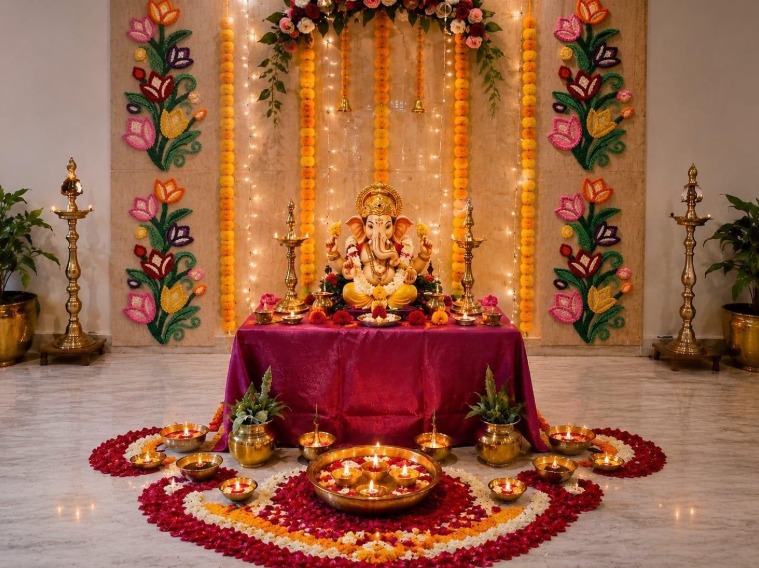
A clean cloth may be placed on the puja platform, and the Ganesha idol or image is arranged respectfully.
Step 2: Light the Diya
A diya is lit before beginning the main worship.
The light traditionally symbolizes auspiciousness and spiritual illumination.
Step 3: Sankalpam
The devotee makes a Sankalpam, expressing the intention behind performing the puja.
The Sankalpam may mention the devotee’s name, family, occasion and devotional purpose.
Step 4: Dhyana
The devotee meditates on Lord Ganesha and focuses the mind on the deity.
This helps establish a peaceful atmosphere before the main ritual begins.
Step 5: Avahanam
Avahanam refers to the invocation of Lord Ganesha.
During an elaborate ritual, specific mantras are recited while respectfully invoking the deity.
Step 6: Pratishthapanam
For a newly installed idol used specifically for a festival or ritual, traditional procedures may include Pratishthapanam.
For an already installed household Ganesha idol, the procedure can differ according to the family’s tradition.
Step 7: Abhishekam
The idol may be ceremonially bathed with water and, depending on the tradition, other substances such as milk, curd, honey or Panchamritam.
The exact Abhishekam procedure depends on the type of puja being performed.
Step 8: Offering Vastra
New or symbolic clothing may be offered to Lord Ganesha.
Red and yellow are commonly associated with auspicious Hindu worship, although the specific practice varies by tradition.
Step 9: Gandham and Kumkum
Sandalwood paste, turmeric and Kumkum may be offered according to the ritual tradition.
Step 10: Flowers and Durva
Flowers and Durva grass are traditionally important offerings in Ganesha worship.
Devotees may offer Durva in small bunches while reciting Ganesha mantras.
Step 11: Dhoopam and Deepam
Incense and a lamp are offered to the deity.
These offerings form part of traditional worship practices.
Step 12: Naivedyam
Food is offered to Lord Ganesha as Naivedyam.
Popular offerings include:
- Modak
- Laddu
- Fruits
- Coconut
- Bananas
- Panchamritam
- Traditional sweets
Modak is particularly associated with Lord Ganesha and is a popular preparation during Ganesh Chaturthi.
Step 13: Mantra Chanting
Devotees may recite Ganesha mantras during the puja.
One of the commonly known Ganesha mantras is:
Om Gam Ganapataye Namah
The mantra may be chanted according to the family’s devotional practice or under the guidance of a priest.
Step 14: Aarti
The puja concludes with Aarti.
Family members may participate by singing devotional Aarti and offering the lit lamp to Lord Ganesha.
Step 15: Prasadam
The Naivedyam is respectfully distributed as Prasadam after the puja.
Shodashopachara Ganesh Puja
An elaborate Ganesh Puja may follow the Shodashopachara system, meaning sixteen traditional forms of worship.
These can include:
- Avahanam – Invocation
- Asanam – Offering a seat
- Padyam – Offering water for the feet
- Arghyam – Offering water
- Achamaniyam – Offering water for purification
- Snanam – Ceremonial bath
- Vastra – Offering clothing
- Yajnopavita – Offering sacred thread
- Gandha – Sandalwood paste
- Pushpa – Flowers
- Dhoopa – Incense
- Deepa – Lamp
- Naivedya – Food offering
- Tambula – Betel offering
- Aarti – Worship with light
- Namaskara – Salutation
The precise sequence and terminology can vary between traditions.
During Ganesha Chaturthi, Shodashopachara Puja is traditionally performed as an elaborate form of Ganapati worship.
Ganesh Puja Samagri
The Samagri required depends on the type and scale of the puja.
Common items include:
- Lord Ganesha idol or image
- Puja chowki
- Clean cloth
- Kalasha
- Coconut
- Mango leaves
- Water
- Turmeric
- Kumkum
- Sandalwood
- Akshata
- Flowers
- Durva grass
- Incense sticks
- Camphor
- Diya
- Cotton wicks
- Ghee or oil
- Fruits
- Coconut
- Modak
- Laddu
- Naivedyam
- Betel leaves
- Betel nuts
- Panchamritam ingredients
A priest may provide a customized Samagri list for an elaborate ceremony.
Importance of Durva Grass in Ganesh Puja
Durva grass is one of the traditional offerings associated with Lord Ganesha.
Devotees commonly offer bunches of Durva during Ganapati worship.
It is especially prominent during Ganesh Chaturthi and other forms of Ganesh Puja.
The offering of Durva reflects the importance of using traditional natural offerings during Hindu worship.
Importance of Modak in Ganesh Puja
Modak is one of the most recognizable offerings associated with Lord Ganesha.
During Ganesh Chaturthi, devotees prepare different varieties of Modak and offer them as Naivedyam.
Other traditional sweets such as laddus are also offered.
The offering represents devotion and gratitude rather than simply being a festive food.
Ganesh Puja for Students
Students may perform Ganesh Puja before:
- Starting a new academic year
- Beginning examinations
- Pursuing higher education
- Starting a new course
- Important academic milestones
Since Lord Ganesha is traditionally associated with wisdom and learning, students may pray for concentration, clarity and disciplined effort.
Ganesh Puja should be understood as a devotional practice and not as a substitute for preparation and study.
Ganesh Puja for Business and Career
Business owners and professionals may perform Ganesh Puja before beginning important ventures.
It may be performed during:
- Opening a new business
- Starting a new office
- Launching a project
- Beginning a new financial year
- Moving into a commercial space
- Starting a new professional journey
The traditional purpose is to seek auspiciousness and blessings before undertaking the new activity.
Ganesh Puja for Housewarming
Ganesh Puja is often included in Gruhapravesham and other housewarming ceremonies.
Lord Ganesha may be worshipped at the beginning of the ceremony before other rituals are performed.
A housewarming Ganesh Puja can include:
- Ganapati invocation
- Sankalpam
- Kalasha worship
- Ganesha Mantra chanting
- Naivedyam
- Aarti
The detailed ritual depends on the complete Gruhapravesham procedure being followed.
Ganesh Puja Before Marriage
Ganesh Puja may also form part of wedding-related rituals.
Families may worship Lord Ganesha before beginning important marriage ceremonies as a traditional prayer for an auspicious beginning.
Ganapati Puja can therefore be incorporated into:
- Wedding ceremonies
- Engagement ceremonies
- Marriage Muhurtham
- Kalyana Pujas
- Wedding-related Homams
Ganesh Puja During Diwali
Lord Ganesha is commonly worshipped together with Goddess Lakshmi during Diwali.
Lakshmi is traditionally associated with prosperity, while Ganesha is associated with wisdom and auspicious beginnings.
Diwali Ganesha Puja can include:
- Dhyana
- Sankalpam
- Ganesha worship
- Offerings
- Mantra chanting
- Aarti
Traditional Diwali Ganesha Puja can also follow a sixteen-step Shodashopachara procedure.
Ganesh Puja Muhurtham
The appropriate timing depends on the purpose of the puja and the relevant Panchang.
For Ganesha Chaturthi, Madhyahna or midday is traditionally preferred for Ganapati Puja.
For other occasions such as weddings, housewarmings or business openings, the muhurtham may be selected based on the specific ceremony and local Panchang.
Therefore, devotees should check the appropriate local Panchang rather than using one fixed time for every Ganesh Puja.
Traditional Benefits of Ganesh Puja
According to Hindu devotional traditions, Ganesh Puja is associated with prayers for:
- Removal of obstacles
- Wisdom
- Knowledge
- Auspicious beginnings
- Clarity
- Success in undertakings
- Family well-being
- Spiritual growth
- Positive beginnings
These are traditional religious beliefs and devotional intentions, not guaranteed material outcomes.
The practice can also encourage devotees to approach important activities with discipline, prayer and thoughtful preparation.
Ganesh Puja at Home
A simple Ganesh Puja can be performed at home with a clean Ganesha idol or image and basic puja materials.
Families can participate together by:
- Decorating the puja space
- Preparing offerings
- Chanting Ganesha Mantras
- Offering flowers and Durva
- Performing Aarti
- Sharing Prasadam
For larger ceremonies, families may invite a priest to conduct the complete ritual according to their tradition.
Ganesh Puja Through Veda Gayathri
Veda Gayathri helps devotees organize traditional Hindu pujas with appropriate ritual procedures and devotional practices.
Ganesh Puja can be arranged for homes, businesses, educational milestones, housewarming ceremonies, weddings and other auspicious occasions.
With proper preparation and traditional guidance, devotees can observe the ceremony as a meaningful spiritual occasion for the entire family.
Frequently Asked Questions About Ganesh Puja
What is Ganesh Puja?
Ganesh Puja is a Hindu worship ceremony dedicated to Lord Ganesha, traditionally associated with wisdom, auspicious beginnings and the removal of obstacles.
Why is Lord Ganesha worshipped first?
In Hindu traditions, Lord Ganesha is commonly worshipped before beginning other pujas and important ceremonies as a traditional prayer for an auspicious and unobstructed beginning.
What is offered to Lord Ganesha?
Common offerings include Durva grass, flowers, fruits, coconut, Modak, Laddu and other Naivedyam items.
Can Ganesh Puja be performed at home?
Yes. A simple Ganesh Puja can be performed at home. A priest can conduct an elaborate ritual when required.
Which mantra is commonly chanted for Lord Ganesha?
Om Gam Ganapataye Namah is a commonly recited Ganesha mantra.
What is Shodashopachara Ganesh Puja?
Shodashopachara refers to a traditional sixteen-step form of worship. It is used for elaborate Ganesha Puja, particularly during Ganesha Chaturthi.
When is Ganesh Puja performed during Ganesh Chaturthi?
Madhyahna, or midday, is traditionally preferred for Ganesh Chaturthi Puja. The exact local muhurtham varies according to the date and location.
Is Ganesh Puja performed during Diwali?
Yes. Lord Ganesha is commonly worshipped along with Goddess Lakshmi during Diwali.
Conclusion
Ganesh Puja is a meaningful Hindu devotional practice dedicated to Lord Ganesha, who is traditionally worshipped for wisdom, auspicious beginnings and the removal of obstacles. From simple household prayers to elaborate Shodashopachara ceremonies, Ganesh Puja can be performed on many important occasions.
Whether it is performed during Ganesh Chaturthi, Diwali, a housewarming ceremony, wedding, business opening or educational milestone, the puja provides an opportunity for devotees to begin important activities with prayer and gratitude.
Veda Gayathri provides traditional puja services to help families perform Ganesh Puja with appropriate rituals, mantras and devotional practices.