- Introduction to Satyanarayana Swamy Vratham
1.1 Meaning of the Vratham
How to Perform Satyanarayana Swamy Vratham at Home is a sacred Hindu ritual dedicated to Lord Vishnu in the divine form of Satyanarayana Swamy. According to the devotional and spiritual services presented by Veda Gayathri this vratham is performed to seek divine blessings for peace, prosperity, happiness, and fulfillment of wishes. The word “Satya” represents truth, while “Narayana” refers to Lord Vishnu, the protector and preserver of the universe.
This vratham is commonly performed during auspicious occasions such as housewarming ceremonies, weddings, birthdays, business openings, and Pournami days. Devotees perform the ritual with deep faith and devotion to express gratitude to the Lord and pray for a successful and harmonious life. The puja mainly includes Ganapathi Puja, Kalasha Sthapana, Satyanarayana Swamy Puja, and the recitation of the sacred Satyanarayana Katha.
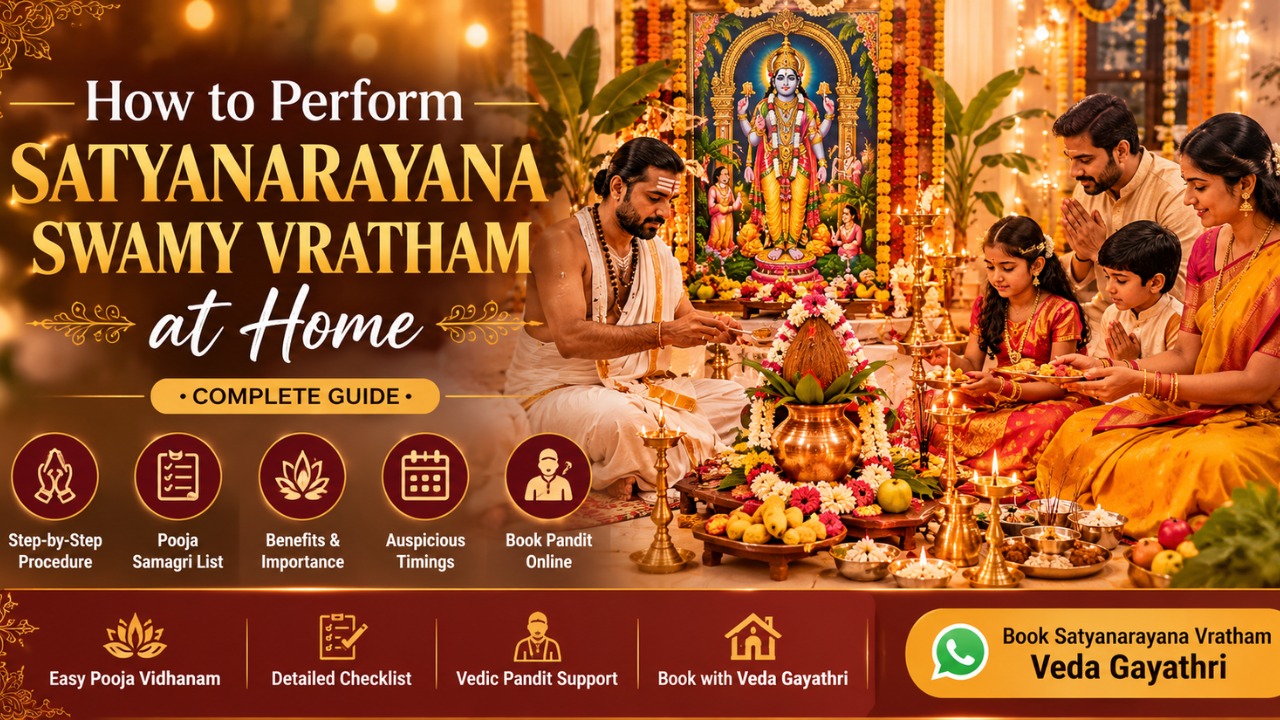
Satyanarayana Vratham is considered one of the most powerful and simple vrathams that can be performed at home with the guidance of experienced priests. The ritual creates a divine and positive atmosphere, helping devotees strengthen their spiritual connection with God and encouraging truthfulness, devotion, and righteousness in daily life.
1.2 Benefits of Performing the Vratham
Performing Satyanarayana Swamy Vratham is believed to bring several spiritual and personal benefits to devotees. As highlighted in devotional puja services similar to those offered by Veda Gayathri, the vratham helps remove obstacles, reduce negative influences, and bring peace and prosperity into one’s life. Devotees believe that sincere worship of Lord Satyanarayana fulfills wishes and attracts divine blessings.
Another important benefit of performing the vratham is family harmony and emotional well-being. The sacred ritual creates positivity at home and strengthens relationships among family members. Many devotees perform this vratham to seek blessings for good health, career success, financial stability, marriage, and overall happiness. The recitation of the Satyanarayana Katha also teaches moral values such as honesty, patience, gratitude, and devotion.
The vratham is also known for bringing spiritual growth and mental peace. By performing the puja with faith and dedication, devotees experience positivity, confidence, and inner satisfaction. Regular observance of Satyanarayana Vratham is believed to protect families from difficulties and bless them with long-lasting prosperity, success, and divine grace.
2. Preparation for Vratham
Preparation for Satyanarayana Swamy Vratham is considered an important part of the sacred ritual. According to the traditional pooja practices followed by Veda Gayathri, devotees prepare both physically and spiritually before performing the vratham. The house, especially the pooja area, is thoroughly cleaned to create a pure and peaceful environment for worship. A clean and devotional atmosphere is believed to attract positive energy and divine blessings from Lord Satyanarayana Swamy.
Devotees usually select an auspicious day such as Pournami (Full Moon Day), Ekadashi, or Thursday to perform the vratham. The pooja mandapam is decorated beautifully with flowers, mango leaves, banana leaves, lamps, and colorful rangoli designs. An idol or photo of Lord Satyanarayana Swamy is placed on a decorated platform along with the Kalasham and other sacred pooja items. Families also wear traditional attire and maintain devotion and discipline throughout the ritual.
Before beginning the vratham, all necessary pooja materials are arranged properly to ensure the ceremony is performed smoothly. Important items include turmeric, kumkum, flowers, fruits, coconuts, betel leaves, milk, ghee, jaggery, and prasadam ingredients. Preparing everything in advance helps devotees focus fully on prayers, chanting, and listening to the Satyanarayana Katha with faith and devotion.
2.1 Choosing an Auspicious Day
According to the spiritual practices and pooja traditions followed by Veda Gayathri, Satyanarayana Swamy Vratham is usually performed on highly auspicious days to receive maximum divine blessings from Lord Satyanarayana Swamy. Many devotees prefer performing the vratham on Pournami (Full Moon Day), Ekadashi, Thursdays, and other spiritually important occasions. These days are considered sacred for worshipping Lord Vishnu and are believed to bring peace, prosperity, and positivity into the home.
The vratham is also commonly performed during special family occasions such as housewarming ceremonies, marriages, birthdays, naming ceremonies, anniversaries, and business openings. Devotees believe that performing the puja on an auspicious day with complete devotion helps remove obstacles and fulfills sincere wishes. Priests generally suggest selecting a suitable muhurtam (auspicious timing) before conducting the vratham.
Many families choose evening hours for the pooja, especially during Pournami, as it is considered highly favorable for Satyanarayana Swamy worship. With proper guidance from experienced Vedic priests, devotees can perform the vratham peacefully at home while maintaining traditional rituals and spiritual discipline.
2.2 Cleaning and Decoration
Preparation for Satyanarayana Swamy Vratham begins with cleaning the entire house, especially the pooja area, to create a pure and positive environment for worship. As followed in traditional pooja methods similar to those practiced by Veda Gayathri, devotees believe that cleanliness represents purity and respect toward the divine presence of Lord Satyanarayana Swamy.
After cleaning, the pooja area is beautifully decorated with flowers, mango leaves, banana leaves, and colorful rangoli designs at the entrance and near the pooja mandapam. A clean wooden plank or platform is arranged for placing the idol or photo of Lord Satyanarayana Swamy along with the Kalasham. Oil lamps and incense sticks are also prepared to create a peaceful and devotional atmosphere during the ritual.
The decoration symbolizes joy, devotion, and welcoming divine blessings into the home. Fresh flowers and traditional decorations add spiritual positivity and enhance the sacred feeling of the vratham. Families usually wear traditional attire and maintain a calm and devotional atmosphere throughout the puja.
2.3 Required Items
For performing Satyanarayana Swamy Vratham, devotees arrange all pooja materials in advance to ensure the ritual is conducted smoothly and traditionally. Based on pooja practices followed by Veda Gayathri, the essential items include an idol or photo of Lord Satyanarayana Swamy, turmeric, kumkum, sandalwood paste, flowers, fruits, betel leaves, betel nuts, coconuts, incense sticks, camphor, and oil lamps.
Other important materials used in the vratham include banana leaves, rice, milk, curd, honey, ghee, jaggery, and sacred Kalasha items. Devotees also prepare prasadam ingredients such as sooji/rava, sugar or jaggery, banana pieces, dry fruits, cardamom, and ghee for making the traditional Satyanarayana Swamy prasadam (sheera/halwa). Fresh flowers and garlands are used to decorate the deity and pooja setup.
All pooja items are arranged neatly before the start of the ritual to maintain discipline and devotion during the vratham. Having all required materials prepared in advance helps devotees perform the puja peacefully and focus completely on prayers, chanting, and seeking the blessings of Lord Satyanarayana Swamy.
3. Setting Up the Pooja Place
Setting up the pooja place is an important step in performing Satyanarayana Swamy Vratham. According to the traditional pooja practices followed by Veda Gayathri, devotees prepare a clean and peaceful area in the house to create a sacred atmosphere for worship. The pooja place is usually decorated with flowers, mango leaves, banana leaves, rangoli designs, and traditional lamps to invite divine positivity and blessings into the home.
A decorated altar or wooden plank is arranged for placing the photo or idol of Lord Satyanarayana Swamy. Along with the deity, the Kalasham is placed using a pot filled with water, mango leaves, and a coconut on top, symbolizing prosperity and divine presence. Important pooja materials such as flowers, fruits, turmeric, kumkum, coconuts, incense sticks, and prasadam are arranged neatly before beginning the ritual.
The pooja begins by lighting the diya and incense sticks, which symbolize the removal of darkness and the arrival of divine light and positivity. Devotees maintain cleanliness, devotion, and a peaceful atmosphere throughout the setup and the vratham. A properly arranged pooja place helps devotees perform the Satyanarayana Swamy Vratham with complete concentration, faith, and spiritual connection.
3.1 Placing the Deity
According to the traditional pooja methods followed by Veda Gayathri, the pooja place should be arranged neatly and spiritually before beginning the Satyanarayana Swamy Vratham. A clean wooden plank or decorated altar is placed in the pooja area, and the photo or idol of Lord Satyanarayana Swamy is positioned at the center. The deity is usually decorated with fresh flowers, garlands, turmeric, kumkum, and sandalwood paste to create a divine atmosphere.
Devotees arrange the pooja setup facing east or north, which is considered auspicious in Hindu traditions. Banana leaves, mango leaf torans, flowers, and rangoli designs are also used around the altar to enhance the sacred environment. The setup symbolizes welcoming the divine presence of Lord Satyanarayana Swamy into the home.
Families maintain cleanliness and devotion while arranging the deity and pooja items. A peaceful and positive atmosphere during the setup is believed to help devotees focus fully on prayers and receive divine blessings for prosperity, happiness, and spiritual well-being.
3.2 Kalash Setup
The Kalasham is one of the most important parts of Satyanarayana Swamy Vratham. As practiced in traditional rituals similar to those guided by Veda Gayathri, a silver, copper, or brass pot is filled with clean water and decorated with turmeric and kumkum. Mango leaves are placed around the opening of the kalash, and a coconut is placed on top, symbolizing purity, prosperity, and divine energy.
The Kalasham is usually placed near the deity on a plate filled with rice. Some devotees also tie a sacred thread around the kalash as part of the ritual. The kalash represents the presence of divine powers and is worshipped during the vratham with devotion and respect.
Setting up the Kalasham properly is considered highly auspicious and spiritually significant. It symbolizes abundance, positivity, and blessings from Lord Satyanarayana Swamy. Devotees offer flowers, fruits, and prayers to the kalash during the puja while chanting sacred mantras.
3.3 Lighting the Lamp
Lighting the diya or oil lamp marks the beginning of the Satyanarayana Swamy Vratham and is considered a symbol of removing darkness and inviting divine light into the home. According to the devotional practices followed by Veda Gayathri, devotees light traditional oil lamps and incense sticks before starting the pooja rituals and chanting.
The flame of the diya represents positivity, knowledge, purity, and the presence of divine energy. Incense sticks are also lit to spread fragrance and create a calm, peaceful, and spiritual atmosphere during the vratham. Families pray sincerely while lighting the lamp and seek blessings for peace, prosperity, and protection from negativity.
Maintaining the sacred flame throughout the pooja is considered auspicious. The divine atmosphere created by the lamp and incense helps devotees perform the vratham with concentration, devotion, and spiritual connection to Lord Satyanarayana Swamy.
4. Sankalpam (Taking the Vow)
Sankalpam is a sacred vow taken before beginning the Satyanarayana Swamy Vratham. According to the traditional pooja procedures followed by Veda Gayathri, devotees perform Sankalpam to express their intention and purpose for conducting the vratham. During this ritual, the devotee mentions their name, family details, date, and the reason for performing the pooja while praying sincerely to Lord Satyanarayana Swamy for blessings, peace, prosperity, and fulfillment of wishes.
The Sankalpam is usually performed by holding water, flowers, and rice in the hand while the priest chants sacred mantras. Devotees may perform the vratham for various reasons such as family well-being, marriage, health, career success, financial stability, housewarming ceremonies, or spiritual growth. Taking the vow with complete faith and devotion is believed to make the pooja spiritually meaningful and powerful.
Family participation is also considered important during the Sankalpam and the entire vratham. All family members sit together, listen to the mantras, and mentally participate in the pooja with devotion and positive thoughts. This collective prayer creates a peaceful and divine atmosphere at home, strengthens family unity, and helps devotees receive the blessings and grace of Lord Satyanarayana Swamy.
- Sankalpam (Taking the Vow)
4.1 Purpose Declaration
Sankalpam is one of the most important steps in Satyanarayana Swamy Vratham, where devotees formally take a sacred vow before beginning the pooja. According to the traditional rituals followed by Veda Gayathri, the devotee states their name, family details, date, and the purpose of performing the vratham while praying sincerely to Lord Satyanarayana Swamy. The sankalpam is performed with devotion and faith to seek divine blessings for peace, prosperity, health, success, and fulfillment of wishes.
Devotees may perform the vratham for various reasons such as housewarming ceremonies, marriage, career growth, business success, recovery from health issues, family harmony, or gratitude for blessings received. By taking the sankalpam, devotees mentally dedicate themselves to performing the vratham with sincerity, discipline, and devotion. This sacred vow strengthens spiritual connection and prepares the mind for the rituals and prayers that follow.
The sankalpam is usually recited under the guidance of a priest while holding water, flowers, and rice in hand. It symbolizes commitment, devotion, and complete surrender to the divine blessings of Lord Satyanarayana Swamy. This step is believed to make the pooja spiritually meaningful and powerful.
4.2 Family Participation
Family participation is considered an important aspect of Satyanarayana Swamy Vratham. As practiced in devotional rituals similar to those guided by Veda Gayathri, all family members sit together during the pooja and participate with devotion and positive thoughts. The vratham is usually performed collectively to seek blessings for the well-being, happiness, and prosperity of the entire family.
During the pooja, family members join in chanting mantras, offering flowers, listening to the Satyanarayana Katha, and praying sincerely to Lord Satyanarayana Swamy. Participating together creates spiritual unity and strengthens emotional bonds among family members. Children and elders are also encouraged to take part in the ritual to maintain traditional values and devotion within the household.
The collective prayers and devotional atmosphere during the vratham are believed to bring peace, positivity, and harmony into the home. Family participation also makes the ritual more spiritually fulfilling and helps devotees experience divine grace together with faith and gratitude.
5. Main Pooja Procedure
The main pooja procedure of Satyanarayana Swamy Vratham is performed with devotion, discipline, and traditional Vedic rituals. According to the pooja practices followed by Veda Gayathri, the ritual begins with Ganapathi Pooja to seek the blessings of Lord Ganesha for the successful completion of the vratham without obstacles. Devotees offer flowers, fruits, turmeric, kumkum, and prayers while chanting sacred mantras to create a positive and spiritual atmosphere.
After Ganapathi Pooja, Lord Satyanarayana Swamy is invoked into the pooja through sacred chants, Vishnu mantras, and devotional prayers. The deity is decorated with flowers, garlands, sandalwood paste, and kumkum while devotees perform archana and offer prayers with complete faith and sincerity. The chanting of mantras and worship of Lord Satyanarayana Swamy are believed to bring peace, prosperity, protection, and fulfillment of wishes.
The pooja continues with the offering of Upacharas such as flowers, fruits, milk, coconuts, sweets, betel leaves, incense sticks, and naivedyam. Special prasadam like sheera or halwa prepared with ghee, sugar or jaggery, and banana is offered to the deity. Devotees also perform harathi and listen to the sacred Satyanarayana Katha during the ritual. The entire pooja procedure creates a divine atmosphere and helps devotees receive the blessings, positivity, and grace of Lord Satyanarayana Swamy.
5.1 Ganapathi Pooja
The main pooja procedure of Satyanarayana Swamy Vratham begins with Ganapathi Pooja. According to the traditional rituals followed by Veda Gayathri, devotees first worship Lord Ganesha to remove obstacles and ensure the smooth completion of the vratham. Lord Ganesha is considered the remover of difficulties and the giver of wisdom, success, and positivity.
During the Ganapathi Pooja, devotees offer turmeric, kumkum, flowers, fruits, and prayers while chanting sacred mantras. A small idol or image of Lord Ganesha is placed near the pooja setup and worshipped with devotion. This ritual is performed to seek blessings for a peaceful and successful pooja without interruptions or negative influences.
Performing Ganapathi Pooja at the beginning of the vratham creates a spiritually positive atmosphere and prepares devotees mentally for the sacred rituals that follow. It is considered an essential part of almost every Hindu pooja and homam.
5.2 Invocation of Lord Satyanarayana
After completing Ganapathi Pooja, devotees perform the invocation of Lord Satyanarayana Swamy. As practiced in traditional pooja methods similar to those guided by Veda Gayathri, sacred mantras and prayers are chanted to invite the divine presence of Lord Satyanarayana into the pooja. The deity is worshipped with complete faith and devotion to seek blessings for peace, prosperity, and fulfillment of wishes.
The idol or photo of Lord Satyanarayana Swamy is decorated with flowers, garlands, sandalwood paste, turmeric, and kumkum. Devotees chant Vishnu mantras and perform archana while offering flowers and prayers to the Lord. The chanting of sacred names and mantras creates a divine and spiritual atmosphere during the vratham.
The invocation ritual symbolizes welcoming Lord Satyanarayana Swamy into the home and seeking his divine grace. Devotees believe that sincere prayers during this step help remove negativity and bring happiness, protection, and spiritual positivity into life.
5.3 Offerings (Upacharas)
Offerings, also known as Upacharas, are an important part of Satyanarayana Swamy Vratham. According to the devotional pooja traditions followed by Veda Gayathri, devotees offer flowers, fruits, milk, sweets, coconuts, betel leaves, incense, and naivedyam to Lord Satyanarayana Swamy with devotion and gratitude.
Special prasadam such as sheera, rava kesari, or halwa prepared with ghee, sugar or jaggery, banana pieces, and dry fruits is offered to the deity during the pooja. Devotees also perform harathi and offer sacred items like sandalwood paste, turmeric, kumkum, and lamps while chanting prayers and mantras.
These offerings symbolize devotion, respect, gratitude, and surrender to the divine blessings of Lord Satyanarayana Swamy. Devotees believe that offering naivedyam and prayers with a pure heart brings prosperity, family harmony, success, and spiritual well-being.
6. Satyanarayana Katha (Story)
The Satyanarayana Katha is one of the most sacred and important parts of Satyanarayana Swamy Vratham. According to the devotional pooja traditions followed by Veda Gayathri, devotees read or listen to the Satyanarayana Katha after completing the main pooja and offerings. The katha consists of five chapters that explain the greatness of Lord Satyanarayana Swamy and the spiritual benefits received by devotees who perform the vratham with sincerity and devotion.
The sacred story describes how people from different walks of life were blessed with peace, prosperity, success, happiness, and protection after worshipping Lord Satyanarayana Swamy. It also teaches important moral values such as truthfulness, faith, gratitude, patience, and devotion toward God. The stories explain that devotees who fulfill their vows and perform the vratham with a pure heart receive divine blessings, while neglecting promises or disrespecting the vratham may lead to difficulties and obstacles.
During the pooja, family members sit together and listen carefully to the Satyanarayana Katha with devotion and concentration. The recitation creates a spiritual and positive atmosphere within the home and strengthens faith in Lord Satyanarayana Swamy. Devotees believe that listening to the sacred story removes negativity, fulfills sincere wishes, and brings long-lasting peace, prosperity, happiness, and divine grace into their lives.
6. Satyanarayana Katha (Story)
6.1 Listening to the Sacred Story
One of the most important parts of Satyanarayana Swamy Vratham is listening to or reading the sacred Satyanarayana Katha. According to the traditional pooja methods followed by Veda Gayathri, the katha is usually recited after the main pooja and offerings are completed. The story consists of five chapters that describe the greatness of Lord Satyanarayana Swamy and the spiritual benefits of performing the vratham with sincerity and devotion.
During the pooja, devotees and family members sit together and listen carefully to the katha with faith and concentration. The recitation explains how devotees from different backgrounds received blessings, prosperity, peace, and protection after performing the vratham. It also teaches the importance of truth, devotion, gratitude, and fulfilling promises made to the Lord.
Listening to the Satyanarayana Katha is believed to purify the mind and create positive spiritual energy in the home. Devotees believe that hearing the sacred story with devotion removes negativity, fulfills wishes, and brings divine blessings, happiness, and prosperity into life.
6.2 Importance of Each Chapter
Each chapter of the Satyanarayana Katha carries a spiritual message and teaches important moral values. As practiced in devotional traditions similar to those guided by Veda Gayathri, the stories mainly highlight devotion to Lord Satyanarayana Swamy, the importance of truthfulness, and the blessings received through sincere worship.
The chapters describe how devotees who performed the vratham with faith were blessed with success, peace, wealth, and happiness. At the same time, the stories also explain the difficulties faced by those who neglected their vows, forgot their promises, or disrespected the vratham. Through these examples, the katha teaches devotees the value of honesty, gratitude, discipline, and devotion in daily life.
The spiritual lessons in each chapter make the Satyanarayana Katha an essential part of the vratham. Listening to the complete story with devotion is believed to strengthen faith, increase positivity, and help devotees receive the divine grace and protection of Lord Satyanarayana Swamy.
7. Aarti and Prasadam Distribution
Aarti and prasadam distribution are the concluding parts of Satyanarayana Swamy Vratham and hold great spiritual importance. According to the traditional pooja methods followed by Veda Gayathri, devotees perform aarti after completing the main pooja, offerings, and Satyanarayana Katha. During the aarti, camphor or oil lamps are lit and waved before Lord Satyanarayana Swamy while chanting devotional songs, slokas, and prayers with faith and gratitude.
The aarti symbolizes the removal of negativity and the arrival of divine light, positivity, and blessings into the home. Family members gather together during this ritual and pray sincerely for peace, prosperity, health, happiness, and protection. The spiritual atmosphere created during the aarti strengthens devotion and creates a sense of unity and positivity among all participants.
After the aarti, prasadam is offered and distributed to family members, relatives, and guests. The prasadam usually includes sacred sweet dishes such as sheera, rava kesari, or halwa prepared with ghee, sugar or jaggery, banana pieces, and dry fruits. Sharing prasadam is considered highly auspicious because it symbolizes sharing the divine blessings of Lord Satyanarayana Swamy. Devotees believe that consuming prasadam with devotion brings peace, positivity, spiritual satisfaction, and divine grace into life.
7. Aarti and Prasadam Distribution
7.1 Performing Aarti
Aarti is one of the final and most devotional parts of Satyanarayana Swamy Vratham. According to the traditional pooja practices followed by Veda Gayathri, devotees perform aarti after completing the pooja, offerings, and Satyanarayana Katha. During the ritual, camphor or oil lamps are lit and waved before Lord Satyanarayana Swamy while chanting prayers and singing devotional songs.
Family members gather together during the aarti and pray with devotion and gratitude to seek divine blessings for peace, prosperity, protection, and happiness. The light of the aarti symbolizes the removal of darkness, negativity, and ignorance while inviting divine positivity and spiritual energy into the home. The devotional atmosphere created during the aarti strengthens faith and spiritual connection with Lord Satyanarayana Swamy.
The aarti is usually accompanied by ringing bells, chanting Vishnu slokas, and offering flowers to the deity. Devotees believe that sincerely participating in the aarti brings mental peace, positivity, and divine grace to the entire family.
7.2 Sharing Prasadam
After the completion of the pooja and aarti, prasadam is distributed to all family members, relatives, friends, and guests present during the vratham. As practiced in devotional traditions similar to those guided by Veda Gayathri, the prasadam usually includes a sacred sweet dish such as sheera, rava kesari, or halwa prepared with ghee, sugar or jaggery, banana pieces, and dry fruits.
Sharing prasadam is considered an important part of Satyanarayana Swamy Vratham because it symbolizes receiving and sharing the blessings of Lord Satyanarayana Swamy. Devotees distribute the prasadam with devotion, gratitude, and happiness after offering it to the deity as naivedyam during the pooja.
Consuming prasadam is believed to bring spiritual purity, positivity, and divine blessings. The act of sharing prasadam also promotes unity, kindness, and togetherness among family members and guests, making the vratham spiritually fulfilling and joyful for everyone present.
8. Vratham Completion
The completion of Satyanarayana Swamy Vratham is marked with final prayers, gratitude, and seeking the divine blessings of Lord Satyanarayana Swamy. According to the traditional pooja practices followed by Veda Gayathri, devotees conclude the vratham after completing the pooja, Satyanarayana Katha, aarti, and prasadam distribution. Family members pray sincerely for peace, prosperity, good health, happiness, success, and fulfillment of wishes while thanking the Lord for his divine grace and protection.
After the final prayers, devotees take blessings from the deity and elders present during the pooja. The completion of the vratham symbolizes spiritual satisfaction, positivity, and devotion toward Lord Satyanarayana Swamy. Many families believe that performing the vratham with faith and sincerity removes obstacles, brings harmony into the home, and blesses them with long-lasting prosperity and well-being.
As part of the vratham completion, serving food and prasadam to guests, relatives, priests, and needy people is considered highly auspicious. Sharing food and performing charity symbolize kindness, gratitude, and compassion. Devotees believe that helping others after the vratham increases spiritual merit and brings divine blessings, peace, and positivity into their lives and homes.
8. Vratham Completion
8.1 Seeking Blessings
The completion of Satyanarayana Swamy Vratham is marked by offering final prayers and seeking the divine blessings of Lord Satyanarayana Swamy. According to the traditional pooja practices followed by Veda Gayathri, devotees pray sincerely for peace, prosperity, good health, family happiness, career success, and fulfillment of wishes. After completing the pooja, katha, and aarti, devotees express gratitude to the Lord for his divine grace and protection.
Family members pray together with devotion and faith, asking for blessings to remove obstacles and bring positivity into their lives. Many devotees also seek spiritual strength, mental peace, and harmony within the family. The completion prayers symbolize surrender, gratitude, and trust in the blessings of Lord Satyanarayana Swamy.
Devotees believe that performing the vratham with sincerity and devotion brings long-lasting prosperity, protection, and spiritual well-being. The final prayers create a peaceful and divine atmosphere and leave devotees with a sense of satisfaction, positivity, and inner happiness.
8.2 Feeding Guests / Charity
Feeding guests and performing charity are considered highly auspicious after completing the Satyanarayana Swamy Vratham. As practiced in devotional traditions similar to those guided by Veda Gayathri, devotees serve food and prasadam to family members, relatives, friends, priests, and guests who attend the pooja. Sharing food is believed to spread divine blessings, happiness, and positivity among everyone present.
Many devotees also donate food, clothes, or essentials to needy people as part of the vratham completion. Charity and helping others are considered acts of kindness and gratitude that please Lord Satyanarayana Swamy. These acts symbolize compassion, generosity, and the importance of sharing blessings with society.
Serving guests and helping the needy after the vratham is believed to increase spiritual merit and bring divine grace, prosperity, and peace into the home. It also reflects the values of devotion, humility, and gratitude taught through the sacred Satyanarayana Vratham.
9. Important Tips
While performing Satyanarayana Swamy Vratham, maintaining cleanliness, devotion, and discipline is considered highly important. According to the traditional pooja methods followed by Veda Gayathri, devotees should clean the house and pooja area thoroughly before starting the ritual. Wearing clean traditional clothes and arranging all pooja materials properly help create a sacred and peaceful atmosphere for worship. Devotees are encouraged to perform the vratham with complete faith, concentration, and positive thoughts to receive the divine blessings of Lord Satyanarayana Swamy.
During the pooja, devotees should maintain purity in thoughts, words, and actions while chanting mantras, listening to the Satyanarayana Katha, and offering prayers. A calm and devotional mindset helps strengthen spiritual connection and makes the vratham more meaningful and spiritually fulfilling. Families are also encouraged to participate together with sincerity and discipline throughout the ritual.
It is important to avoid interruptions and distractions during the vratham. Maintaining silence and a peaceful environment during mantra chanting, pooja procedures, and katha recitation helps preserve the spiritual energy of the ceremony. Devotees believe that performing the vratham without disturbances and with full devotion brings peace, positivity, prosperity, fulfillment of wishes, and the divine grace of Lord Satyanarayana Swamy.
9. Important Tips
9.1 Maintain Cleanliness and Devotion
Maintaining cleanliness and devotion is considered very important while performing Satyanarayana Swamy Vratham. According to the traditional pooja practices followed by Veda Gayathri, devotees should keep the house and pooja area clean and pure before beginning the ritual. Wearing clean traditional clothes and arranging the pooja materials properly help create a peaceful and spiritual atmosphere during the vratham.
Devotees are encouraged to perform the pooja with complete faith, concentration, and sincerity. Chanting mantras, listening to the Satyanarayana Katha, and offering prayers with devotion are believed to increase the spiritual significance of the vratham. Maintaining positive thoughts and a calm mindset during the ritual helps devotees connect spiritually with Lord Satyanarayana Swamy.
Purity in thoughts, words, and actions during the vratham is considered highly auspicious. A devotional atmosphere filled with faith and discipline is believed to attract divine blessings, positivity, peace, and prosperity into the home.
9.2 Avoid Interruptions
Performing Satyanarayana Swamy Vratham peacefully without interruptions is an important part of the ritual. As practiced in devotional traditions similar to those guided by Veda Gayathri, devotees should complete the pooja in a calm and focused environment to maintain spiritual energy and concentration throughout the ceremony.
Family members are encouraged to avoid unnecessary distractions, conversations, or disturbances during the pooja, mantra chanting, and Satyanarayana Katha recitation. Keeping mobile phones aside and maintaining silence whenever possible helps create a more devotional and sacred atmosphere. Devotees believe that performing the vratham with full attention and discipline increases the effectiveness and spiritual benefits of the ritual.
A peaceful environment during the vratham allows devotees to pray sincerely and experience mental peace, positivity, and spiritual satisfaction. Completing the pooja without interruptions is believed to help devotees receive the complete blessings and divine grace of Lord Satyanarayana Swamy.
10.How Does Veda Gayathri Perform Satyanarayana Swamy Vratham?
Veda Gayathri performs Satyanarayana Swamy Vratham with traditional Vedic procedures under the guidance of experienced and knowledgeable priests. The pooja is conducted with complete devotion, discipline, and proper chanting of sacred mantras to ensure a spiritually peaceful and divine experience for devotees. The priests follow authentic Hindu rituals and help families perform the vratham smoothly at homes, apartments, offices, or function halls according to traditional customs and spiritual practices.
The process usually begins with selecting an auspicious date and muhurtam suitable for the family. Veda Gayathri pandits guide devotees regarding the required pooja materials and preparation of the pooja area. On the day of the vratham, the priests perform Ganapathi Pooja first to remove obstacles and create a positive spiritual atmosphere. This is followed by Kalasha Sthapana, Sankalpam, and the invocation of Lord Satyanarayana Swamy through sacred Vedic chanting and devotional prayers. The deity is worshipped with flowers, fruits, turmeric, kumkum, coconuts, milk, sweets, and traditional naivedyam offerings.
One of the most important parts of the pooja conducted by Veda Gayathri pandits is the recitation of the sacred Satyanarayana Katha. The priests explain the significance of the five chapters while devotees and family members participate with devotion and faith. The katha teaches spiritual values such as truthfulness, gratitude, devotion, and fulfilling promises made to God. After the katha, the pandits perform aarti, mantra chanting, and final prayers for peace, prosperity, good health, family harmony, career growth, and fulfillment of wishes.
Veda Gayathri also focuses on maintaining traditional Vedic standards, cleanliness, punctuality, and devotional atmosphere during the vratham. The experienced priests guide devotees throughout the ritual so that every step is performed correctly and peacefully. Family members are encouraged to participate actively by chanting prayers, offering flowers, and receiving blessings together. The pooja concludes with prasadam distribution and blessings from the pandits for happiness, positivity, success, and spiritual well-being.
Apart from performing the pooja, Veda Gayathri also helps devotees understand the spiritual importance of Satyanarayana Swamy Vratham and its benefits. Their services are aimed at helping families perform the vratham traditionally and conveniently while experiencing divine grace, positivity, peace, and prosperity through the blessings of Lord Satyanarayana Swamy.
11.Conclusion – How to Perform Satyanarayana Swamy Vratham
Satyanarayana Swamy Vratham is one of the most sacred and widely performed Hindu rituals dedicated to Lord Vishnu in the form of Satyanarayana Swamy. According to the traditional pooja methods followed by Veda Gayathri, the vratham is performed with devotion, discipline, and sincerity to seek divine blessings for peace, prosperity, happiness, health, and fulfillment of wishes. This sacred ritual is usually conducted on auspicious days such as Pournami, Ekadashi, and Thursdays, as well as during important family occasions like housewarming ceremonies, marriages, birthdays, and business openings.
To understand how to perform Satyanarayana Swamy Vratham, devotees first prepare the house and pooja area by cleaning and decorating it with flowers, rangoli, mango leaves, and lamps. A photo or idol of Lord Satyanarayana Swamy is placed on a decorated altar along with the Kalasham filled with water, mango leaves, and a coconut. The vratham begins with Ganapathi Pooja to remove obstacles, followed by Sankalpam, where devotees take a sacred vow stating the purpose of performing the vratham. Sacred mantras and prayers are then chanted to invoke Lord Satyanarayana Swamy into the pooja.
The main pooja includes offering flowers, fruits, milk, sweets, coconuts, and naivedyam to the deity with devotion. One of the most important parts of how to perform Satyanarayana Swamy Vratham is listening to or reading the Satyanarayana Katha, which consists of five chapters explaining the greatness of the vratham and the importance of truth, faith, gratitude, and devotion. After the katha, devotees perform aarti with camphor and devotional songs and then distribute prasadam to family members, relatives, and guests.
The vratham concludes with final prayers seeking blessings for prosperity, family harmony, spiritual growth, and success in life. Feeding guests and helping needy people are also considered auspicious acts after completing the vratham. Overall, understanding how to perform Satyanarayana Swamy Vratham helps devotees conduct the ritual with proper devotion and traditional practices. Performing the vratham sincerely is believed to remove obstacles, bring positivity and peace, fulfill wishes, and bless devotees with the divine grace and protection of Lord Satyanarayana Swamy.