Introduction
Marriage holds a special place in Hindu tradition, and many families consider horoscope matching and traditional rituals before finalizing a marriage. Kuja Dosha, also commonly known as Manglik Dosha or Mangal Dosha, is one of the astrological factors that some families consider while examining marriage compatibility.
According to traditional Vedic astrology, Kuja Dosha is associated with the placement of Mars (Mangala) in particular houses of a person’s birth chart. When an astrologer identifies Kuja Dosha, families may choose to perform traditional remedies such as Kuja Dosha Puja, Manglik Dosha Puja, or related prayers.
At Veda Gayathri, traditional Hindu poojas and Vedic rituals can be arranged according to family customs and the guidance of qualified priests. Kuja Dosha Puja may be performed as a devotional and traditional remedy when recommended after horoscope consultation.
This comprehensive guide explains what Kuja Dosha is, why Manglik Dosha Puja is performed, its traditional significance, procedure, pooja items, suitable timings, and frequently asked questions.
What Is Kuja Dosha?
Kuja Dosha is a concept found in traditional Vedic astrology that relates to the position of Mars in a person’s birth chart.
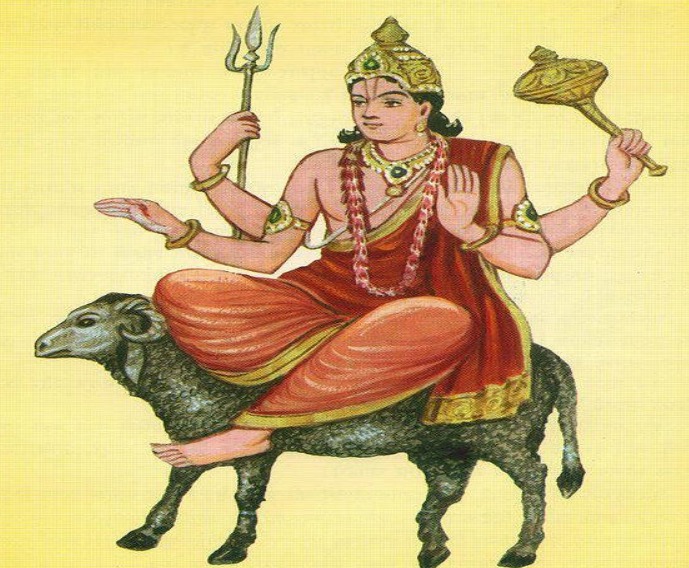
Mars is known as Kuja, Mangala, or Angaraka in Sanskrit traditions.
Depending on the astrological system being followed, Mars occupying certain houses of the birth chart may be considered an indication of Kuja Dosha.
The houses commonly discussed in connection with Kuja Dosha include:
- 1st house
- 4th house
- 7th house
- 8th house
- 12th house
However, different schools of astrology may use different rules, exceptions, and cancellation conditions when determining whether Kuja Dosha applies.
Therefore, simply seeing Mars in one of these houses is not sufficient to make a complete assessment without examining the entire horoscope.
What Is Manglik Dosha?
Manglik Dosha is another commonly used name for Kuja Dosha or Mangal Dosha.
The terms are generally used to describe an astrological condition associated with certain placements of Mars.
A person whose horoscope is traditionally considered to have this condition may be referred to as a Manglik.
The interpretation of Manglik Dosha varies among astrologers. Some consider additional planetary placements, aspects, signs, house lords, and cancellation conditions before determining its significance.
For this reason, horoscope analysis should be performed using the complete birth chart rather than relying on a single planetary position.
Why Is Kuja Dosha Associated With Marriage?
Mars is traditionally associated with qualities such as:
- Energy
- Courage
- Assertiveness
- Passion
- Determination
- Strength
In traditional Vedic astrology, Mars’s placement is therefore considered when examining certain aspects of marriage and relationships.
The 7th house, in particular, has an important association with marriage and partnerships in Vedic astrology. Other houses are also considered when evaluating Kuja Dosha according to different astrological traditions.
Some astrologers believe that particular Mars placements may create challenges related to marital harmony or compatibility.
These are traditional astrological interpretations and beliefs, not scientifically established conclusions.
What Is Kuja Dosha Puja?
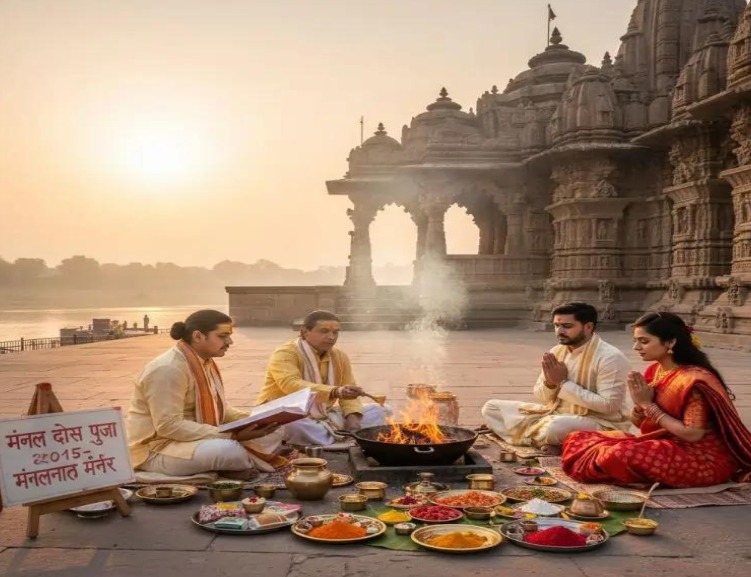
Kuja Dosha Puja is a traditional Hindu ritual performed as a remedial religious practice when Kuja Dosha is identified through astrological consultation.
The ceremony involves prayers to Lord Mars and other deities according to the specific ritual tradition.
The purpose of the puja is traditionally described as seeking:
- Peace
- Auspiciousness
- Divine blessings
- Harmony
- Protection from obstacles
- A positive beginning to marriage
The exact procedure varies depending on the priest, family tradition, regional customs, and specific astrological recommendation.
Significance of Manglik Dosha Puja
Manglik Dosha Puja has significance for families who follow traditional Vedic astrology and wish to perform a religious remedy after identifying Kuja Dosha.
The ritual provides an opportunity for the individual or couple to participate in prayers before marriage.
Rather than viewing the ceremony only as a remedy, families may also regard it as a spiritual preparation for an important stage of life.
The ceremony can encourage the couple and their families to approach marriage with:
- Faith
- Commitment
- Patience
- Mutual respect
- Understanding
- Positive intentions
Kuja Dosha and Horoscope Matching
Horoscope matching is a traditional practice followed by many Hindu families before marriage.
When evaluating compatibility, an astrologer may examine various aspects of the bride’s and groom’s horoscopes.
These may include:
- Rashi
- Nakshatra
- Guna matching
- Nadi
- Bhakoot
- Graha Maitri
- Gana
- Yoni
- Planetary positions
- Mangal or Kuja Dosha
- Dasha periods
Kuja Dosha is therefore only one factor among several that may be considered in traditional horoscope matching.
A complete horoscope assessment is preferable to making a marriage decision based solely on the presence or absence of Kuja Dosha.
How Is Kuja Dosha Determined?
In traditional Vedic astrology, Kuja Dosha is usually assessed based on the position of Mars in the birth chart.
Many commonly used systems examine Mars from:
- Ascendant or Lagna
- Moon
- Venus
However, the exact rules vary among astrological traditions.
Astrologers may also examine:
- Mars’s sign
- Planetary aspects
- House ownership
- Strength of Mars
- Beneficial planetary influences
- Jupiter’s influence
- Venus’s position
- Cancellation conditions
- The complete birth chart
Because different schools follow different calculation methods, two astrologers may sometimes interpret the same chart differently.
Kuja Dosha Cancellation or Exceptions
Traditional astrology contains several conditions under which Kuja Dosha may be considered reduced, cancelled, or modified.
These can depend on factors such as:
- The sign occupied by Mars
- Mars’s relationship with the sign lord
- Beneficial planetary aspects
- Jupiter’s influence
- Placement of other planets
- Similar Kuja Dosha in both horoscopes
- Specific house combinations
The rules are complex and differ between astrological traditions.
Therefore, families should not assume that Kuja Dosha automatically means that a marriage will face problems.
A qualified astrologer can explain the complete horoscope and any applicable cancellation or mitigating factors.
Is Kuja Dosha the Same for Everyone?
No.
The interpretation depends on the individual’s complete birth chart.
Two people may both have Mars in a particular house but have different overall horoscope configurations.
The strength of Mars, aspects from other planets, sign placement, house ownership, and other factors can affect how an astrologer interprets the chart.
This is why personalized horoscope analysis is traditionally recommended.
Kuja Dosha Puja Procedure
The exact procedure can differ depending on the family’s tradition and the type of ritual being performed.
A general Kuja Dosha Puja may include the following stages.
1. Preparation of the Pooja Space
The pooja area is cleaned and prepared before the ceremony.
A suitable place is selected for the ritual, and the required materials are arranged.
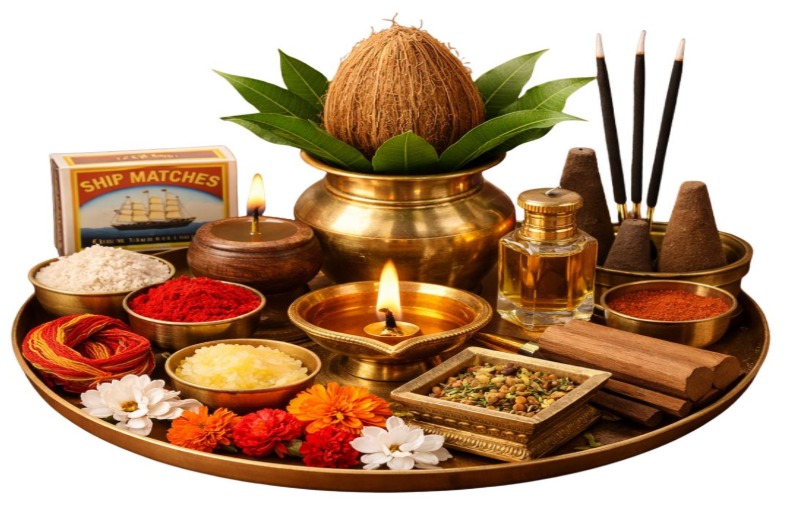
The area may be decorated with:
- Flowers
- Rangoli
- Mango leaves
- Traditional lamps
- Pooja decorations
2. Ganapati Puja
The ceremony may begin with prayers to Lord Ganesha.
Ganapati is traditionally worshipped at the beginning of many Hindu religious ceremonies.
The family seeks blessings for the smooth completion of the puja.
3. Sankalpam
The priest guides the participant through Sankalpam, the sacred declaration of intention.
The purpose of the puja is traditionally stated during this stage.
The Sankalpam formally establishes the intention behind performing Kuja Dosha Puja.
4. Kalasha Sthapana
A Kalasha may be prepared and worshipped according to the ritual tradition.
It is commonly decorated using:
- Mango leaves
- Coconut
- Turmeric
- Kumkum
- Flowers
The priest performs the required prayers and invokes divine blessings.
5. Invocation of Lord Mars
The central portion of the ceremony involves prayers to Mangala or Angaraka, the deity associated with Mars.
Appropriate mantras are recited by the priest.
The participant follows the instructions provided during the ritual.
6. Mars Mantra Chanting
Traditional Mars mantras may be chanted during the ceremony.
The priest may recite the mantras while performing the associated offerings and rituals.
The specific mantra and number of repetitions depend on the tradition and type of puja.
7. Offerings
Traditional offerings may be made during the puja.
Depending on the procedure, offerings can include:
- Flowers
- Fruits
- Red-coloured flowers
- Turmeric
- Kumkum
- Rice
- Water
- Incense
- Lamps
- Naivedyam
The exact materials can vary.
8. Kuja Dosha Homa
In some forms of the ceremony, a Kuja Dosha Homa or related fire ritual may be performed.
The priest offers prescribed materials into the sacred fire while chanting appropriate mantras.
The Homa is performed according to the relevant Vedic procedure.
9. Purnahuti
If a Homa is performed, the ceremony may conclude with Purnahuti, the final offering into the sacred fire.
This marks the completion of the fire ritual.
10. Aarti and Blessings
The ceremony concludes with prayers and Aarti.
The participant and family members receive blessings from the priest and elders.
The family may also offer prayers for peace, prosperity, and a harmonious future.
Pooja Items Required for Kuja Dosha Puja
The exact requirements depend on the specific ritual.
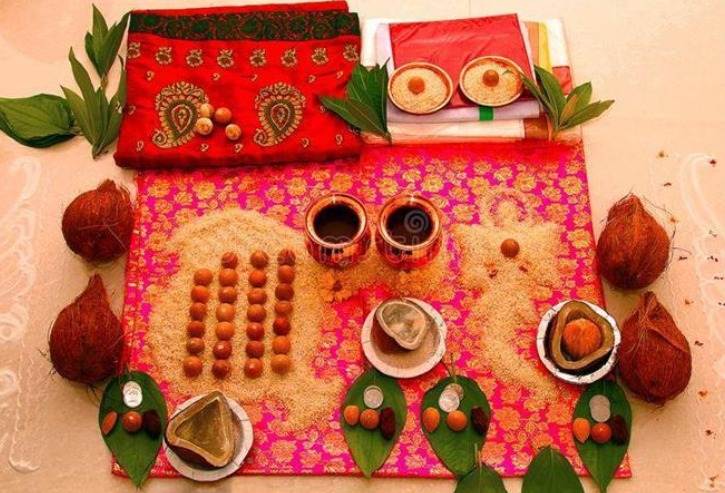
Common items may include:
- Turmeric
- Kumkum
- Rice
- Red flowers
- Fruits
- Coconut
- Betel leaves
- Betel nuts
- Mango leaves
- Kalasha
- Water
- Sandalwood
- Incense
- Camphor
- Oil or ghee
- Cotton wicks
- Naivedyam
- Homa materials
- Other items specified by the priest
Families should obtain the final list from their priest because the required materials can vary according to the ritual procedure.
Why Is Red Colour Associated With Mars?
In traditional Hindu astrology, Mars is commonly associated with the colour red.
Red is traditionally connected with:
- Energy
- Strength
- Courage
- Action
- Power
As a result, red flowers, red cloth, or other red-coloured offerings may be used during certain Mars-related rituals.
The exact offerings depend on the specific religious tradition.
Kuja Dosha Puja for Marriage
Families may perform Kuja Dosha Puja before marriage when a traditional horoscope assessment identifies Kuja Dosha.
The ceremony can be performed:
- Before engagement
- After horoscope matching
- Before the wedding
- During the pre-wedding period
- According to an astrologer’s recommended Muhurtham
The exact timing should be determined based on the individual’s horoscope and family tradition.
Can Both Bride and Groom Perform Kuja Dosha Puja?
Yes, depending on the circumstances and the priest’s guidance.
If both the bride and groom are traditionally considered to have Kuja Dosha, some families may perform the relevant rituals for both individuals.
In some traditional astrological approaches, similar Kuja Dosha in both charts may itself be considered a mitigating factor.
However, the interpretation depends on the complete horoscopes and the astrological system being followed.
Kuja Dosha Puja Before Marriage
Performing the puja before marriage allows the family to complete the traditional remedial ritual before the wedding celebrations.
The ceremony may be scheduled separately so that the couple can participate without the time constraints of the wedding day.
It can also provide an opportunity for both families to participate in prayers and seek blessings.
Kuja Dosha Puja After Marriage
In some traditions, individuals may perform remedial rituals even after marriage.
This can happen if the person learns about Kuja Dosha later or if an astrologer recommends a specific traditional remedy.
The timing and type of ritual should be discussed with a qualified priest or astrologer.
Kuja Dosha and Marriage Compatibility
Kuja Dosha should not be considered independently when evaluating traditional horoscope compatibility.
A comprehensive analysis may consider:
- Both birth charts
- Moon signs
- Nakshatras
- Planetary positions
- 7th house
- 7th house lord
- Venus
- Jupiter
- Mars
- Dasha periods
- Other compatibility factors
The presence of Kuja Dosha alone does not provide a complete picture of two people’s compatibility.
Traditional Benefits Associated With Kuja Dosha Puja
According to traditional religious and astrological beliefs, Kuja Dosha Puja is associated with several intentions.
Seeking Peace
The ceremony is traditionally performed with the intention of seeking peace and balance.
Seeking Divine Blessings
The individual prays for divine support before entering married life.
Traditional Astrological Remedy
It may be performed as a remedial practice after horoscope consultation.
Positive Beginning
The ceremony can provide a devotional beginning to marriage preparations.
Family Participation
It gives family members an opportunity to participate in prayers and blessings.
These are traditional beliefs and religious practices, not scientifically proven effects.
Is Kuja Dosha Puja Necessary for Every Manglik?
Not necessarily.
Traditional astrology includes several conditions that may reduce or cancel the interpretation of Kuja Dosha.
The complete horoscope should therefore be examined before deciding whether a remedial puja is appropriate.
Families should avoid making decisions based only on generic online descriptions of Manglik Dosha.
When Is Kuja Dosha Puja Performed?
The appropriate timing varies.
An astrologer or priest may consider:
- Tithi
- Nakshatra
- Vara
- Lagna
- Planetary positions
- Individual horoscope
- Wedding Muhurtham
- Family tradition
Some families prefer to perform the puja on a Tuesday because Tuesday is traditionally associated with Mars.
However, the actual Muhurtham should be determined according to the specific ritual and the family’s tradition rather than assuming that every Tuesday is suitable.
Kuja Dosha Puja on Tuesday
Tuesday is traditionally associated with Mangala, or Mars.
For this reason, some families choose Tuesday for Mars-related prayers and rituals.
However, selecting a date and time involves more than simply choosing a weekday.
A priest or astrologer can determine a suitable Muhurtham based on the relevant horoscope and ritual requirements.
Can Kuja Dosha Puja Be Performed at Home?
Depending on the type of ritual, some forms of Kuja Dosha Puja can be performed at home.
A clean and suitable pooja space should be prepared.
If a Homa is included, appropriate fire-safety measures and adequate ventilation are necessary.
For elaborate ceremonies, families may prefer a temple, pooja hall, or other suitable venue.
Kuja Dosha Puja at a Temple
Some families prefer to perform Mars-related rituals at temples traditionally associated with Lord Shiva, Lord Subrahmanya, or Navagraha worship.
Temple-based rituals can provide a traditional devotional environment.
The available services and procedures differ from temple to temple, so families should confirm the arrangements beforehand.
Role of the Priest in Kuja Dosha Puja
A trained priest can guide the family through the ritual and explain each stage.
The priest may:
- Conduct Sankalpam
- Perform Ganapati Puja
- Invoke Mangala
- Recite appropriate mantras
- Conduct Homa where applicable
- Guide the participant
- Perform Aarti
- Explain the required materials
Families can discuss their horoscope-related concerns and preferred traditions with the priest before the ceremony.
How to Prepare for Kuja Dosha Puja
Proper preparation can make the ceremony smooth and organized.
Consult a Qualified Astrologer
If the puja is being recommended because of Kuja Dosha, obtain a complete horoscope assessment.
Discuss the Procedure With the Priest
Ask which form of Kuja Dosha Puja is appropriate.
Confirm the Muhurtham
Select the date and time according to the relevant tradition.
Arrange the Pooja Materials
Prepare the materials in advance.
Prepare the Pooja Area
Ensure that the ceremony space is clean and suitable.
Follow the Priest’s Instructions
During the ceremony, participants should follow the priest’s guidance regarding mantras, offerings, and rituals.
Kuja Dosha Puja and Modern Wedding Planning
Modern couples often combine traditional ceremonies with contemporary wedding celebrations.
Kuja Dosha Puja can be scheduled separately from:
- Engagement
- Haldi
- Mehendi
- Sangeet
- Wedding
- Reception
Planning the puja separately can allow the couple and family members to participate without rushing through the ritual.
Why Choose Veda Gayathri for Kuja Dosha Puja?
At Veda Gayathri, traditional Hindu poojas and Vedic rituals can be arranged according to the family’s requirements and customary practices.
Families planning a Kuja Dosha or Manglik Dosha Puja can discuss their requirements, preferred location, ceremony type, and suitable timing with the service team.
The ceremony can be organized with traditional procedures and guidance from experienced priests.
Whether the ritual is performed before marriage or as part of broader wedding preparations, proper planning can help families conduct the ceremony in a peaceful and devotional environment.
Frequently Asked Questions About Kuja Dosha Puja
What is Kuja Dosha?
Kuja Dosha is a traditional Vedic astrology concept associated with certain placements of Mars in a birth chart.
Is Kuja Dosha the same as Manglik Dosha?
Yes. Kuja Dosha, Manglik Dosha, and Mangal Dosha are commonly used names for the astrological condition associated with Mars.
Does every Manglik person have marriage problems?
Traditional astrologers do not necessarily interpret Kuja Dosha in the same way for every person. The complete horoscope and possible cancellation or mitigating factors are considered.
Is Kuja Dosha Puja compulsory?
No. It depends on the family’s beliefs, traditions, and the recommendation of an astrologer or priest.
Can Kuja Dosha be cancelled?
Traditional Vedic astrology describes several cancellation or mitigating conditions. These depend on the complete horoscope and the astrological system being used.
Can both bride and groom perform the puja?
Yes, depending on the circumstances and the priest’s guidance.
Can Kuja Dosha Puja be performed before marriage?
Yes. Many families who choose to perform the ritual conduct it during the pre-wedding period.
Can the puja be performed after marriage?
Some families perform remedial rituals after marriage as well, depending on their traditions and astrological recommendations.
Which day is associated with Mars?
Tuesday is traditionally associated with Mars or Mangala.
What are the main items required?
Common items include red flowers, turmeric, kumkum, rice, fruits, coconut, Kalasha materials, lamps, incense, and Homa materials when applicable.
Is Kuja Dosha Puja scientifically proven?
The beliefs surrounding planetary influences and astrological remedies belong to traditional religious and astrological practices and are not scientifically established.
Conclusion
Kuja Dosha / Manglik Dosha Puja is a traditional Hindu remedial ritual associated with Mars and is sometimes performed in connection with marriage preparations. Families who follow Vedic astrology may consider the ritual after a detailed horoscope assessment identifies Kuja Dosha.
The ceremony may include Ganapati Puja, Sankalpam, Kalasha Sthapana, prayers to Mangala, mantra chanting, offerings, Homa, Purnahuti, and blessings.
It is important to remember that Kuja Dosha is only one factor considered in traditional horoscope matching. Different astrologers and traditions may interpret it differently, including the presence of cancellation or mitigating factors. Therefore, families should seek a complete horoscope assessment rather than relying on a single planetary placement.
For families who follow these traditions, Kuja Dosha Puja can serve as a devotional occasion to seek blessings, peace, and a positive beginning before marriage.
Veda Gayathri can assist families in arranging traditional Kuja Dosha Puja and other Vedic rituals according to their customary practices and requirements.