Introduction
Marriage is one of the most important samskaras in Hindu tradition. Families often perform various pujas, homams, and traditional rituals before a wedding to seek divine blessings for a peaceful and harmonious married life. Among the traditional rituals associated with marriage and Vedic astrology is Kumbha Vivaham, also known as Kumbh Vivah or Ghata Vivah.
The word Kumbha refers to a pot or sacred vessel, while Vivaham means marriage. In the traditional form of the ritual, a person symbolically enters into a marriage ceremony with a Kumbha before their actual marriage to a human partner. Depending on regional and family traditions, the symbolic object may be a clay pot, a sacred tree, or a representation associated with Lord Vishnu.
Kumbha Vivaham is particularly associated in contemporary practice with Manglik Dosha, also known as Mangal Dosha or Kuja Dosha. Some families consult astrologers and priests about this ritual when a horoscope is believed to contain particular marriage-related planetary combinations.
It is important to understand that these are traditional astrological and religious beliefs. There is no scientific evidence that a Kumbha Vivaham can alter planetary influences or guarantee a particular marriage outcome.
At Veda Gayathri, traditional pujas and homams can be arranged with respect for Vedic customs and individual family traditions. Kumbha Vivaham may be performed as a devotional and traditional ceremony before the main wedding, based on the guidance of a qualified priest.
What Is Kumbha Vivaham?
Kumbha Vivaham is a traditional symbolic marriage ceremony in which a person is ceremonially married to a Kumbha or sacred pot before entering into their actual marriage.
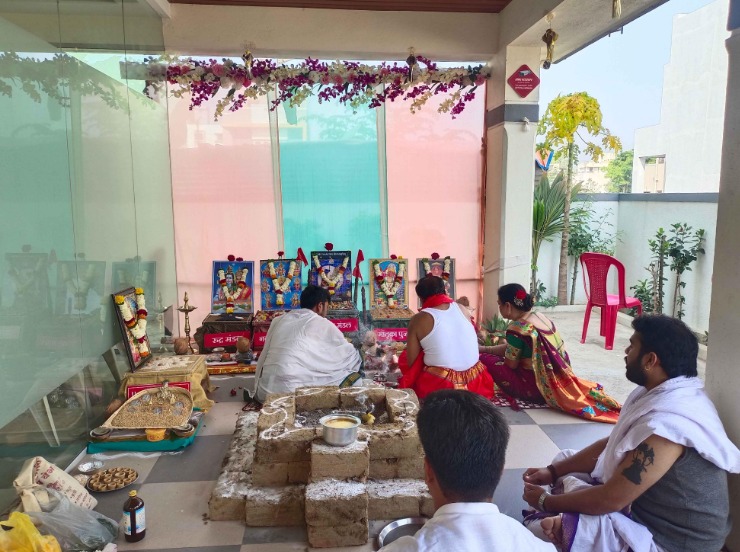
The ritual is sometimes described as a form of symbolic first marriage. The ceremony can include several elements of a traditional Hindu wedding, including prayers, Sankalpam, invocation, sacred fire rituals, mantras, and symbolic wedding rites.
Depending on the regional tradition, variations may involve:
- A clay Kumbha or pot
- A sacred Kalasha
- A Peepal tree
- A banana tree
- A representation of Lord Vishnu
- Other prescribed symbolic forms
The exact form is not identical across all Hindu communities. Regional customs, family traditions, and the priest’s lineage can determine how the ceremony is conducted.
Why Is Kumbha Vivaham Performed?
Kumbha Vivaham is traditionally performed for specific astrological or devotional reasons.
The most commonly discussed association is Manglik Dosha, where Mars is considered to have a particular placement in a birth chart according to certain schools of Vedic astrology.
Some traditional practitioners believe that such planetary combinations may be associated with challenges concerning marriage. In these traditions, Kumbha Vivaham is considered one possible remedial ritual.
Other traditional interpretations may recommend symbolic marriage rituals for particular combinations involving the seventh or eighth houses or other marriage-related considerations.
However, not every person identified as Manglik is automatically considered to require Kumbha Vivaham. Different astrological traditions use different rules for identifying and interpreting Mangal Dosha, including cancellation or mitigating factors.
Therefore, families should avoid performing the ritual solely because someone has been casually told that they are Manglik. A complete horoscope assessment, if the family follows astrology, should be obtained from a qualified practitioner.
Kumbha Vivaham and Manglik Dosha
Manglik Dosha, also called Mangal Dosha or Kuja Dosha, is a concept in Hindu astrology associated with the placement of Mars in certain houses of a birth chart.
Different schools and practitioners may use somewhat different rules when determining whether Mangal Dosha is present and how significant it is.
Some commonly cited placements include the:
- 1st house
- 4th house
- 7th house
- 8th house
- 12th house
Some traditions also examine the position of Mars from the Moon or Venus.
Traditional astrologers may consider additional factors that can reduce, cancel, or modify the interpretation of the Dosha.
For this reason, simply identifying Mars in one particular house should not be treated as sufficient to conclude that a person has a serious marriage-related problem.
Kumbha Vivaham is therefore best understood as one traditional ritual associated with certain astrological interpretations, rather than a mandatory ceremony for everyone who has been called Manglik.
Spiritual Significance of Kumbha Vivaham
The Kumbha has an important place in Hindu ritual traditions.
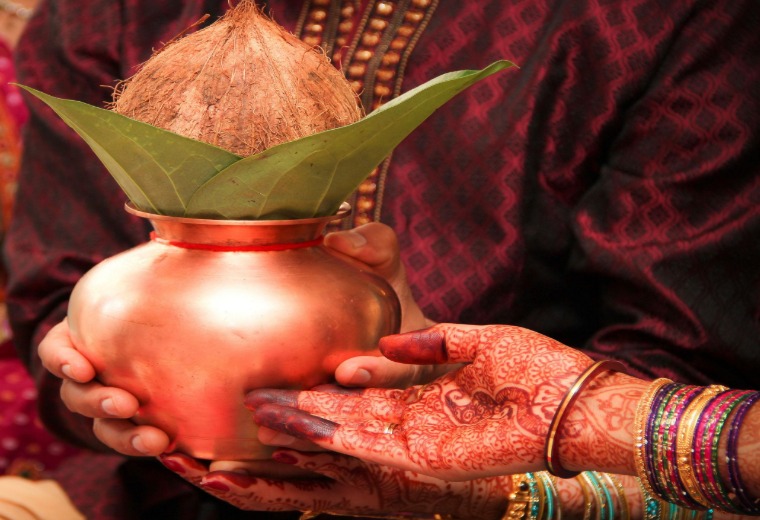
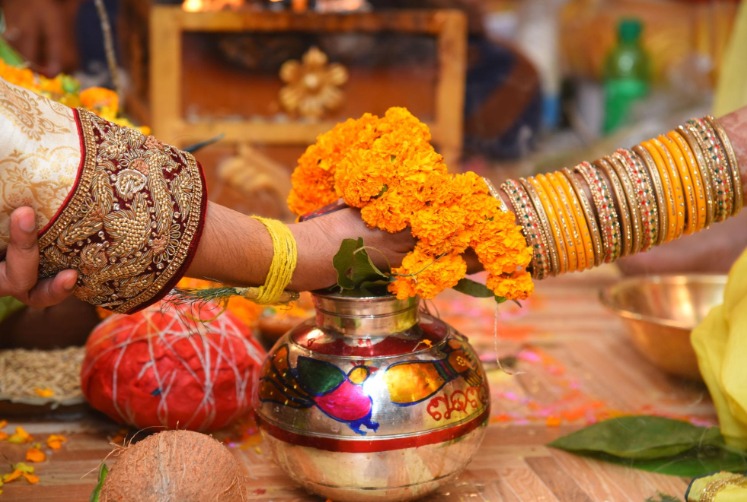
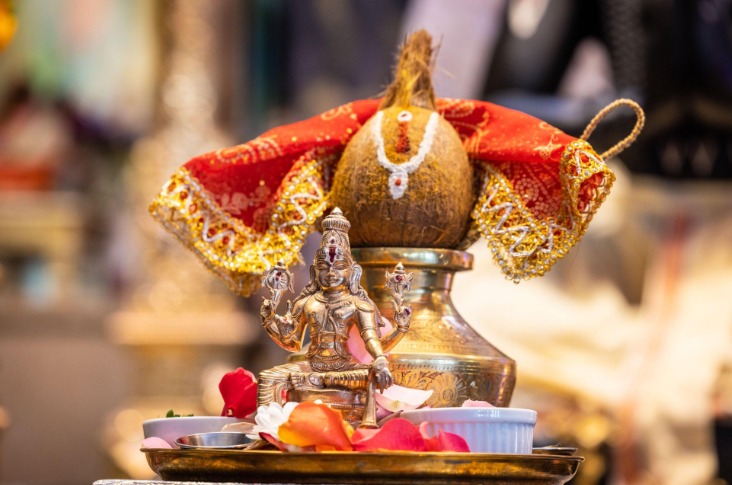
A Kalasha or sacred vessel is commonly used during pujas and represents auspiciousness, sacred presence, and the symbolic containment of divine blessings.
In Kumbha Vivaham, the vessel becomes the focus of a symbolic marriage ritual.
The ceremony can represent:
- Completion of a symbolic ritual union
- Spiritual preparation before marriage
- Prayer for an auspicious married life
- Seeking divine blessings
- Faith in traditional practices
- The transition from one ritual stage to another
For families who follow these traditions, the ceremony can provide a meaningful spiritual setting before the main wedding.
Symbolism Behind the Ritual
The symbolic nature of Kumbha Vivaham is one of its most distinctive features.
The person undergoing the ceremony participates in a marriage-like ritual with a symbolic object rather than another human being.
Traditional interpretations differ regarding the exact purpose of this symbolism. Some astrologers describe it as a way of addressing a perceived first-marriage astrological influence, while other traditions emphasize ritual purification and spiritual preparation.
The symbolic marriage is subsequently concluded according to the relevant tradition before the person’s actual marriage.
The ritual should therefore be understood within the religious and cultural framework in which it is performed.
Who Can Perform Kumbha Vivaham?
Traditionally, Kumbha Vivaham may be recommended for a person whose horoscope is believed to contain a particular marriage-related Dosha.
It may be considered for:
- Individuals identified as Manglik
- Individuals with specific marriage-related astrological combinations
- People experiencing traditional concerns regarding marriage compatibility
- Families following specific regional customs
- Individuals advised by a qualified priest or astrologer
However, there is no universal rule that every Manglik person must perform Kumbha Vivaham.
Some astrological traditions consider cancellation factors, planetary strength, compatibility between both horoscopes, and other chart combinations before recommending a remedy.
Kumbha Vivaham for Marriage Delays
Some families choose Kumbha Vivaham when marriage is believed to be delayed because of an astrological Dosha.
In traditional belief, the ritual is intended to address the perceived astrological concern before the actual wedding.
The prayer may focus on:
- Finding suitable marriage opportunities
- Removing perceived obstacles
- Receiving family support
- Developing compatibility
- Seeking a peaceful married life
- Beginning the marriage journey with positive intentions
At the same time, marriage delays can have many practical reasons, including education, career, personal preferences, family circumstances, and social factors.
Therefore, spiritual practices can be accompanied by practical efforts such as meeting suitable people, communicating clearly, and making informed decisions about compatibility.
Types of Symbolic Marriage Associated With Kumbha Vivaham
Different traditions describe more than one form of symbolic marriage.
Kumbha or Pot Vivaham
In the most direct form, the person symbolically marries a pot or Kumbha.
This is the form from which the name Kumbha Vivaham is derived.
The pot is prepared and decorated according to the ritual tradition before the symbolic wedding rites are performed.
Tree Vivaham
Some traditions involve symbolic marriage with a sacred tree or plant.
Peepal and banana plants are among the forms mentioned in contemporary descriptions of symbolic marriage rituals.
The exact practice varies considerably by region and tradition.
Vishnu Vivaham
Another form mentioned in some traditions involves a symbolic marriage with a representation of Lord Vishnu.
The choice of form should not be made casually. It is generally determined according to the family’s tradition and the priest’s guidance.
How Is Kumbha Vivaham Performed?
The detailed procedure can differ according to regional customs, the purpose of the ritual, and the priest’s tradition.
A general ceremony may include the following stages.
1. Preparation of the Puja Area
The ceremony begins with preparation of a clean and auspicious space.
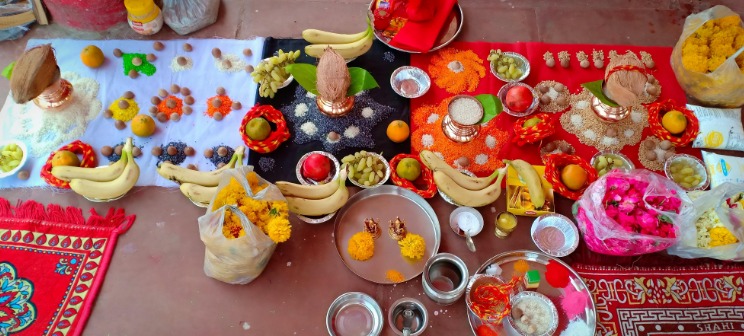
The required puja materials, Kumbha, flowers, lamps, fruits, grains, and other ritual items are arranged.
The participant generally wears clean traditional clothing.
2. Sankalpam
The priest performs Sankalpam, which establishes the purpose and intention of the ceremony.
The Sankalpam may include details such as:
- Name of the participant
- Gotra, where applicable
- Nakshatra
- Rashi
- Purpose of the ceremony
- Prayer for an auspicious future marriage
3. Ganapati Puja
Lord Ganesha is traditionally worshipped at the beginning of many Hindu ceremonies.
The purpose is to begin the ritual with prayers for auspiciousness and successful completion.
4. Kalasha and Deity Worship
A Kalasha may be established and worshipped according to the selected ritual procedure.
Other deities may also be invoked depending on the tradition being followed.
5. Preparation of the Kumbha
The Kumbha or symbolic object is prepared for the ceremony.
It may be decorated with:
- Turmeric
- Kumkum
- Flowers
- Cloth
- Sacred threads
- Mango leaves
- Coconut
The exact decoration varies according to the local tradition.
6. Invocation and Mantra Chanting
The priest chants the prescribed mantras and prayers.
The participant takes part in the ceremony according to the priest’s instructions.
7. Symbolic Marriage Ceremony
The main symbolic marriage rites are performed between the participant and the Kumbha or other prescribed symbolic form.
Depending on the tradition, elements may resemble parts of a Hindu wedding ceremony.
These can include:
- Offering prayers
- Exchange of flowers
- Tying of symbolic threads
- Circumambulation
- Sacred fire worship
- Wedding mantras
Not every tradition includes every one of these elements.
8. Homa or Havan
Some forms of Kumbha Vivaham include a Homam or Havan.
Offerings are made into the sacred fire while appropriate mantras are recited.
Common Homa materials may include ghee, grains, herbs, sesame, and other prescribed substances.
9. Completion of the Symbolic Marriage
After the prescribed marriage rites are completed, the symbolic marriage is concluded according to the tradition.
The treatment of the Kumbha afterward varies. Some traditions describe breaking or otherwise ritually disposing of the symbolic vessel, while other traditions follow different procedures.
The exact practice should be determined by the priest rather than copied from another regional tradition.
10. Purnahuti and Aarti
If a Homam is included, Purnahuti marks the final offering into the sacred fire.
The ceremony may conclude with Aarti, prayers, blessings, and distribution of Prasadam.
Materials Required for Kumbha Vivaham
The required materials depend on the particular form of the ceremony.
Common materials may include:
- Kumbha or prescribed symbolic object
- Kalasha
- Coconut
- Mango leaves
- Turmeric
- Kumkum
- Flowers
- Garland
- Rice
- Grains
- Ghee
- Homa materials
- Sandalwood
- Incense
- Camphor
- Betel leaves
- Betel nuts
- Fruits
- Naivedyam
- Sacred thread
- Traditional clothing
The priest conducting the ceremony should provide the final list because requirements can differ between traditions.
When Should Kumbha Vivaham Be Performed?
The date and time for Kumbha Vivaham are traditionally selected according to the purpose of the ceremony and the family’s religious customs.
A priest or astrologer who follows the family’s tradition may consider:
- Tithi
- Nakshatra
- Vara
- Lagna
- Rashi
- Horoscope considerations
- Muhurtham
- Regional customs
Some contemporary practitioners associate Kumbha Vivaham with specific days such as Tuesday because of its connection with Mars and Mangal-related remedies. However, there is no single universally followed date or timing across all Hindu traditions.
Therefore, the date should be selected according to the specific tradition being followed.
Is Kumbha Vivaham Necessary for Every Manglik Person?
No universal religious rule requires every person identified as Manglik to perform Kumbha Vivaham.
Different schools of Vedic astrology use different approaches to Mangal Dosha. Some consider cancellation or reduction factors, while others assess the entire horoscope before recommending a remedy.
For example, astrologers may consider:
- The strength and dignity of Mars
- Mars’s house placement
- Aspects from other planets
- The condition of the seventh house
- Venus and Jupiter
- The Moon
- Both partners’ horoscopes
- Cancellation or mitigating combinations
Therefore, families should not assume that a Kumbha Vivaham is mandatory simply because a person has been described as Manglik.
Kumbha Vivaham and Horoscope Matching
Horoscope matching is practiced by some Hindu families before marriage.
If astrology is part of the family’s decision-making process, both horoscopes can be assessed rather than focusing on one planetary placement alone.
Traditional matching may consider:
- Guna matching
- Nakshatra
- Rashi
- Mangal Dosha
- Seventh house
- Venus
- Jupiter
- Other planetary combinations
Kumbha Vivaham may be recommended in some traditions when a particular astrological concern remains after such an assessment.
However, horoscope matching is a cultural and astrological practice and is not a scientifically validated method for predicting marital compatibility.
Traditional Beliefs About the Benefits of Kumbha Vivaham
Traditional practitioners associate Kumbha Vivaham with several intended benefits.
Prayer for Removal of Perceived Obstacles
Families may perform the ceremony with the intention of addressing perceived astrological obstacles related to marriage.
Support for Marriage Prospects
The ritual may be performed as a devotional prayer for suitable marriage opportunities.
Spiritual Preparation
The ceremony provides an opportunity for prayer and spiritual preparation before the actual wedding.
Seeking Marital Harmony
Devotees may pray for understanding, cooperation, affection, and peaceful family relationships.
Traditional Mangal Dosha Remedy
For families who follow Jyotisha traditions, Kumbha Vivaham may be considered one possible remedy for certain interpretations of Mangal Dosha.
These are traditional beliefs and intentions, not scientifically proven outcomes.
Kumbha Vivaham vs. Regular Marriage
Kumbha Vivaham should not be confused with a conventional Hindu marriage between two people.
Kumbha Vivaham | Regular Hindu Marriage |
Symbolic marriage ritual | Marriage between two individuals |
Usually performed before the actual wedding | Establishes the actual marital relationship |
May involve a pot, tree, or prescribed representation | Involves the bride and groom |
Often associated with astrological remedies | Represents family and social union |
Procedure varies by tradition | Wedding rituals vary by community |
Usually concluded before the actual marriage | Creates the actual marital bond |
The purpose and social meaning of the two ceremonies are therefore different.
Kumbha Vivaham and Modern Marriage Preparation
Modern marriage preparation can combine spiritual traditions with practical preparation.
While families may choose to perform Kumbha Vivaham according to their beliefs, individuals should also discuss important aspects of married life with their prospective partners.
These can include:
- Career expectations
- Financial planning
- Family responsibilities
- Lifestyle preferences
- Communication
- Personal boundaries
- Future goals
- Location and living arrangements
- Children and parenting expectations
A ritual can be meaningful as part of a family’s spiritual tradition, but healthy marriage decisions also require communication, consent, mutual respect, and practical planning.
Role of the Priest in Kumbha Vivaham
A knowledgeable priest can guide the family through the ceremony and explain which rituals are appropriate for their particular tradition.
The priest may:
- Determine the ritual format
- Conduct Sankalpam
- Perform Ganapati Puja
- Establish the Kalasha
- Prepare the Kumbha
- Chant the prescribed mantras
- Conduct symbolic wedding rites
- Perform Homam when required
- Complete Purnahuti
- Conduct Aarti
- Explain the concluding rituals
Because Kumbha Vivaham differs between regions and traditions, following a qualified priest’s instructions is preferable to combining procedures from unrelated sources.
How to Prepare for Kumbha Vivaham
Families can prepare for the ceremony by discussing the procedure with the priest beforehand.
A Few Days Before the Ceremony
The family can:
- Confirm the date and time
- Obtain the required materials
- Arrange the puja location
- Confirm the priest
- Understand any dietary or ritual restrictions
- Prepare traditional clothing
On the Day of the Ceremony
Participants should:
- Take a bath and wear clean clothes
- Keep the puja area clean
- Arrive on time
- Follow the priest’s instructions
- Participate respectfully
- Maintain a calm and devotional mindset
The priest should be informed in advance about any practical limitations or special family requirements.
Kumbha Vivaham at Veda Gayathri
At Veda Gayathri, traditional Hindu pujas and rituals can be arranged according to the family’s spiritual requirements and customary practices.
Kumbha Vivaham can be organized as a traditional pre-marriage ceremony for individuals whose families choose to follow this practice. The ceremony can include Sankalpam, Ganapati Puja, Kumbha preparation, prescribed marriage rituals, mantra chanting, Homam where applicable, Purnahuti, and Aarti.
The exact procedure can be adapted according to the relevant regional and family tradition under the guidance of a qualified priest.
Frequently Asked Questions About Kumbha Vivaham
What is Kumbha Vivaham?
Kumbha Vivaham is a traditional symbolic marriage ceremony in which a person is ceremonially married to a Kumbha or other prescribed symbolic form before their actual marriage.
Why is Kumbha Vivaham performed?
It is traditionally performed as a remedial ritual for certain astrological concerns, particularly Mangal or Kuja Dosha, according to some schools of Hindu astrology.
Is Kumbha Vivaham the same as Manglik Dosha Puja?
No. They are different rituals. Mangal Dosha Puja focuses on worship and propitiation associated with Mars, while Kumbha Vivaham involves a symbolic marriage ceremony.
Is Kumbha Vivaham required for every Manglik person?
No. Different astrological traditions assess Mangal Dosha differently, and some consider cancellation or mitigating factors. A complete horoscope assessment is generally recommended within traditions that follow astrology.
What is used in Kumbha Vivaham?
A Kumbha or pot is the most direct symbolic form. Depending on the tradition, a sacred tree or a representation associated with Lord Vishnu may also be used.
Can Kumbha Vivaham be performed before the actual wedding?
Yes. Traditionally, it is performed as a symbolic ceremony before the person’s actual marriage.
Can Kumbha Vivaham be performed at home?
The possibility depends on the form and tradition. Because the ceremony can involve specific mantras and wedding rites, families generally benefit from conducting it under the guidance of a knowledgeable priest.
Does Kumbha Vivaham guarantee a successful marriage?
No. It is a traditional religious and astrological practice and cannot scientifically guarantee a particular marriage outcome. A healthy marriage also depends on communication, mutual respect, compatibility, consent, and shared responsibilities.
Conclusion
Kumbha Vivaham is a distinctive traditional Hindu symbolic marriage ritual associated in many contemporary practices with marriage-related astrological concerns, particularly Mangal or Kuja Dosha. The ceremony involves a symbolic marriage with a Kumbha or another prescribed form and is generally performed before the person’s actual marriage.
The ritual carries cultural and spiritual significance for families who follow these traditions. It can provide an opportunity for prayer, reflection, and seeking blessings before beginning married life.
At Veda Gayathri, Kumbha Vivaham can be performed with respect for traditional customs and according to the family’s requirements and priestly guidance. While traditional rituals can hold deep spiritual meaning, they should be complemented by thoughtful marriage preparation, mutual understanding, communication, and informed personal decisions.