Introduction
Vivaha Puja is an important Hindu religious ceremony associated with marriage and the beginning of a new phase of life. In Hindu tradition, marriage is considered a sacred union that brings two individuals and their families together. Vivaha Puja includes prayers, traditional rituals, offerings, and the chanting of mantras to seek divine blessings for the couple and their future married life.
The word Vivaha refers to marriage, while Puja means worship or devotional offering. Depending on the family’s customs and regional traditions, Vivaha Puja may be performed before the wedding, as part of the wedding ceremony, or during specific marriage-related religious occasions.
Veda Gayathri helps families arrange traditional Hindu pujas and auspicious ceremonies with appropriate spiritual guidance, helping devotees conduct their rituals according to their customs and requirements.
What Is Vivaha Puja?
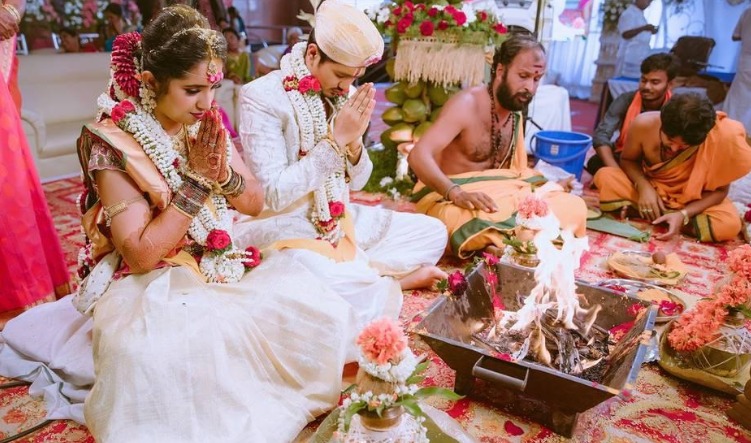
Vivaha Puja is a traditional Hindu worship ceremony performed in connection with marriage. It is intended to create an auspicious spiritual atmosphere and invoke blessings for the bride, groom, and their families.
The ceremony can include prayers to Lord Ganesha and other deities associated with auspicious beginnings, prosperity, family welfare, and marital harmony.
Depending on the tradition followed, Vivaha Puja may involve:
- Ganapati Puja
- Sankalpam
- Kalasha Sthapana
- Invocation of deities
- Mantra chanting
- Archana
- Sacred offerings
- Homam or Havan, where applicable
- Naivedyam
- Mangala Harathi
- Blessings for the couple
The exact procedure can vary according to regional customs, family traditions, and the specific purpose of the ceremony.
Significance of Vivaha Puja in Hindu Tradition
Marriage is traditionally regarded as one of the important samskaras in Hindu culture. Religious ceremonies associated with marriage are performed to mark the transition into married life and seek divine blessings.
Vivaha Puja provides an opportunity for the couple and their families to come together in prayer before or during the wedding.
Traditionally, families seek blessings for:
- A harmonious married life
- Mutual understanding between the couple
- Family happiness
- Prosperity and well-being
- A peaceful household
- Auspicious beginnings
- Long-lasting companionship
The ceremony also reflects the importance of family, commitment, tradition, and spirituality in Hindu marriage customs.
Veda Gayathri supports families in preserving these traditional practices while helping them understand the requirements of their chosen ceremony.
When Is Vivaha Puja Performed?
The timing of Vivaha Puja depends on the family’s tradition and the purpose of the ceremony.
It may be performed:
Before the Wedding
Families may perform marriage-related pujas before the wedding to seek divine blessings and prepare for the auspicious occasion.
During Wedding Ceremonies
Certain pujas form an integral part of the Hindu wedding ceremony itself. The exact sequence differs among communities and regions.
Before Marriage-Related Functions
Vivaha Puja may also be performed before important wedding-related functions as part of the family’s traditional preparations.
For Special Marriage Occasions
Some families perform marriage-related religious ceremonies on specific occasions to pray for marital harmony, prosperity, and family well-being.
When an auspicious date and time are required, families may consult a priest or astrologer according to their traditional practices.
Importance of Vivaha Muhurtham
Vivaha Muhurtham refers to the auspicious date and time selected for a Hindu marriage ceremony.
Traditionally, families may consider Panchanga factors such as:
- Tithi
- Nakshatra
- Vara
- Yoga
- Karana
- Planetary positions
- Birth stars of the bride and groom, where applicable
The selection process can differ according to regional and family traditions. A priest or qualified astrologer can help determine an appropriate Muhurtham based on the family’s requirements.
Vivaha Puja and Vivaha Muhurtham are related but are not the same.
Vivaha Puja refers to the religious worship and rituals, while Vivaha Muhurtham refers to the auspicious timing selected for the marriage ceremony.
Vivaha Puja Rituals and Procedure
The exact Vivaha Puja procedure can vary depending on the tradition and purpose. A typical ceremony may include several important stages.
1. Preparing the Puja Space
The puja area is cleaned and decorated before the ceremony. A suitable place is arranged for the deity, kalasham, lamps, flowers, and other puja materials.
Traditional decorations such as flowers, mango leaves, rangoli, and other auspicious items may be used.
2. Ganapati Puja
The ceremony may begin with prayers to Lord Ganesha.
Ganesha is traditionally worshipped before many important Hindu ceremonies. Devotees seek blessings for an auspicious beginning and the smooth completion of the rituals.
3. Sankalpam
The priest performs Sankalpam, which establishes the intention of the ceremony.
The names of the participants and other relevant details may be mentioned according to the traditional procedure.
4. Kalasha Sthapana
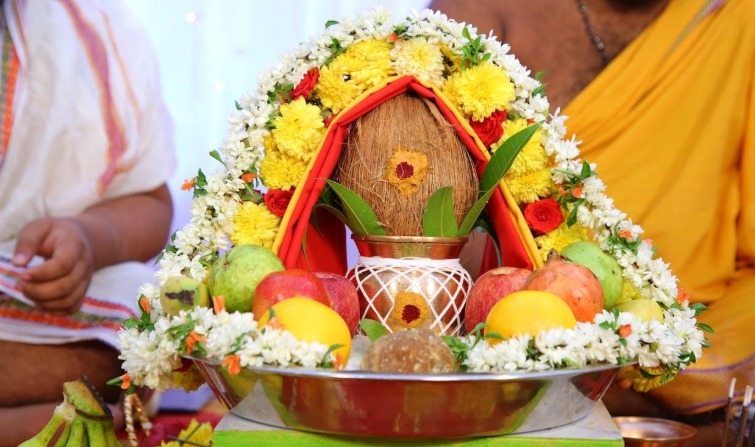
A sacred kalasham may be prepared as part of the ceremony.
The kalasham is an important element in many Hindu pujas and represents auspiciousness, purity, and divine presence.
5. Invocation of Deities
The priest invokes the appropriate deities through traditional mantras and prayers.
Depending on the family tradition, prayers may be offered to deities associated with marriage, prosperity, protection, and family welfare.
6. Archana and Mantra Chanting
Traditional mantras are chanted, and flowers or Akshata are offered to the deities.
The couple and family members may participate in the prayers according to the priest’s instructions.
7. Homam or Havan
In some forms of Vivaha Puja, a Homam or Havan may be performed.
Sacred offerings are made into the fire while appropriate mantras are chanted. The exact procedure depends on the specific ritual being performed.
8. Naivedyam
Food, fruits, sweets, and other appropriate offerings may be presented as Naivedyam.
After the offering, Prasadam may be distributed among the participants.
9. Mangala Harathi
Mangala Harathi is performed toward the conclusion of the ceremony.
The ritual marks an auspicious completion of the puja and is followed by prayers for the well-being of the couple and family.
Deities Worshipped During Vivaha Puja
The deities included in Vivaha Puja vary according to the family’s religious tradition.
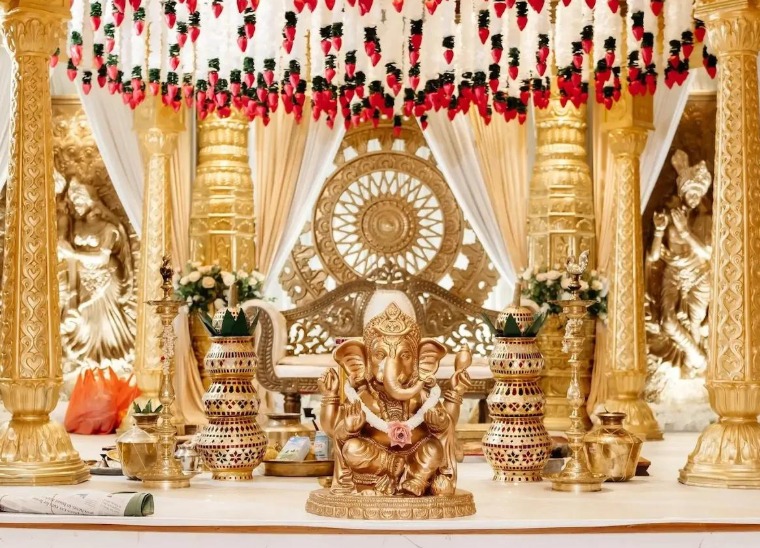
Lord Ganesha
Lord Ganesha is traditionally worshipped at the beginning of auspicious ceremonies. Families seek blessings for a smooth and successful beginning.
Lord Shiva and Goddess Parvati
The divine union of Shiva and Parvati holds an important place in Hindu traditions associated with marriage. Their relationship is often invoked as a symbol of divine companionship and marital devotion.
Lord Vishnu and Goddess Lakshmi
Vishnu and Lakshmi are traditionally associated with prosperity, abundance, protection, and family well-being.
Lord Murugan
In certain South Indian traditions, Lord Murugan and his divine consorts are associated with marriage-related celebrations and religious observances.
The specific deities and mantras used during Vivaha Puja should follow the family’s tradition and the guidance of the priest conducting the ceremony.
Vivaha Puja Items Required
The list of materials can differ according to the specific puja. Commonly required items may include:
- Turmeric
- Kumkum
- Sandalwood
- Flowers
- Fruits
- Coconut
- Betel leaves
- Betel nuts
- Akshata or rice
- Kalasham
- Mango leaves
- Oil or ghee lamps
- Incense sticks
- Camphor
- Naivedyam
- Puja cloth
- Sacred thread
- Water
- Puja plates
Additional materials may be required if the ceremony includes Homam or other specific rituals.
It is recommended to confirm the complete list with the priest before the ceremony.
Benefits of Performing Vivaha Puja
Vivaha Puja is primarily a devotional practice through which families seek divine blessings. The benefits traditionally associated with the ceremony include spiritual and family-oriented blessings.
Seeking Blessings for Married Life
Couples and their families pray for happiness, understanding, companionship, and harmony.
Auspicious Beginning
The ceremony provides a spiritual beginning to the important transition into married life.
Family Well-Being
Families traditionally pray for prosperity, peace, and the overall well-being of the household.
Spiritual Peace
Participating in prayers and traditional rituals can create a peaceful and devotional atmosphere for the couple and their families.
Strengthening Family Bonds
Marriage ceremonies bring relatives and family members together. Participating in shared rituals can reinforce family connections and cultural traditions.
These benefits represent traditional religious beliefs and purposes and should not be understood as guaranteed outcomes.
Vivaha Puja for Bride and Groom
Vivaha Puja provides an opportunity for both the bride and groom to participate in the religious aspects of marriage.
The couple may participate in:
- Sankalpam
- Mantra chanting
- Offering flowers
- Offering Akshata
- Performing traditional rituals
- Participating in Homam, where applicable
- Receiving blessings from elders
- Taking part in Mangala Harathi
The priest guides the couple through each stage according to the particular wedding tradition.
The participation of both individuals reflects the traditional understanding of marriage as a shared spiritual and family responsibility.
How to Prepare for Vivaha Puja
Proper preparation can make the ceremony more organized and meaningful.
Select the Purpose
Determine whether the puja is being performed before the wedding, during the wedding, or for another marriage-related occasion.
Consult a Priest
Discuss the ceremony with a qualified priest to understand the required rituals, mantras, materials, and procedures.
Choose the Muhurtham
If an auspicious timing is required, consult a priest or astrologer according to the family’s traditional practices.
Arrange Puja Materials
Prepare all the required materials before the ceremony so that the rituals can proceed without unnecessary interruptions.
Prepare the Puja Area
Clean and decorate the ceremony area and arrange the required idols, kalasham, lamps, flowers, and other items.
Prepare the Couple
The bride and groom should follow any traditional instructions provided by the priest regarding clothing, participation, fasting, or other preparations.
Difference Between Vivaha Puja and Kalyana Puja
Vivaha Puja and Kalyana Puja are closely related terms and may sometimes be used interchangeably, but their exact meaning can vary depending on regional and family traditions.
Vivaha Puja | Kalyana Puja |
Associated with marriage and wedding rituals | Associated with auspicious marriage-related worship |
Often performed as part of marriage ceremonies | May be performed for marriage-related blessings |
Procedure varies by tradition | Procedure varies by tradition |
Can include wedding-related rituals | Can include prayers for marital harmony and prosperity |
May be connected with Vivaha Muhurtham | May be connected with Kalyana Muhurtham |
Because terminology differs between communities, families should follow the specific tradition prescribed by their priest.
Vivaha Puja and Hindu Marriage Traditions
Hindu weddings differ considerably across India. Telugu, Tamil, Kannada, Marathi, Bengali, Gujarati, North Indian, and other traditions may have different ceremonies and sequences.
For example, wedding customs can differ in:
- Mantras
- Wedding rituals
- Deity worship
- Wedding attire
- Food offerings
- Muhurtham traditions
- Regional customs
- Family-specific practices
Therefore, there is no single universal procedure for every Vivaha Puja.
Veda Gayathri can help families understand and organize traditional ceremonies according to their preferred customs and requirements.
Role of the Priest in Vivaha Puja
The priest plays an important role in conducting the traditional ceremony.
The priest may:
- Explain the sequence of rituals
- Chant the required mantras
- Guide the couple through the ceremony
- Conduct Sankalpam
- Perform Archana
- Conduct Homam where applicable
- Explain the required offerings
- Guide the family during important rituals
Families should discuss the complete procedure with the priest beforehand so that they can prepare the necessary materials and understand their participation.
Why Choose Veda Gayathri for Vivaha Puja?
Veda Gayathri helps families organize traditional Hindu pujas and marriage-related ceremonies with appropriate guidance and preparation.
Families can seek assistance with:
- Vivaha Puja arrangements
- Traditional marriage rituals
- Auspicious timings
- Puja materials
- Priest guidance
- Marriage-related ceremonies
- Customized religious requirements
The goal is to help families conduct their ceremonies in a well-organized manner while respecting their religious and cultural traditions.
Frequently Asked Questions About Vivaha Puja
What is Vivaha Puja?
Vivaha Puja is a Hindu religious ceremony associated with marriage. It includes prayers and traditional rituals performed to seek divine blessings for the couple and their families.
When should Vivaha Puja be performed?
It can be performed before or during a wedding, depending on the family’s customs and the specific purpose of the ceremony.
What is the difference between Vivaha Puja and Vivaha Muhurtham?
Vivaha Puja refers to the religious ceremony, while Vivaha Muhurtham refers to the auspicious date and time selected for the marriage.
Which gods are worshipped during Vivaha Puja?
The deities vary according to tradition. Lord Ganesha, Lord Shiva and Goddess Parvati, and Lord Vishnu and Goddess Lakshmi may be included in marriage-related prayers.
What items are required for Vivaha Puja?
Common items include turmeric, kumkum, flowers, fruits, coconut, betel leaves, rice, kalasham, lamps, incense, camphor, and Naivedyam. The exact list depends on the ceremony.
Can married couples perform Vivaha Puja?
Marriage-related pujas may be performed by married couples depending on the purpose and family tradition. A priest can advise on the appropriate ceremony.
Is Vivaha Puja the same in every Hindu tradition?
No. Hindu marriage customs vary by region, community, and family tradition. The procedure, mantras, and sequence can therefore differ.
Conclusion
Vivaha Puja is an important marriage-related Hindu ceremony that brings together spirituality, family traditions, prayers, and auspicious rituals. It provides an opportunity for the bride, groom, and their families to seek divine blessings before beginning a new chapter of life.
From Ganapati Puja and Sankalpam to traditional offerings, mantra chanting, Homam, and Mangala Harathi, each part of the ceremony has a place within the relevant religious tradition. The exact procedure, however, can vary according to regional customs and family practices.
With proper preparation and guidance, families can conduct Vivaha Puja in a meaningful and organized manner. Veda Gayathri supports families in arranging traditional Hindu pujas and marriage-related ceremonies while helping them follow the customs and requirements relevant to their occasion.