Introduction
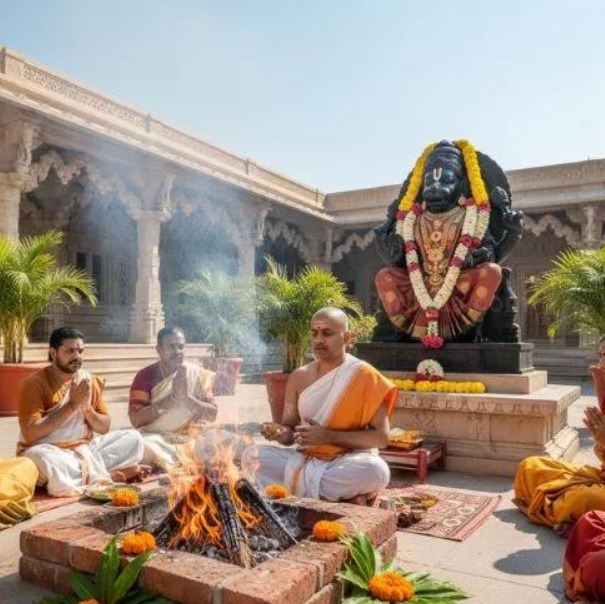
Lakshmi Narasimha Homam is a sacred Vedic fire ritual dedicated to Lord Lakshmi Narasimha, the divine form of Lord Vishnu accompanied by Goddess Lakshmi. In Hindu tradition, Lord Narasimha is revered as a powerful protector of devotees, while Goddess Lakshmi is associated with prosperity, abundance and auspiciousness.
The homam combines mantra recitation, prayers and sacred fire offerings to seek divine blessings for protection, courage, peace, prosperity and family well-being. Devotees may perform this homam during important life situations, auspicious occasions or periods when they wish to undertake a special devotional prayer.
The story of Lord Narasimha and Prahlada is one of the central narratives associated with this form of Vishnu. Lord Narasimha is traditionally worshipped as the protector who appeared to defend Prahlada from Hiranyakashipu.
At Veda Gayathri, devotees can arrange traditional puja and homam services with appropriate priestly guidance. A properly conducted Lakshmi Narasimha Homam can provide a meaningful spiritual setting for individuals and families to offer prayers and seek the blessings of Lord Narasimha and Goddess Lakshmi.
What Is Lakshmi Narasimha Homam?
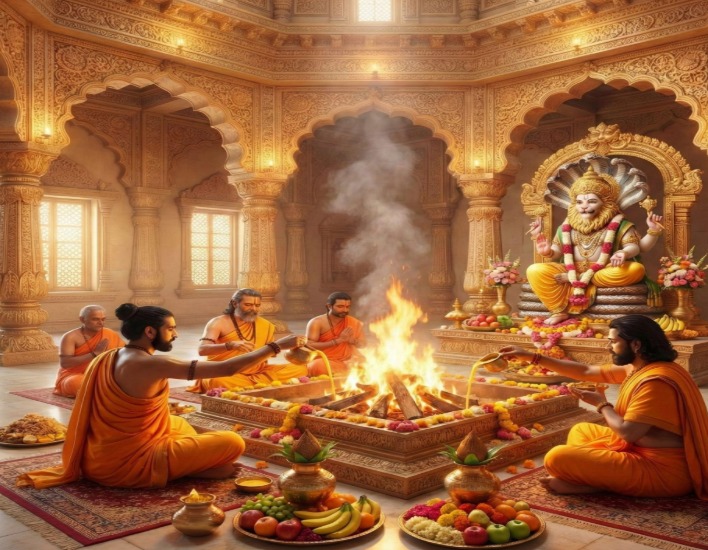
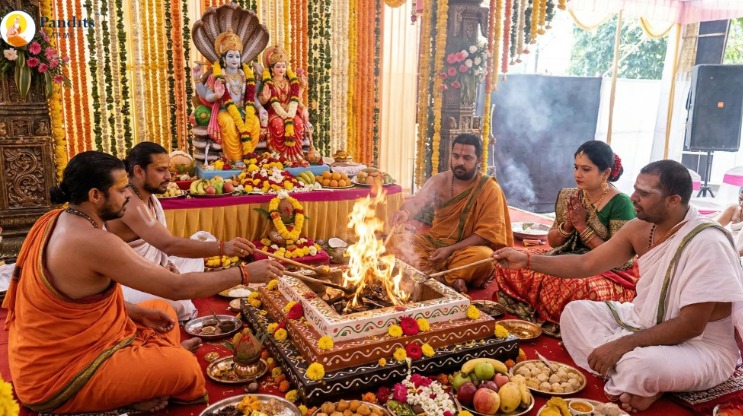
Lakshmi Narasimha Homam is a sacred fire ceremony dedicated to Lord Lakshmi Narasimha. During the ritual, a consecrated fire is established in a homa kundam and offerings are made while appropriate mantras are recited.
Lord Narasimha is the fourth avatar of Lord Vishnu in the commonly described Dashavatara tradition. His form combines the features of a human and a lion. Goddess Lakshmi is worshipped alongside Narasimha in the Lakshmi Narasimha form.
The ritual therefore brings together two important devotional themes:
- Protection and courage through Lord Narasimha
- Prosperity and auspiciousness through Goddess Lakshmi
- Spiritual strength through mantra and prayer
- Family welfare and peace
- Devotion and surrender to the Divine
The exact mantras, offerings and sequence can vary according to the sampradaya, priestly tradition and purpose of the ceremony.
Who Is Lord Lakshmi Narasimha?
Lord Narasimha is a celebrated incarnation of Lord Vishnu. According to the traditional story, Prahlada was a devoted follower of Vishnu despite opposition from his father, the demon king Hiranyakashipu.
Hiranyakashipu had received a boon that made him difficult to defeat under particular conditions. Lord Vishnu manifested as Narasimha, neither completely human nor completely animal, and defeated Hiranyakashipu in a manner that fulfilled the conditions of the boon.
This story is traditionally interpreted as a representation of divine protection, devotion and the triumph of dharma over adharma.
In Lakshmi Narasimha worship, Goddess Lakshmi is present with Lord Narasimha, giving the form an additional association with prosperity, peace and auspiciousness.
Significance of Lakshmi Narasimha Homam
Lakshmi Narasimha Homam holds an important place in devotional worship because it combines the protective aspect of Narasimha with the auspicious and prosperous aspect associated with Goddess Lakshmi.
The sacred fire serves as the central focus of the homam. Offerings such as ghee, grains, herbs and other prescribed materials may be offered while mantras are chanted. Some traditional yajna practices describe offerings such as ghee, honey, milk, grains, sesame and sacred plant materials being offered into the fire.
Devotees traditionally perform the homam with prayers for:
- Protection from difficulties
- Courage during challenging periods
- Peace and family well-being
- Prosperity and financial stability
- Removal of obstacles
- Spiritual strength
- Auspicious beginnings
These are traditional religious beliefs, not guaranteed material outcomes.
Why Do People Perform Lakshmi Narasimha Homam?
Different families perform this homam for different devotional reasons.
For Protection
Lord Narasimha is traditionally regarded as a powerful protector of devotees. Families may perform the homam as a prayer for protection from fear, difficulties and negative influences.
For Prosperity
Because Goddess Lakshmi is worshipped together with Lord Narasimha, devotees may perform the ritual seeking blessings for prosperity, abundance and financial stability.
For Overcoming Obstacles
Some devotees undertake Lakshmi Narasimha worship during challenging periods in their personal or professional lives, seeking spiritual strength and determination.
For Family Well-Being
Families may perform the homam together as a prayer for peace, harmony and auspiciousness within the household.
For Courage and Inner Strength
The Narasimha form of Vishnu is associated with courage and protection. Devotees may turn to this worship when they are facing situations that cause fear or uncertainty.
Traditional Benefits of Lakshmi Narasimha Homam
Various Hindu traditions and temple practices associate Lakshmi Narasimha worship with several spiritual benefits.
These traditionally include:
- Seeking divine protection
- Developing courage and confidence
- Seeking relief from fear
- Praying for prosperity
- Seeking family harmony
- Supporting spiritual discipline
- Seeking auspiciousness
- Overcoming obstacles through devotion
- Creating a peaceful environment for prayer
Some temple and devotional sources specifically describe Lakshmi Narasimha Homam as a prayer for protection, prosperity and overcoming challenges.
These benefits should be understood within their religious and devotional context rather than as guaranteed results.
Lakshmi Narasimha Homam and the Story of Prahlada
The story of Prahlada is central to the worship of Lord Narasimha.
Prahlada remained devoted to Lord Vishnu despite severe opposition from his father, Hiranyakashipu. When Hiranyakashipu challenged Prahlada’s faith and attempted to harm him, Lord Narasimha appeared and protected the devotee.
This story represents the importance of faith, devotion and dharma in Hindu tradition.
For devotees, the Narasimha form represents the belief that divine protection can appear even during extremely difficult circumstances.
Lakshmi Narasimha Homam therefore becomes an opportunity to remember this story and offer prayers with faith and devotion.
Lakshmi Narasimha Homam Mantras
Mantras form an important part of the homam.
One well-known Narasimha mantra is:
“Ugram Veeram Maha-Vishnum
Jvalantam Sarvato Mukham
Nrisimham Bhishanam Bhadram
Mrityor Mrityum Namamyaham.”
The mantra praises Lord Narasimha as powerful, radiant, auspicious and protective.
A Narasimha Gayatri is also used in some worship traditions:
“Om Nrisimhaya Vidmahe
Vajranakhaya Dhimahi
Tanno Nrisimhah Prachodayat.”
The precise mantras and repetition counts used during a formal homam depend on the ritual tradition and the priest conducting the ceremony.
When Is Lakshmi Narasimha Homam Performed?
Lakshmi Narasimha Homam can be performed on an appropriate auspicious date selected according to family tradition and priestly guidance.
Narasimha Jayanti
Narasimha Jayanti is one of the most important occasions associated with Lord Narasimha worship. It commemorates the traditional appearance of Lord Narasimha.
Some temple traditions observe special Narasimha worship and homams during this period.
Ekadashi
Ekadashi is an important observance in Vaishnava traditions, and some devotees choose an Ekadashi for Narasimha-related worship.
Friday
Friday is traditionally associated with Goddess Lakshmi in many Hindu traditions. Some practitioners therefore choose Friday for Lakshmi Narasimha worship.
Swati Nakshatra
Some traditions consider Swati Nakshatra particularly significant for Narasimha worship. The final date and muhurtham should be confirmed with a priest or panchang according to the individual’s requirements.
Important Life Occasions
Families may also perform the homam during important beginnings, family milestones or periods when they wish to undertake a special devotional prayer.
Best Time to Perform Lakshmi Narasimha Homam
The exact time should be selected according to the tithi, nakshatra, yoga and family requirements.
Some traditions give special importance to evening worship because Lord Narasimha is traditionally described as having appeared at twilight. However, the actual homam timing should be fixed according to the specific ritual procedure and local panchang.
A priest can help determine an appropriate muhurtham based on:
- Tithi
- Nakshatra
- Yoga
- Location
- Family tradition
- Purpose of the homam
Lakshmi Narasimha Homam Procedure
The exact procedure can vary depending on the tradition. A general Lakshmi Narasimha Homam may include the following stages.
1. Preparation of the Puja Area
The area is cleaned and decorated with flowers, mango leaves and traditional puja decorations.
The homa kundam and other required materials are arranged before the ceremony begins.
2. Ganapati Puja
The ceremony generally begins with prayers to Lord Ganesha.
This is traditionally done to seek blessings for the smooth completion of the ritual.
3. Sankalpam
The priest performs the Sankalpam on behalf of the devotees.
The names of the participants and the intention of the ceremony may be included.
4. Kalasha Sthapana
A sacred kalasha is established using water, mango leaves, coconut and other traditional materials.
The kalasha is worshipped as part of the ritual preparation.
5. Invocation of Lord Lakshmi Narasimha
The priest invokes Lord Narasimha and Goddess Lakshmi through appropriate dhyana, avahana and mantra recitation.
6. Agni Pratishtha
The sacred fire is established in the homa kundam.
Agni becomes the central medium through which the offerings are made.
7. Narasimha Mantra Japa
The priest chants the prescribed Narasimha mantras.
The number of repetitions can vary according to the ritual format.
8. Main Homam
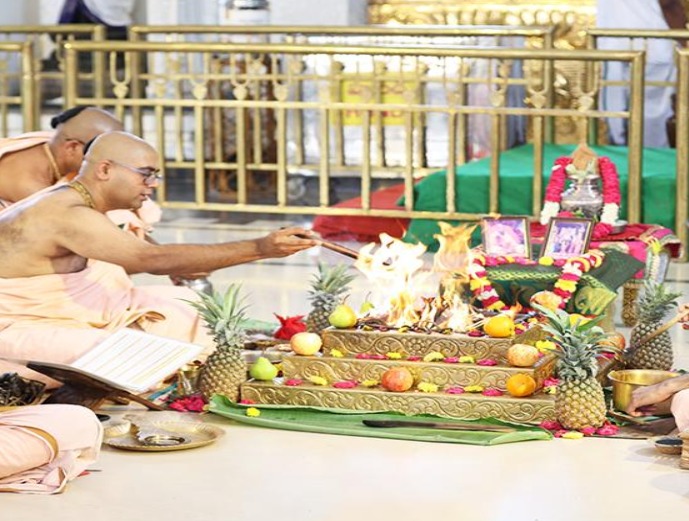
Ghee, grains, herbs and other prescribed offerings are offered into the sacred fire while the relevant mantras are recited.
9. Lakshmi Worship
Depending on the specific procedure, prayers or hymns dedicated to Goddess Lakshmi may also be included.
Some Lakshmi Narasimha homam procedures incorporate Lakshmi-related recitations such as Sri Suktam.
10. Purnahuti
The main ritual concludes with Purnahuti, the final offering into the sacred fire.
It symbolically represents the completion of the principal offerings.
11. Aarti and Blessings
The ceremony concludes with Aarti, prayers and blessings.
Prasadam and teertham may then be distributed to the participants.
Samagri Required for Lakshmi Narasimha Homam
The exact materials depend on the specific ritual procedure. Common items can include:
- Homa kundam
- Ghee
- Samidha
- Homa dravyam
- Rice
- Sesame seeds
- Grains
- Flowers
- Tulasi leaves where appropriate
- Turmeric
- Kumkum
- Sandalwood
- Camphor
- Incense
- Coconut
- Betel leaves
- Betel nuts
- Fruits
- Dry fruits
- Kalasha
- Mango leaves
- Akshata
- Lamps
- Cotton wicks
- Naivedyam
- Purnahuti materials
A priest should provide the final samagri list because requirements can differ between traditions.
Importance of Goddess Lakshmi in Lakshmi Narasimha Worship
Goddess Lakshmi is traditionally associated with wealth, prosperity, abundance and auspiciousness.
When Lakshmi is worshipped together with Narasimha, devotees seek a combination of divine protection and prosperity.
This makes Lakshmi Narasimha worship particularly meaningful for families who wish to offer prayers for:
- Financial stability
- Prosperity
- Family welfare
- Auspicious beginnings
- Peace
- Abundance
The spiritual meaning is not limited to material wealth. Devotees may also view Lakshmi’s blessings in terms of peace, harmony and overall auspiciousness.
Lakshmi Narasimha Homam for Business and Career
Some devotees perform Lakshmi Narasimha Homam before beginning a new business, entering a new professional phase or during challenging financial periods.
The devotional intention may be to seek:
- Stability
- Courage
- Prosperity
- Removal of obstacles
- Positive beginnings
- Strength during difficult periods
The homam should be regarded as a spiritual practice. Business and career decisions should continue to be based on proper planning, professional advice and practical action.
Lakshmi Narasimha Homam for Family Well-Being
A family can participate together in the homam by listening to the mantras, offering prayers and receiving prasadam.
The ceremony provides an opportunity for family members to gather in a spiritual environment and seek blessings for:
- Peace at home
- Harmony among family members
- Protection
- Prosperity
- Auspiciousness
- Spiritual growth
Can Lakshmi Narasimha Homam Be Performed at Home?
Yes, a Lakshmi Narasimha Homam can be conducted at home under the guidance of a qualified priest.
A suitable area should be selected where the homa kundam can be safely placed and sufficient ventilation is available.
For elaborate procedures involving extensive mantra recitation and specific ritual requirements, it is advisable to have a trained priest conduct the ceremony.
Some devotees also choose established Narasimha temples for the homam because of their long-standing connection with Narasimha worship.
Famous Lakshmi Narasimha Temples
Lakshmi Narasimha worship is prominent in many parts of India.
Some well-known Narasimha temples include:
- Ahobilam, Andhra Pradesh
- Yadadri, Telangana
- Simhachalam, Andhra Pradesh
- Antarvedi, Andhra Pradesh
- Mangalagiri, Andhra Pradesh
- Dharmapuri, Telangana
Ahobilam is particularly associated with the Narasimha tradition and is known for its multiple Narasimha forms.
Yadadri is another important Lakshmi Narasimha pilgrimage centre in Telangana.
The Lakshmi Narasimha temple at Hampi is also notable for its monumental Narasimha sculpture. India’s official tourism portal describes the Hampi sculpture as a large monolithic representation of the deity in his fierce form.
How Long Does Lakshmi Narasimha Homam Take?
The duration varies depending on the type and scale of the homam.
A simple ceremony may take less time, while a more elaborate homam involving multiple priests, extended mantra japa and additional pujas can take several hours.
The duration can depend on:
- Number of priests
- Mantra count
- Additional pujas
- Sankalpam
- Homam procedure
- Number of participants
- Purnahuti arrangements
It is best to confirm the approximate duration with the priest before scheduling the ceremony.
How to Prepare for Lakshmi Narasimha Homam
Clean the Puja Area
Keep the area clean and suitable for conducting the homam.
Take a Bath
Devotees traditionally take a bath and wear clean clothes before participating.
Arrange the Samagri
Prepare the required materials according to the priest’s list.
Discuss the Sankalpam
Inform the priest about the purpose of the homam and the names of the participants.
Maintain a Peaceful Environment
Family members should try to maintain a calm and devotional atmosphere during the ceremony.
Participate With Devotion
Listen carefully to the mantras and follow the priest’s instructions during the homam.
Role of the Priest in Lakshmi Narasimha Homam
A knowledgeable priest is important for a formal Lakshmi Narasimha Homam.
The priest generally takes responsibility for:
- Selecting or confirming the ritual procedure
- Sankalpam
- Kalasha Sthapana
- Deity invocation
- Mantra recitation
- Agni Pratishtha
- Homa offerings
- Purnahuti
- Aarti
- Blessings
Traditional homam procedures can differ, so the ceremony should follow the appropriate paddhati or ritual tradition rather than combining unrelated procedures.
Lakshmi Narasimha Homam and Spiritual Well-Being
Beyond the specific intention of the ceremony, a homam provides an opportunity for prayer, meditation and reflection.
The sound of Vedic mantras, the presence of the sacred fire and the participation of family members can create a focused devotional atmosphere.
Devotees may use the ceremony to express gratitude, seek courage and surrender their concerns to the Divine.
The spiritual significance of the ritual ultimately depends on the devotee’s faith and sincere participation.
Lakshmi Narasimha Homam and Health
Some devotional traditions associate Lakshmi Narasimha worship with prayers for health and well-being.
However, Lakshmi Narasimha Homam is not a medical treatment or substitute for professional healthcare.
Anyone experiencing a health condition should continue appropriate medical consultation and treatment. Religious practices may be followed alongside medical care according to personal faith.
Why Choose Veda Gayathri for Lakshmi Narasimha Homam?
Veda Gayathri provides traditional puja and homam services for devotees who wish to perform sacred ceremonies with appropriate priestly guidance.
A Lakshmi Narasimha Homam can be arranged according to the family’s requirements, including the purpose of the Sankalpam, preferred date, location and ritual format.
The ceremony gives families an opportunity to come together and offer prayers to Lord Lakshmi Narasimha while following a traditional worship procedure.
Whether performed at home, at a temple or for a special occasion, the homam can become a meaningful devotional experience for the entire family.
Frequently Asked Questions About Lakshmi Narasimha Homam
What is Lakshmi Narasimha Homam?
Lakshmi Narasimha Homam is a sacred fire ritual dedicated to Lord Narasimha and Goddess Lakshmi. It involves mantra recitation, prayers and offerings into a consecrated fire.
What is the purpose of Lakshmi Narasimha Homam?
Devotees traditionally perform it to seek blessings for protection, courage, prosperity, peace and family well-being.
When can Lakshmi Narasimha Homam be performed?
It may be performed on Narasimha Jayanti, Ekadashi, Swati Nakshatra days or another auspicious date selected according to the family’s tradition and priestly guidance.
Can Lakshmi Narasimha Homam be performed at home?
Yes. A qualified priest can conduct the homam at home, provided there is an appropriate and safe space for the sacred fire.
What samagri is required?
Common materials include ghee, samidha, grains, sesame, flowers, coconut, kalasha items, fruits, naivedyam and other homam materials. The exact list varies according to the ritual procedure.
How long does Lakshmi Narasimha Homam take?
The duration depends on the scale of the ceremony, mantra count, number of priests and additional rituals.
Is Lakshmi Narasimha Homam a cure for health problems?
No. It is a religious and devotional ritual. It should not replace medical diagnosis or treatment.
Can Lakshmi Narasimha Homam be performed for business prosperity?
Some devotees perform it as a prayer for prosperity, stability and auspicious beginnings. Practical business planning and professional guidance remain essential.
Conclusion
Lakshmi Narasimha Homam is a sacred devotional ceremony that brings together the worship of Lord Narasimha and Goddess Lakshmi. Lord Narasimha is traditionally revered as a protector of devotees, while Goddess Lakshmi represents prosperity, abundance and auspiciousness.
Through sacred fire offerings, mantra recitation, prayers and Sankalpam, devotees seek divine blessings for courage, protection, peace, prosperity and family well-being.
The exact procedure, mantras and samagri can vary according to the tradition followed by the priest. Therefore, conducting the homam with appropriate Vedic guidance helps maintain the intended ritual sequence.
For families looking for a meaningful spiritual ceremony, Veda Gayathri can help arrange Lakshmi Narasimha Homam according to traditional practices and the family’s devotional requirements.