Introduction
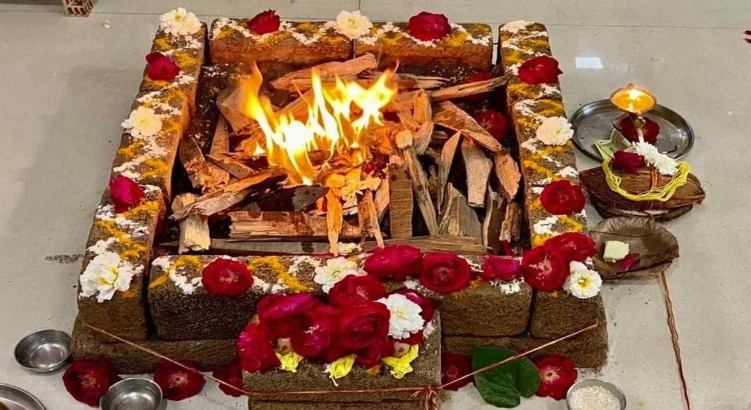
Maha Mrityunjaya Homam is a traditional Hindu fire ritual dedicated to Lord Shiva in his form as Tryambaka, the three-eyed one. The homam centers around the sacred Maha Mrityunjaya Mantra, one of the most revered Vedic mantras associated with prayers for protection, longevity, spiritual strength and freedom from the fear of death.
The Maha Mrityunjaya Mantra is found in the Rigveda 7.59.12 and also occurs in the Yajurveda tradition. It is traditionally addressed to Tryambaka, an epithet of Rudra associated with Shiva.
The mantra is:
“Om Tryambakam Yajamahe Sugandhim Pushtivardhanam
Urvarukamiva Bandhanan Mrityor Mukshiya Maamritat.”
Its traditional meaning expresses a prayer to be released from the bondage of death, using the imagery of a ripe fruit naturally separating from its stem, while remaining connected with immortality.
Maha Mrityunjaya Homam is performed by chanting the mantra and making prescribed offerings into a sacred fire. Devotees traditionally undertake this homam during periods when they seek divine grace, courage, peace and protection.
At Veda Gayathri, Maha Mrityunjaya Homam can be performed according to traditional Vedic procedures, with appropriate Sankalpam, mantra chanting, Homa offerings and concluding prayers.
What Is Maha Mrityunjaya Homam?
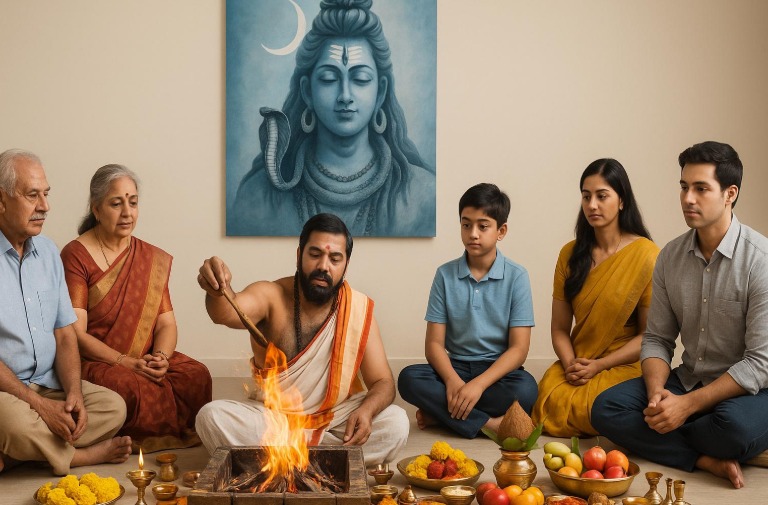
Maha Mrityunjaya Homam is a Vedic fire ritual dedicated to Lord Shiva in which the Maha Mrityunjaya Mantra is chanted while offerings are made into Agni.
The word Maha means great, Mrityu refers to death, and Jaya means victory or overcoming. The name therefore conveys the traditional idea of overcoming the fear and bondage associated with death.
The central mantra asks for liberation from mortality and bondage while remaining connected with Amrita, or immortality. This is why the mantra has traditionally been associated not only with physical longevity but also with spiritual liberation and inner strength.
During a homam, the mantra is repeatedly recited and offerings are made into the sacred fire. The exact offerings, number of repetitions and sequence of rituals can vary according to the priest, family tradition and particular Vedic procedure.
Maha Mrityunjaya Homam may also be called:
- Mrityunjaya Homam
- Maha Mrityunjaya Homa
- Mrityunjaya Havan
- Tryambaka Homam
- Mrityunjaya Homa
- Rudra Mrityunjaya Homam
Who Is Lord Maha Mrityunjaya?
Maha Mrityunjaya is a form or aspect of Lord Shiva associated with Tryambaka, the three-eyed one.
The three eyes of Shiva are traditionally interpreted in different ways, including associations with the Sun, Moon and fire, as well as deeper spiritual knowledge.
In the Maha Mrityunjaya Mantra, Shiva is addressed as Tryambaka. The mantra describes him as Sugandhim and Pushtivardhanam, traditionally understood as the fragrant one and the nourisher who promotes well-being.
Devotees worship this form of Shiva while praying for:
- Spiritual strength
- Protection
- Peace
- Longevity
- Courage
- Inner stability
- Freedom from fear
- Divine grace
The deeper meaning of the mantra extends beyond simply asking for a longer physical life. Its closing words express a prayer for liberation from death while remaining connected with immortality.
Origin of the Maha Mrityunjaya Mantra
The Maha Mrityunjaya Mantra has a long history in Vedic tradition.
It is found in Rigveda 7.59.12 and is also preserved in Yajurveda traditions. The verse is addressed to Tryambaka/Rudra.
The traditional mantra is:
ॐ त्र्यम्बकं यजामहे सुगन्धिं पुष्टिवर्धनम् ।
उर्वारुकमिव बन्धनान् मृत्योर्मुक्षीय माऽमृतात् ॥
Transliteration:
Om Tryambakam Yajamahe Sugandhim Pushtivardhanam
Urvarukamiva Bandhanan Mrityor Mukshiya Maamritat.
A commonly given translation is:
“We worship the three-eyed one, who is fragrant and nourishes all beings. May we be liberated from the bondage of death like a ripe fruit naturally released from its stem, but not separated from immortality.”
This powerful imagery is one of the reasons the mantra has remained an important part of Shiva worship.
Meaning of the Maha Mrityunjaya Mantra
Understanding the meaning of the mantra can make participation in the homam more meaningful.
Om
Om is regarded as a sacred primordial syllable and is widely used at the beginning of Hindu prayers and mantras.
Tryambakam
Tryambakam means the three-eyed one and refers to Lord Shiva.
Yajamahe
Yajamahe conveys the meaning of worshipping, honoring or making an offering.
Sugandhim
Sugandhim can be understood as fragrant or possessing a divine fragrance.
Pushtivardhanam
This refers to the one who nourishes, supports and promotes well-being.
Urvarukamiva Bandhanan
This part compares liberation to a ripe fruit naturally separating from its supporting vine or stem.
Mrityor Mukshiya
This expresses the prayer to be released from death or the bondage associated with mortality.
Maamritat
The final phrase asks not to be separated from Amrita, traditionally understood as immortality or the deathless principle.
The overall meaning therefore goes beyond physical longevity. It represents a prayer for freedom from fear, bondage and mortality while remaining connected with the spiritual principle of immortality.
Significance of Maha Mrityunjaya Homam
Maha Mrityunjaya Homam has an important place in Shaiva devotional practices.
The ritual combines:
- Sacred fire worship
- Vedic mantra chanting
- Offerings to Agni
- Shiva worship
- Sankalpam
- Prayer and meditation
- Concluding blessings
Traditionally, devotees perform this homam seeking divine grace during difficult periods of life.
It is particularly associated with prayers for health, longevity, protection and freedom from fear of death. These associations are part of Hindu devotional tradition rather than guarantees of medical or other outcomes.
Why Is Maha Mrityunjaya Homam Performed?
There are many traditional reasons for performing this homam.
For Longevity
Devotees traditionally perform Maha Mrityunjaya Homam with prayers for a long and meaningful life.
For Protection
The ritual is associated with prayers seeking divine protection from danger, fear and difficult circumstances.
During Difficult Periods
Families may perform the homam during emotionally or spiritually challenging periods.
During Health-Related Concerns
The Maha Mrityunjaya Mantra is traditionally recited during illness and other difficult situations.
However, a homam should be treated as a spiritual practice and prayer, not as a replacement for medical diagnosis, treatment or emergency care.
For Peace and Courage
The chanting and ritual can provide a structured devotional practice for people seeking inner peace and courage.
For Spiritual Growth
The mantra’s deeper emphasis on liberation and immortality makes the homam relevant to spiritual reflection as well.
Traditional Benefits of Maha Mrityunjaya Homam
Different Hindu traditions associate the homam with several spiritual and devotional benefits.
Seeking Blessings for Longevity
The most widely recognized traditional association is prayer for longevity and well-being.
Seeking Protection
Devotees may perform the homam as a prayer for protection from danger and adversity.
Promoting Inner Strength
Regular prayer and mantra recitation can become a source of spiritual discipline and courage.
Reducing Fear
The mantra’s central theme is liberation from the bondage and fear associated with death. Devotees may find this spiritually reassuring during difficult times.
Supporting Peace of Mind
The process of listening to or participating in repetitive mantra chanting and ritual prayer may provide a peaceful devotional environment.
Seeking Family Well-Being
Families may perform the homam collectively as a prayer for the well-being of a family member or the household.
Spiritual Protection
Within traditional belief, the mantra and homam are regarded as practices for seeking divine protection and grace.
These are traditional religious beliefs, not scientifically established guarantees of health, longevity or protection.
Maha Mrityunjaya Homam for Health and Well-Being
Health and well-being are among the most common contexts in which the Maha Mrityunjaya Mantra is traditionally recited.
Families may organize a homam when someone is experiencing a difficult period or when they wish to offer prayers for recovery and strength.
The ritual may provide an opportunity for family members to come together, pray and maintain a positive devotional atmosphere.
It is important to distinguish spiritual practice from medical care. Maha Mrityunjaya Homam should complement, not replace, appropriate medical treatment.
If someone is seriously ill, experiencing an emergency or undergoing treatment, they should continue following advice from qualified healthcare professionals.
Maha Mrityunjaya Homam for Longevity
Longevity is central to the traditional understanding of the Maha Mrityunjaya Mantra.
The prayer does not simply ask for endless physical life. Its deeper imagery focuses on liberation from the bondage of death while remaining connected with immortality.
For this reason, the homam can also be understood as a spiritual prayer for:
- A meaningful life
- Strength during challenges
- Freedom from excessive fear
- Spiritual awareness
- Divine grace
- Inner courage
Many devotees choose to perform the ritual for themselves or family members as part of their spiritual practice.
Maha Mrityunjaya Homam for Family Members
A family can perform Maha Mrityunjaya Homam as a collective prayer.
Parents may arrange the homam for their children, adults may perform it for elderly parents, and families may come together during difficult circumstances.
The Sankalpam can traditionally be made for a specific person or for the well-being of the entire family.
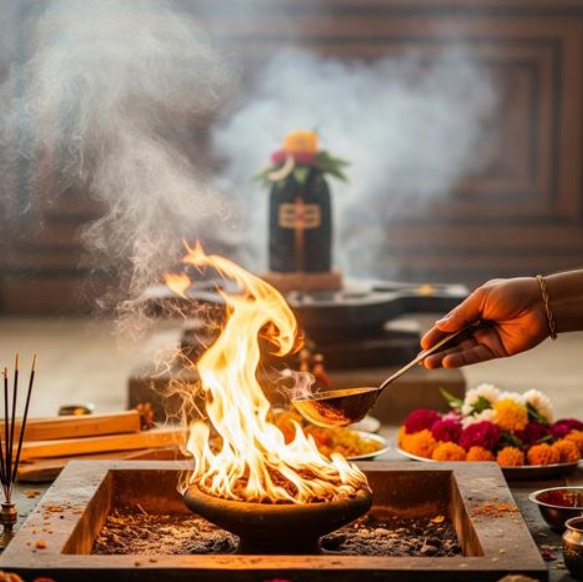
Family members may participate by:
- Sitting near the homam
- Listening to the mantra
- Repeating the mantra when appropriate
- Offering flowers
- Performing Namaskaram
- Receiving Prasad
- Participating in the concluding Aarti
Maha Mrityunjaya Homam and the Story of Markandeya
The story of Sage Markandeya is traditionally associated with Shiva worship and the Mrityunjaya theme.
According to the well-known devotional story, Markandeya was destined to have a short life. Through intense devotion to Lord Shiva, he sought refuge in Shiva. When Yama, the deity associated with death, came for him, Markandeya embraced the Shiva Lingam. Shiva appeared and protected his devotee.
The story is traditionally remembered as an example of devotion, surrender and Shiva’s grace.
Different versions of the Markandeya story appear in Hindu sacred literature, and the exact narrative details vary across traditions.
The story contributes to the devotional association between Lord Shiva, protection and the conquest of fear of death.
When Is Maha Mrityunjaya Homam Performed?
There is no single universally prescribed day for every Maha Mrityunjaya Homam. The appropriate time can depend on the purpose of the ceremony and the family’s tradition.
Some devotees prefer to perform Shiva-related rituals on:
- Mondays
- Pradosham
- Maha Shivaratri
- Shravan/Sawan
- Important Shiva festivals
- Personally selected auspicious Muhurthams
The date and time can also be selected after consulting a priest or astrologer when the homam is being performed for a specific individual.
For a personalized ceremony, the priest may consider details such as:
- Nakshatra
- Rashi
- Tithi
- Muhurtham
- Purpose of the homam
- Family tradition
Maha Mrityunjaya Homam Procedure
The exact procedure can differ according to the Vedic tradition and the priest performing the ritual. A general ceremony may include the following stages.
1. Preparation of the Puja Area
The area is cleaned and prepared for the homam.
The Homa Kundam and required puja materials are arranged.
2. Achamanam and Purification
Traditional purification prayers are performed before beginning the main ceremony.
3. Ganapati Puja
Lord Ganesha is worshipped first in many Hindu rituals to seek blessings for an obstacle-free ceremony.
4. Sankalpam
The priest makes the Sankalpam, stating the intention behind the homam.
It may include details such as:
- Name
- Gotra
- Nakshatra
- Rashi
- Location
- Purpose of the homam
For example, the Sankalpam may be made for health, longevity, peace, protection or family well-being according to the devotee’s intention.
5. Kalasha Sthapana
A Kalasha may be prepared and consecrated as part of the ritual.
Water, mango leaves, coconut and other traditional items may be used according to the specific procedure.
6. Shiva Invocation
Lord Shiva in his Tryambaka/Mrityunjaya form is invoked through appropriate prayers and mantras.
7. Maha Mrityunjaya Mantra Japa
The central mantra is chanted for the prescribed number of repetitions.
The number of repetitions depends on the purpose and ritual tradition.
8. Agni Pratishtha
The sacred fire is established in the Homa Kundam.
Agni becomes the central medium through which the prescribed offerings are made.
9. Homa Offerings
Ghee and other prescribed Homa Dravyas are offered into the sacred fire while the Maha Mrityunjaya Mantra is chanted.
Traditional procedures may include offerings of herbs and other materials depending on the specific paddhati.
10. Maha Mrityunjaya Mantra Recitation
The mantra is repeatedly chanted while offerings are made into the fire.
The priest maintains the appropriate pronunciation, rhythm and ritual sequence.
11. Purnahuti
Purnahuti is the final major offering into the sacred fire.
It signifies the completion of the principal homam.
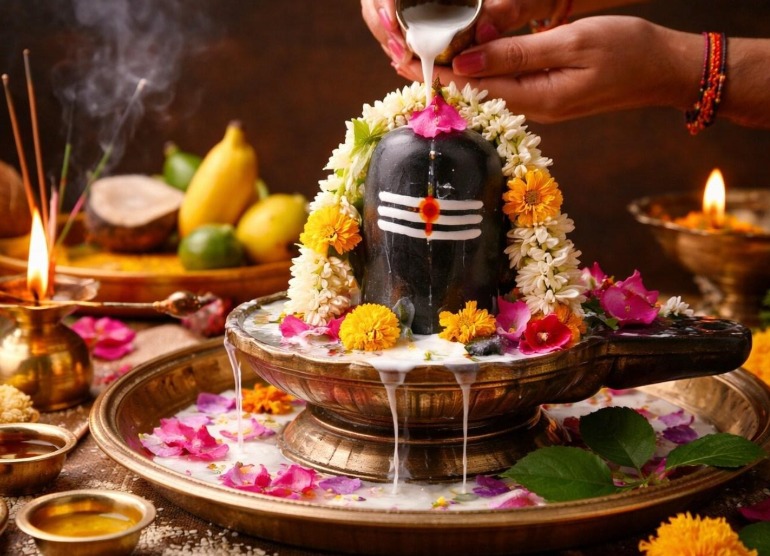
12. Shiva Abhishekam
Depending on the ritual format, Shiva Abhishekam may be performed as part of or after the homam.
Water and other traditional Abhishekam materials may be offered to the Shiva Lingam.
13. Aarti and Prasad
The ceremony concludes with Aarti, prayers and distribution of Prasad.
The exact order and inclusion of these steps varies by tradition and priestly procedure.
Maha Mrityunjaya Homam Samagri
The required Samagri can differ depending on the particular homam procedure.
Commonly required materials may include:
- Homa Kundam
- Ghee
- Samidhas
- Homa Dravyas
- Sacred herbs
- Bilva leaves
- Durva grass, where prescribed
- Flowers
- Fruits
- Coconut
- Betel leaves
- Betel nuts
- Turmeric
- Kumkum
- Sandalwood
- Akshata
- Camphor
- Incense
- Oil or ghee lamps
- Kalasha
- Mango leaves
- Naivedyam
- Shiva Lingam or Shiva-related puja materials
The final list should be confirmed with the priest because materials and quantities vary according to the ritual tradition. Some Mrityunjaya Homa procedures specifically describe offerings such as ghee, durva, bilva and herbs.
Maha Mrityunjaya Homam at Home
Maha Mrityunjaya Homam can be performed at home when suitable arrangements are available.
A home ceremony generally requires:
- A clean and ventilated space
- Homa Kundam
- Fire-safe surroundings
- Required Samagri
- Experienced priest
- Adequate seating
- Water and fire-safety arrangements
Because the homam involves an open sacred fire, appropriate ventilation and fire safety are important.
Families should follow the priest’s instructions regarding the setup and handling of the Homa Kundam.
Maha Mrityunjaya Homam at a Temple
Some devotees prefer to perform the homam in a Shiva temple or other traditional ritual setting.
Temple-based ceremonies may be convenient because the priest, puja materials and ritual space can already be arranged.
A temple ceremony may also allow devotees to combine the homam with:
- Shiva Abhishekam
- Rudrabhishekam
- Archana
- Aarti
- Prasad distribution
The availability of specific rituals depends on the individual temple.
How to Prepare for Maha Mrityunjaya Homam
Devotees can make a few preparations before the ceremony.
Confirm the Muhurtham
Speak with the priest and confirm the date and time.
Prepare Personal Details
The priest may require:
- Name
- Gotra
- Nakshatra
- Rashi
- Name of the person for whom the Sankalpam is being performed
Arrange the Samagri
Confirm the complete list of required materials beforehand.
Maintain Cleanliness
Take a bath and wear clean clothes before participating in the ceremony.
Maintain a Devotional Mindset
The homam is traditionally approached with faith, concentration and sincerity.
Follow Priest’s Instructions
If the priest recommends fasting, dietary restrictions or particular prayers, follow them according to your family tradition and personal circumstances.
How Long Does Maha Mrityunjaya Homam Take?
The duration depends on the type of homam, number of mantra repetitions, number of participants and additional rituals included.
A simple ceremony may take a couple of hours, while an elaborate Maha Mrityunjaya Homam with extensive mantra japa, Abhishekam and other rituals can take considerably longer.
If the homam is being organized for a specific purpose, it is advisable to ask the priest for the expected duration when booking the ceremony.
Importance of Mantra Pronunciation
The Maha Mrityunjaya Mantra is a Vedic mantra, and traditional Vedic practice places importance on correct pronunciation and recitation.
During a formal homam, the priest generally leads the chanting.
Devotees participating in the mantra recitation should follow the priest’s pronunciation rather than attempting unfamiliar Vedic pronunciation independently.
The mantra can also be approached with an understanding of its meaning, making the devotional practice more meaningful.
Maha Mrityunjaya Homam and Spiritual Well-Being
Beyond its traditional association with longevity and protection, the homam has a deeper spiritual dimension.
The mantra asks for liberation from the bondage of death while remaining connected to immortality.
This can encourage reflection on:
- The temporary nature of physical life
- The importance of spiritual awareness
- Acceptance
- Courage
- Devotion
- Surrender
- Inner peace
Thus, Maha Mrityunjaya Homam can be understood not only as a prayer for physical well-being but also as a spiritual practice centered on overcoming fear and seeking divine grace.
Frequently Asked Questions About Maha Mrityunjaya Homam
What is Maha Mrityunjaya Homam?
Maha Mrityunjaya Homam is a traditional Vedic fire ritual dedicated to Lord Shiva, centered around the Maha Mrityunjaya Mantra.
What is the Maha Mrityunjaya Mantra?
It is a Vedic mantra addressed to Tryambaka/Rudra and found in Rigveda 7.59.12. It is traditionally associated with prayers for liberation from death and connection with immortality.
Why is Maha Mrityunjaya Homam performed?
It is traditionally performed to seek Shiva’s blessings for longevity, protection, peace, spiritual strength and freedom from fear.
Can Maha Mrityunjaya Homam be performed for a sick person?
Yes, families traditionally perform the homam as a prayer for the well-being and recovery of someone who is ill. However, it should not replace professional medical care.
Can it be performed for children?
Yes. Families may perform it as a traditional prayer for a child’s well-being and protection.
Can Maha Mrityunjaya Homam be performed at home?
Yes, provided suitable arrangements are made and the ritual is conducted safely by an experienced priest.
What is the main mantra used in the homam?
The principal mantra is:
Om Tryambakam Yajamahe Sugandhim Pushtivardhanam
Urvarukamiva Bandhanan Mrityor Mukshiya Maamritat.
Is Maha Mrityunjaya Homam only for health?
No. While health and longevity are important traditional associations, the mantra also has a deeper spiritual meaning related to liberation from fear, mortality and bondage.
Is Maha Mrityunjaya Homam the same as Rudra Homam?
They are related Shiva-centered Vedic rituals, but they are not necessarily identical. The exact procedure, mantra sequence and offerings can differ.
When is the best time to perform Maha Mrityunjaya Homam?
The appropriate Muhurtham depends on the purpose of the ceremony and the family’s tradition. A priest can help select a suitable date and time.
Maha Mrityunjaya Homam at Veda Gayathri
At Veda Gayathri, Maha Mrityunjaya Homam can be arranged according to the purpose and traditional requirements of the devotee or family.
The ceremony can include:
- Ganapati Puja
- Sankalpam
- Kalasha Sthapana
- Shiva invocation
- Maha Mrityunjaya Mantra Japa
- Sacred fire establishment
- Homa offerings
- Purnahuti
- Shiva Abhishekam, where included
- Aarti
- Prasad
Families may consider Maha Mrityunjaya Homam for traditional prayers related to longevity, protection, family well-being, spiritual strength or during difficult periods.
The exact procedure and Samagri requirements can be discussed with the priest before scheduling the ceremony.
Conclusion
Maha Mrityunjaya Homam is a deeply respected Hindu fire ritual centered around the ancient Maha Mrityunjaya Mantra dedicated to Tryambaka, the three-eyed form of Rudra associated with Lord Shiva.
The mantra, preserved in the Rigveda and Yajurveda traditions, expresses a profound prayer for liberation from the bondage of death while remaining connected with immortality.
Traditionally, devotees perform Maha Mrityunjaya Homam seeking blessings for longevity, protection, peace, courage and spiritual strength. It may be performed for individuals, children, elderly family members or the entire family.
The ritual combines mantra chanting, Shiva worship, sacred fire offerings and prayer. The exact procedure, Samagri, mantra count and Muhurtham can vary according to regional and family traditions.
For families looking to perform a traditional Maha Mrityunjaya Homam, Veda Gayathri can help arrange the ceremony according to the appropriate ritual procedure and purpose.