Introduction
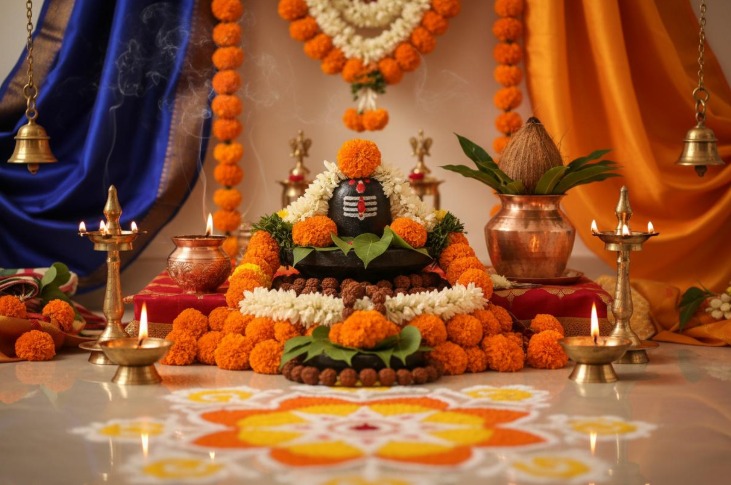
Mahashivratri 2027, also known as Maha Shivaratri or the Great Night of Shiva, is one of the most sacred Hindu festivals dedicated to Lord Shiva. Devotees across India and around the world observe this auspicious occasion through fasting, prayers, Shiva Abhishekam, mantra chanting, meditation and night-long worship.
Mahashivratri 2027 will be celebrated on Saturday, March 6, 2027. The festival is observed on Krishna Paksha Chaturdashi, the fourteenth day of the waning Moon. The exact Puja and Nishita Kaal timings vary according to location.
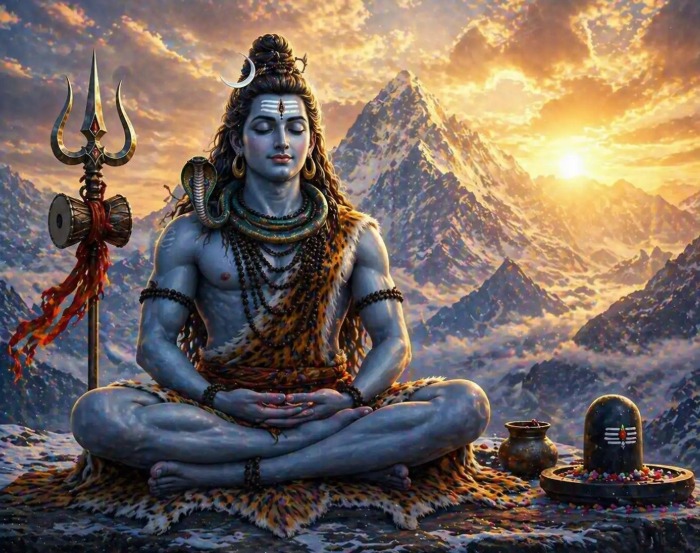
At Veda Gayathri, we bring you the significance, traditions, rituals, fasting rules, Puja Vidhi and spiritual importance of Mahashivratri so that devotees can celebrate this sacred festival with devotion and understanding.
Mahashivratri 2027 Date and Day
Mahashivratri 2027 will be celebrated on Saturday, March 6, 2027.
The festival is based on the Hindu lunar calendar, so its date changes every year according to the lunar Tithi. Mahashivratri falls on Krishna Paksha Chaturdashi during the month of Phalguna.
For devotees, the night of Mahashivratri is especially important because Shiva Puja is traditionally performed during the night, particularly around Nishita Kaal, the midnight period.
Mahashivratri 2027 at a Glance
Details | Information |
Festival | Mahashivratri 2027 |
Date | March 6, 2027 |
Day | Saturday |
Deity | Lord Shiva |
Tithi | Krishna Paksha Chaturdashi |
Main Worship | Night Puja |
Important Time | Nishita Kaal |
Main Practices | Fasting, Abhishekam, Puja, Jagaran and Mantra Chanting |
Devotees should check their local Panchang for accurate Puja timings because sunrise, sunset and Tithi timings differ from one location to another.
What Is Mahashivratri?
The word Mahashivratri means the “Great Night of Shiva.” It is a sacred occasion dedicated to Lord Shiva, who is worshipped as Mahadeva, Shankara, Neelkantha, Pashupati and by many other names.
Mahashivratri is traditionally associated with devotion, meditation, self-discipline and spiritual awakening. Unlike many Hindu festivals that are primarily celebrated during the daytime, Mahashivratri gives special importance to night-time worship.
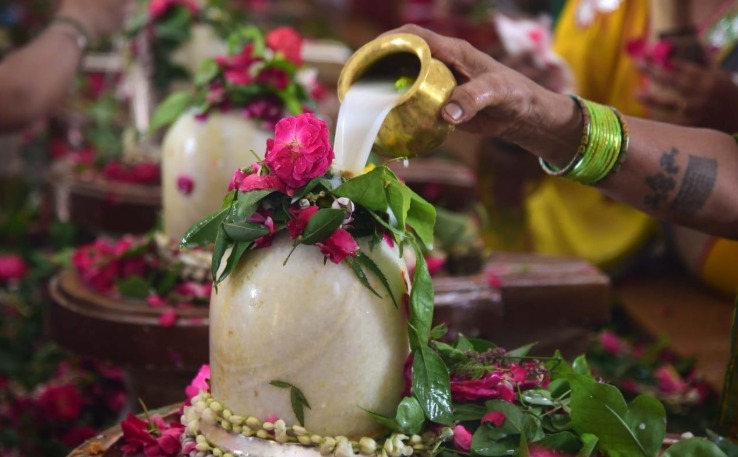
Devotees may remain awake throughout the night, chant Shiva mantras, perform Abhishekam, listen to devotional stories and participate in four Prahar Puja.
For Veda Gayathri, Mahashivratri is an opportunity to help devotees understand not only the rituals but also the deeper spiritual meaning behind this important festival.
Why Is Mahashivratri Celebrated?
Mahashivratri is celebrated in honour of Lord Shiva and is associated with several important stories and traditions from Hindu scriptures and religious practices.
Different traditions give different explanations for the origin and significance of Mahashivratri. One tradition connects the festival with the divine union of Lord Shiva and Goddess Parvati. Another associates it with Shiva appearing as an infinite pillar of light, known as the Jyotirlinga.
The festival also represents spiritual transformation. Lord Shiva’s association with destruction is understood not simply as destruction of life, but as the removal of ignorance, negativity and attachments that prevent spiritual growth.
Mahashivratri Significance
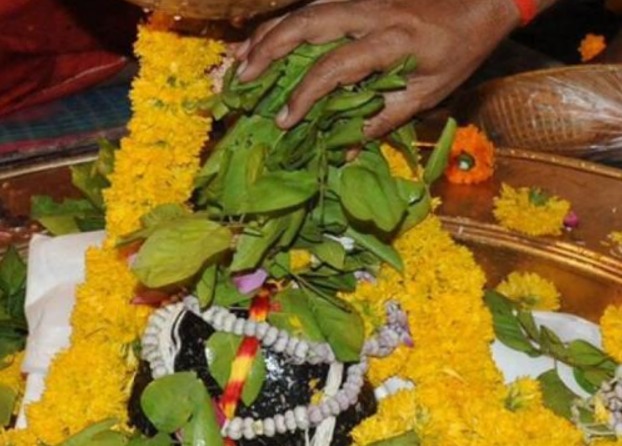
Mahashivratri has deep religious and spiritual significance for Shiva devotees.
The festival encourages people to turn their attention inward through prayer, fasting and meditation. Devotees believe that sincere worship of Lord Shiva on this sacred night can help cultivate peace, discipline and spiritual awareness.
The major spiritual values associated with Mahashivratri include:
- Devotion
- Self-control
- Meditation
- Inner peace
- Spiritual awareness
- Removal of negativity
- Transformation
- Surrender to the Divine
The night-long worship also reminds devotees to remain spiritually aware and focused rather than becoming distracted by worldly activities.
Mahashivratri 2027 Tithi
Mahashivratri is observed on Krishna Paksha Chaturdashi, the fourteenth lunar day of the waning phase of the Moon.
In 2027, the Chaturdashi Tithi begins during the day on March 6 and continues into March 7. Since the relevant Tithi occurs during the night, the main Mahashivratri observance falls on March 6.
The exact Tithi timings depend on the location, so devotees should consult a local Panchang before planning their Puja.
Mahashivratri 2027 Puja Timings
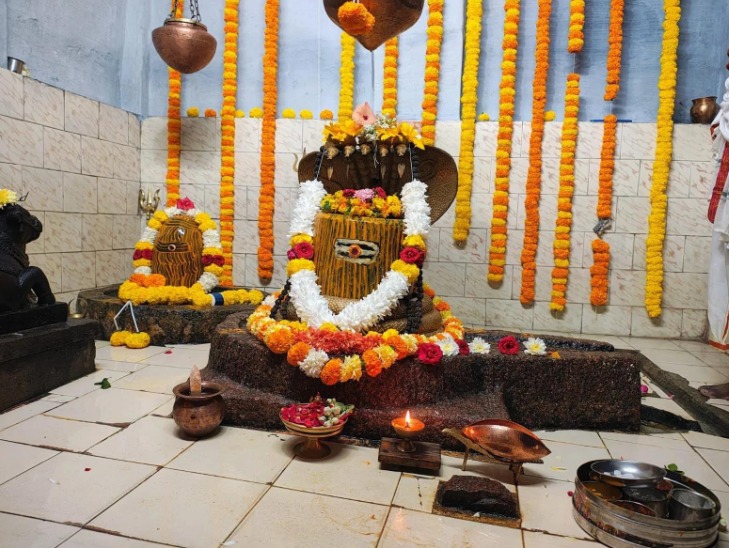
The most important period for Mahashivratri worship is traditionally known as Nishita Kaal.
Nishita Kaal refers to the midnight period and is considered especially auspicious for performing Shiva Puja.
For example, in Hyderabad, the approximate Nishita Kaal for Mahashivratri 2027 is around 12:03 AM to 12:51 AM on March 7.
The exact timing differs from city to city. Therefore, devotees in Hyderabad, Bengaluru, Chennai, Mumbai, Delhi, Kolkata or other locations should check their local Panchang.
What Is Nishita Kaal?
Nishita Kaal is the midnight period during which Mahashivratri devotees traditionally perform special Shiva worship.
Devotees who perform a single major Puja during the night may choose Nishita Kaal. Others follow the tradition of performing Puja during all four Prahar periods.
Nishita Kaal is therefore one of the most important terms to know when preparing for Mahashivratri.
Four Prahar Puja on Mahashivratri
The night of Mahashivratri is traditionally divided into four Prahar periods.
Devotees may perform Shiva Puja during each Prahar, making the worship a continuous spiritual practice throughout the night.
The four Prahar observance generally includes:
First Prahar
The first Prahar begins after sunset and marks the beginning of the main night-time worship.
Second Prahar
Devotees continue Shiva Puja, Abhishekam and mantra chanting during the second Prahar.
Third Prahar
The third Prahar includes the midnight period and is especially significant because it overlaps with Nishita Kaal.
Fourth Prahar
The final Prahar continues until early morning and concludes the night-long worship.
Exact Prahar timings depend on the local sunrise and sunset and should be checked using a location-specific Panchang.
Mahashivratri 2027 Vrat
Fasting, or Mahashivratri Vrat, is one of the most common practices followed by devotees.
The purpose of fasting is traditionally associated with self-discipline, purification and concentration. Devotees dedicate their physical and mental energy toward prayer and spiritual activities.
Different devotees follow different forms of fasting according to their family traditions and personal circumstances.
Types of Mahashivratri Fasting
Common fasting practices include:
- Nirjala Vrat: Abstaining from food and water.
- Phalahar Vrat: Eating fruits and permitted fasting foods.
- Milk-based fasting: Consuming milk or permitted dairy products.
- Partial fasting: Eating simple foods permitted according to one’s tradition.
Strict fasting is not suitable for everyone. Children, elderly people, pregnant women and people with dietary or medical requirements should follow appropriate guidance and should not undertake an unsafe fast.
Mahashivratri Vrat Rules
There is no single fasting method followed by every Hindu family. Customs differ according to region, tradition and personal practice.
Common practices include:
- Taking a bath before beginning the fast.
- Wearing clean clothes.
- Taking a Sankalp.
- Avoiding regular grains and foods that are not permitted during fasting.
- Consuming permitted fruits or fasting foods where applicable.
- Maintaining a peaceful state of mind.
- Spending time in prayer and meditation.
- Chanting Shiva mantras.
- Breaking the fast according to the appropriate Parana tradition.
The spiritual purpose of Vrat is more important than simply remaining hungry.
Mahashivratri Puja Vidhi
Mahashivratri Puja can be performed at home or in a Shiva temple.
A simple traditional Puja can be performed using a Shiva Lingam or image of Lord Shiva.
Step 1: Clean the Puja Area
Clean the Puja space and arrange the Shiva Lingam or Lord Shiva idol respectfully.
Step 2: Take a Bath
Take a bath and wear clean clothes before beginning the Puja.
Step 3: Take Sankalp
Sit before Lord Shiva and make a sincere Sankalp to observe Mahashivratri Vrat and Puja.
Step 4: Perform Abhishekam
Offer water to the Shiva Lingam and perform Abhishekam according to your family tradition.
Traditional offerings may include:
- Water
- Milk
- Curd
- Honey
- Ghee
- Sugar
- Panchamrit
- Gangajal
Step 5: Offer Bilva Leaves
Offer fresh and clean Bilva leaves to Lord Shiva.
Bilva leaves are considered especially sacred in Shiva worship.
Step 6: Offer Flowers
Offer suitable flowers while chanting Shiva mantras.
Step 7: Apply Sandalwood and Vibhuti
Sandalwood and Vibhuti may be offered according to the Puja tradition being followed.
Step 8: Light Diya and Incense
Light a traditional lamp and incense as part of the worship.
Step 9: Chant Shiva Mantras
Chant Om Namah Shivaya with devotion.
Step 10: Perform Aarti
Complete the Puja by performing Shiva Aarti and offering prayers.
Mahashivratri Puja Samagri
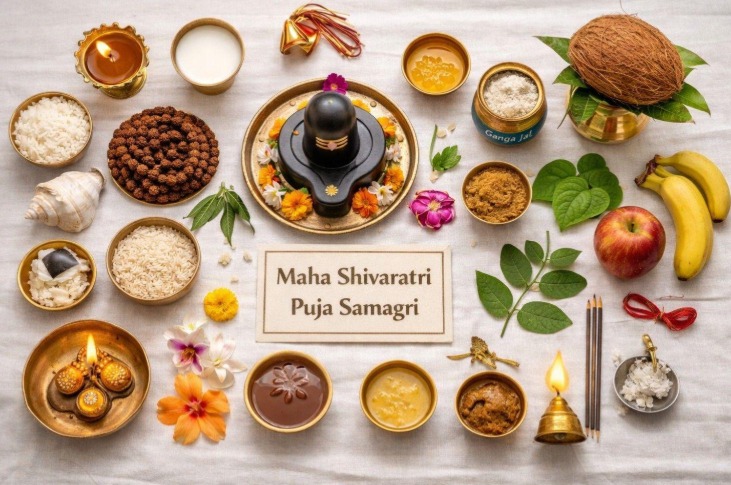
The following items are commonly used for Mahashivratri Puja:
- Shiva Lingam or Shiva idol
- Water
- Gangajal
- Milk
- Curd
- Honey
- Ghee
- Sugar
- Panchamrit
- Bilva leaves
- Flowers
- Sandalwood
- Vibhuti
- Incense
- Diya
- Cotton wicks
- Camphor
- Fruits
- Naivedyam
- Clean cloth
The required materials can differ depending on regional and family traditions.
Importance of Bilva Leaves
Bilva leaves, also called Bael leaves, have a special significance in Shiva worship.
Devotees traditionally offer Bilva leaves to the Shiva Lingam during Mahashivratri Puja.
The three-leaf structure of Bilva is often given symbolic spiritual interpretations in Hindu traditions.
Devotees should offer clean Bilva leaves respectfully according to their family or temple tradition.
Mahashivratri Mantras
Mantra chanting is an important part of Mahashivratri worship.
Om Namah Shivaya
ॐ नमः शिवाय
“Om Namah Shivaya” is one of the most widely chanted Shiva mantras.
Devotees may chant this mantra during Abhishekam, meditation, temple worship and Jagaran.
Maha Mrityunjaya Mantra
ॐ त्र्यम्बकं यजामहे सुगन्धिं पुष्टिवर्धनम्।
उर्वारुकमिव बन्धनान्मृत्योर्मुक्षीय मामृतात्॥
The Maha Mrityunjaya Mantra is traditionally associated with Lord Shiva and is widely recited during Shiva worship.
Mahashivratri Jagaran
Jagaran means staying awake during the night.
Devotees traditionally stay awake on Mahashivratri by spending the night in prayer and spiritual activities.
People may participate in:
- Shiva Bhajans
- Mantra chanting
- Meditation
- Scripture reading
- Shiva Katha
- Abhishekam
- Four Prahar Puja
- Temple worship
The purpose of Jagaran is to maintain spiritual awareness throughout the sacred night.
Mahashivratri Mythological Stories
Mahashivratri is associated with several important Hindu traditions and stories.
Shiva and Parvati
One popular tradition connects Mahashivratri with the divine union of Lord Shiva and Goddess Parvati.
Their union represents the relationship between Shiva and Shakti and is regarded as a powerful symbol of divine consciousness and energy.
The Jyotirlinga Story
Another important tradition describes Lord Shiva appearing as an endless pillar of divine light.
Brahma and Vishnu attempted to discover its beginning and end but were unable to find its limits.
This story symbolizes the infinite and transcendent nature of Lord Shiva.
Samudra Manthan and Neelkantha
According to another well-known tradition, the churning of the cosmic ocean produced a deadly poison called Halahala.
Lord Shiva consumed the poison to protect creation. His throat became blue, giving rise to the name Neelkantha, meaning “the blue-throated one.”
These stories emphasize Shiva’s compassion, sacrifice, protection and divine power.
Mahashivratri Celebrations Across India
Mahashivratri is celebrated throughout India with different regional customs.
In Andhra Pradesh and Telangana, devotees visit Shiva temples, perform Abhishekam and participate in special prayers.
In Karnataka, devotees observe fasting, visit temples and participate in Shiva worship.
In Tamil Nadu, devotees visit important Shiva temples and participate in night-long prayers.
In Maharashtra, devotees observe fasting and perform Shiva Puja.
Across North India, devotees participate in temple worship, Rudrabhishekam, fasting and devotional programmes.
Although the customs differ, devotion to Lord Shiva remains the central element of the festival.
Mahashivratri Temple Celebrations
Shiva temples become important centres of worship during Mahashivratri.
Many temples organize:
- Special Abhishekam
- Rudrabhishekam
- Shiva Aarti
- Bhajans
- Mantra chanting
- Night-long Puja
- Four Prahar Puja
- Spiritual discourses
- Prasadam distribution
Devotees planning to visit a temple should check the temple’s official timings because opening hours and special arrangements can vary during Mahashivratri.
Mahashivratri Fasting Food
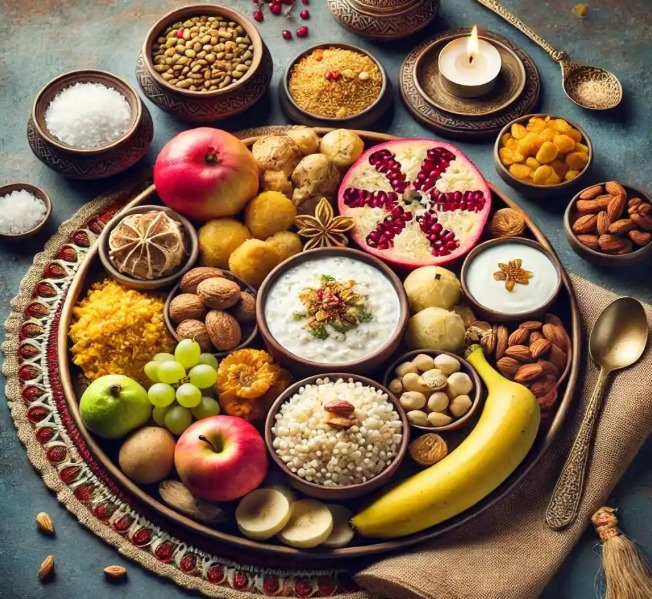
Devotees observing a partial or fruit-based fast may consume traditional fasting foods.
Common choices include:
- Fruits
- Milk
- Curd
- Coconut water
- Sabudana
- Makhana
- Potatoes
- Singhara flour
- Rajgira
- Nuts
- Dry fruits
Food restrictions differ between communities and families, so devotees should follow their established fasting tradition.
How to Celebrate Mahashivratri at Home
Mahashivratri can be celebrated peacefully at home through simple devotional practices.
Morning
Wake up early, take a bath and clean the Puja area. Wear clean clothes and take the Sankalp for the Vrat.
Evening
Prepare the Shiva Puja materials and perform Abhishekam. Offer Bilva leaves, flowers, water and other traditional offerings.
Night
Chant Om Namah Shivaya, meditate and perform Nishita Kaal Puja. Devotees who wish to observe Jagaran can spend the night in prayer and devotional activities.
Next Morning
Complete the morning prayers and break the fast according to the appropriate local Parana timing and personal tradition.
Mahashivratri 2027 Parana
Parana refers to breaking the fast after the completion of the religious observance.
For devotees observing a strict Vrat, the fast is traditionally broken on the following day according to the applicable Panchang timing.
Since Parana timings depend on location and tradition, devotees should check their local Panchang before breaking the fast.
Mahashivratri Do’s and Don’ts
Do’s
- Keep the Puja area clean.
- Observe the Vrat according to your capacity.
- Chant Shiva mantras.
- Offer Bilva leaves.
- Perform Abhishekam respectfully.
- Visit a Shiva temple if possible.
- Spend time in meditation and prayer.
- Maintain a peaceful and positive mindset.
Don’ts
- Do not force yourself into an unsafe fast.
- Avoid unnecessary arguments and negativity.
- Follow your family’s traditional Puja practices.
- Do not assume another city’s Puja timing applies to your location.
- Avoid treating the festival only as a social celebration; remember its spiritual purpose.
Spiritual Lessons of Mahashivratri
Mahashivratri provides several important spiritual lessons.
Self-Control
Fasting teaches discipline and control over physical desires.
Inner Peace
Prayer and meditation can help devotees develop a calmer and more focused mind.
Letting Go of Negativity
The symbolism associated with Lord Shiva encourages devotees to overcome negative thoughts and attachments.
Devotion
Mahashivratri reminds devotees of the importance of faith and surrender.
Transformation
Shiva’s association with transformation teaches that endings can create opportunities for renewal and spiritual growth.
Conclusion
Mahashivratri 2027 will be celebrated on Saturday, March 6, 2027. It is a sacred occasion dedicated to Lord Shiva and is observed through fasting, Abhishekam, Bilva leaf offerings, mantra chanting, meditation, temple visits and night-long worship.
The true essence of Mahashivratri goes beyond rituals. It is a time to develop self-discipline, devotion, inner peace and spiritual awareness. Whether you observe a strict fast, perform a simple Puja at home, visit a Shiva temple or chant Om Namah Shivaya, sincere devotion is at the heart of this sacred festival.
At Veda Gayathri, we aim to make Hindu festivals easier to understand and celebrate by bringing together their dates, traditions, mythology, rituals and spiritual significance.
May Lord Shiva bless you and your family with peace, strength, wisdom and prosperity.
Om Namah Shivaya!
Har Har Mahadev!