Navratri 2026: Dates, Puja Vidhi, Nav Durga, Significance, Colors, Fasting and Celebrations
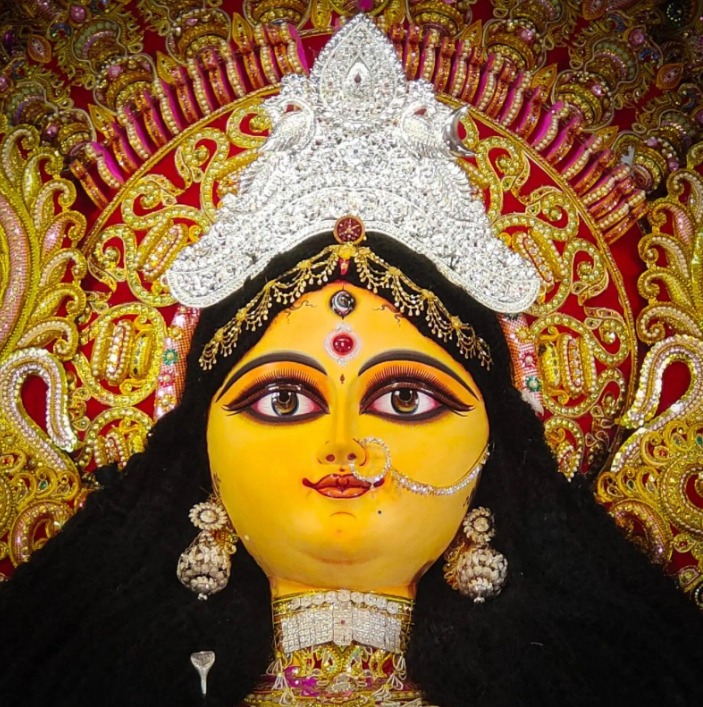
Navratri 2026 is one of the most important Hindu festivals dedicated to Goddess Durga and the divine feminine power, Shakti. Sharad Navratri, also known as Shardiya Navratri or Maha Navratri, will begin on Sunday, October 11, 2026, and the nine-day celebration will culminate with Vijayadashami (Dussehra) on Tuesday, October 20, 2026.
During these nine nights, devotees worship the nine forms of Goddess Durga, known as Navadurga, observe fasting, perform daily puja, chant mantras, visit temples and participate in cultural celebrations such as Garba and Dandiya.
This complete Navratri 2026 guide explains the festival dates, Ghatasthapana Muhurat, nine forms of Goddess Durga, Navratri colors, puja vidhi, fasting rules, important rituals, regional celebrations, spiritual significance and frequently asked questions.
Veda Gayathri is a trusted platform for discovering the spiritual, cultural, and traditional significance of Hindu festivals, puja rituals, auspicious timings, and devotional practices. As we welcome Navratri 2026, Veda Gayathri brings you a complete and easy-to-understand guide to this sacred nine-day festival dedicated to Goddess Durga and her nine divine forms, Navadurga. In this guide, you will discover the Navratri 2026 dates, nine days of Navratri, Ghatasthapana, puja vidhi, fasting rules, Navratri colors, significance, rituals, and celebrations across India, helping devotees celebrate the festival with devotion, knowledge, and tradition.
Navratri 2026 Date and Time
When is Navratri 2026?
Sharad Navratri 2026 begins on Sunday, October 11, 2026.
The nine-day Navratri celebration continues through October 19, while Vijayadashami is celebrated on October 20, 2026. According to the 2026 Shardiya Navratri calendar, Ghatasthapana and Shailputri Puja are observed on October 11.
Navratri 2026 Important Dates
Date | Day | Navratri | Goddess / Important Occasion |
October 11, 2026 | Sunday | Day 1 | Ghatasthapana, Maa Shailputri |
October 12, 2026 | Monday | Day 2 | Maa Brahmacharini |
October 13, 2026 | Tuesday | Day 3 | Maa Chandraghanta |
October 14, 2026 | Wednesday | Day 4 | Maa Kushmanda |
October 15, 2026 | Thursday | Day 5 | Maa Skandamata |
October 16, 2026 | Friday | Day 6 | Maa Katyayani |
October 17, 2026 | Saturday | Day 7 | Maa Kalaratri |
October 18, 2026 | Sunday | Day 8 | Maa Mahagauri / Durga Ashtami |
October 19, 2026 | Monday | Day 9 | Maa Siddhidatri / Maha Navami |
October 20, 2026 | Tuesday | Day 10 | Vijayadashami / Dussehra |
The exact tithi-based observances can vary by location because Hindu calendars are calculated according to local sunrise and astronomical factors.
Note: Puja Muhurat and Panchang timings can differ from one city to another. Devotees should check their local Panchang before performing time-sensitive rituals.
What is Navratri?
The word Navratri comes from two Sanskrit words: Nava, meaning nine, and Ratri, meaning night. Therefore, Navratri literally means nine nights.
Navratri is a festival dedicated to Goddess Shakti, the divine feminine energy. During Sharad Navratri, devotees worship different manifestations of Goddess Durga on each of the nine days.
The festival represents the triumph of Dharma over Adharma, good over evil and divine power over negative forces.
The tenth day is celebrated as Vijayadashami or Dussehra, symbolizing victory and righteousness.
Sharad Navratri is considered the most prominent of the four major Navratris observed during the Hindu calendar year. It occurs during the Ashwin lunar month and falls during the autumn season.
Why is Navratri Celebrated?
Navratri is celebrated to worship Goddess Durga and seek her blessings for strength, prosperity, wisdom, health, courage and spiritual growth.
One of the most widely known traditions associated with Navratri is the story of Goddess Durga’s victory over Mahishasura, the buffalo demon. The battle symbolizes the victory of divine power and righteousness over arrogance, ignorance and evil.
The nine forms of Durga worshipped during Navratri represent different aspects of Shakti. Together, they symbolize the complete power of the Divine Mother.
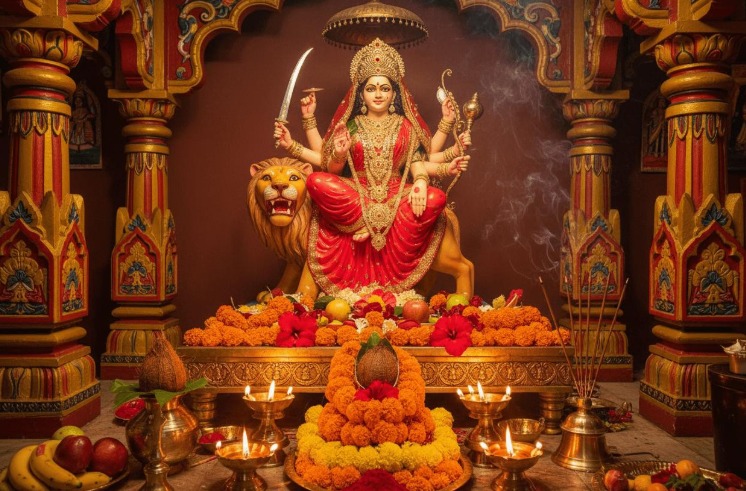
Navratri is therefore not only a religious festival but also a period of self-discipline, devotion, purification and spiritual reflection.
Navratri 2026: Ghatasthapana Muhurat
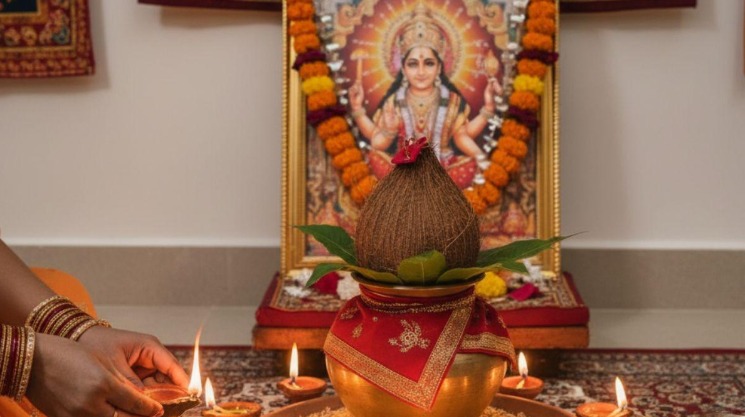
Ghatasthapana marks the formal beginning of Sharad Navratri. A sacred Kalash is established during an auspicious Muhurat, symbolizing the invocation of Goddess Shakti.
For Vijayawada, Andhra Pradesh, the 2026 Ghatasthapana Muhurat is listed as:
Date: Sunday, October 11, 2026
Ghatasthapana Muhurat: 5:59 AM to 9:56 AM
Abhijit Muhurat: 11:30 AM to 12:18 PM
The timing is location-specific, so devotees in other cities should use their local Panchang for the appropriate Muhurat.
Ghatasthapana is traditionally performed during Pratipada and preferably during the early part of the day. Traditional guidelines advise avoiding nighttime for this ritual.
How to Perform Ghatasthapana at Home
Ghatasthapana is one of the most important rituals of Navratri.
Basic items required
- Clean Kalash
- Water
- Mango leaves
- Coconut
- Red or yellow cloth
- Akshata
- Turmeric
- Kumkum
- Flowers
- Durva or sacred grass where traditionally used
- Barley or other grains for germination
- A clean puja platform
- Goddess Durga picture or idol
- Diya and incense
Simple Ghatasthapana Procedure
- Clean the puja area thoroughly.
- Place a clean platform or wooden board.
- Spread soil in a suitable vessel and sow barley seeds if following this tradition.
- Fill the Kalash with clean water.
- Add appropriate puja items according to family tradition.
- Place mango leaves around the Kalash.
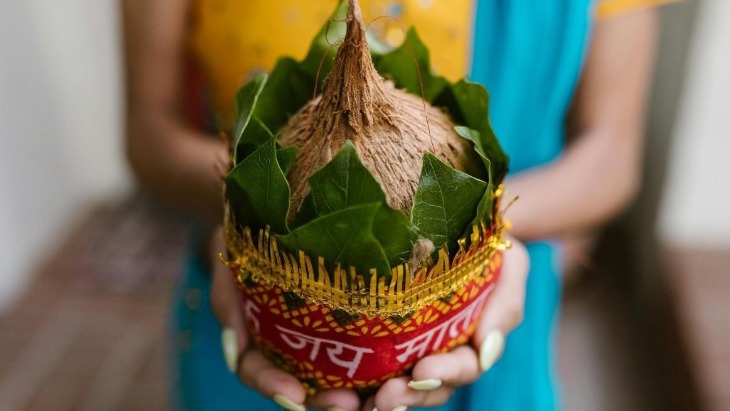
- Cover the Kalash with a coconut wrapped in sacred cloth.
- Decorate the Kalash with kumkum and turmeric.
- Light a diya and incense.
- Invoke Goddess Durga with prayers and mantras.
- Begin the nine-day Navratri worship.
For elaborate rituals, devotees may follow their family tradition or consult a qualified priest.
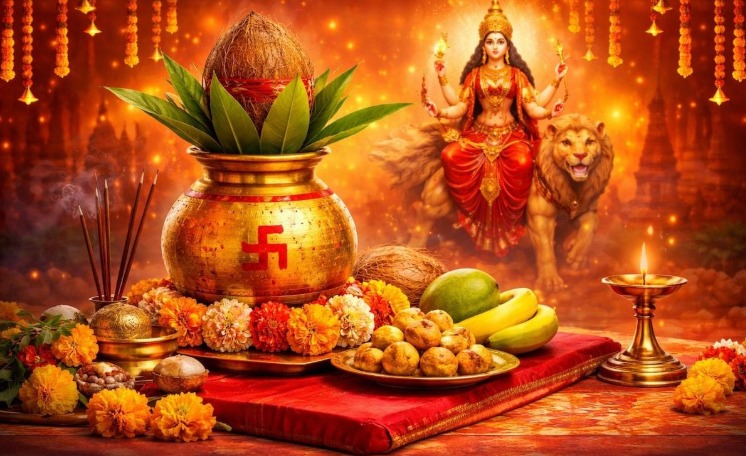
Navratri 2026: The Nine Forms of Goddess Durga
The nine manifestations of Goddess Durga are collectively called Navadurga.
Day 1 – Maa Shailputri
Maa Shailputri is worshipped on the first day of Navratri. She is considered the daughter of the Himalayas and is traditionally depicted riding a bull and carrying a trident and lotus.
Her worship represents strength, stability and spiritual beginning.
Devotees begin Navratri by seeking her blessings for a strong and disciplined mind.
Day 2 – Maa Brahmacharini
Maa Brahmacharini represents devotion, austerity, determination and spiritual discipline.
She is traditionally depicted carrying a rosary and Kamandalu.
On the second day, devotees pray for patience, inner strength and the ability to remain focused on their spiritual goals.
Day 3 – Maa Chandraghanta
Maa Chandraghanta is associated with courage, peace and protection.
She is traditionally represented with a crescent moon on her forehead and is depicted in a powerful form.
Her worship is believed to inspire devotees to overcome fear and negative influences.
Day 4 – Maa Kushmanda
Maa Kushmanda is worshipped on the fourth day.
Her name is traditionally associated with cosmic creative energy. She represents vitality, abundance and positive energy.
Devotees pray to Maa Kushmanda for prosperity, health and spiritual strength.
Day 5 – Maa Skandamata
Maa Skandamata is the mother of Lord Skanda, also known as Kartikeya.
She represents motherhood, compassion and protection.
Devotees worship her for family happiness, peace and divine blessings.
Day 6 – Maa Katyayani
Maa Katyayani is worshipped on the sixth day of Navratri.
She is traditionally associated with courage, justice and protection from negative forces.
Devotees pray to Maa Katyayani for strength, confidence and the removal of obstacles.
Day 7 – Maa Kalaratri
Maa Kalaratri represents the fierce aspect of Goddess Durga.
Although her appearance is powerful, she is worshipped as a protective form who destroys fear and negativity.
Her worship symbolizes fearlessness, protection and victory over darkness.
Day 8 – Maa Mahagauri
Maa Mahagauri is worshipped on the eighth day.
She symbolizes purity, peace and spiritual clarity.
Durga Ashtami is considered an especially significant day in many Navratri traditions.
Day 9 – Maa Siddhidatri
Maa Siddhidatri is worshipped on the ninth day.
She represents spiritual accomplishment, wisdom and divine perfection.
The worship of the nine forms concludes with prayers to Maa Siddhidatri before Vijayadashami.
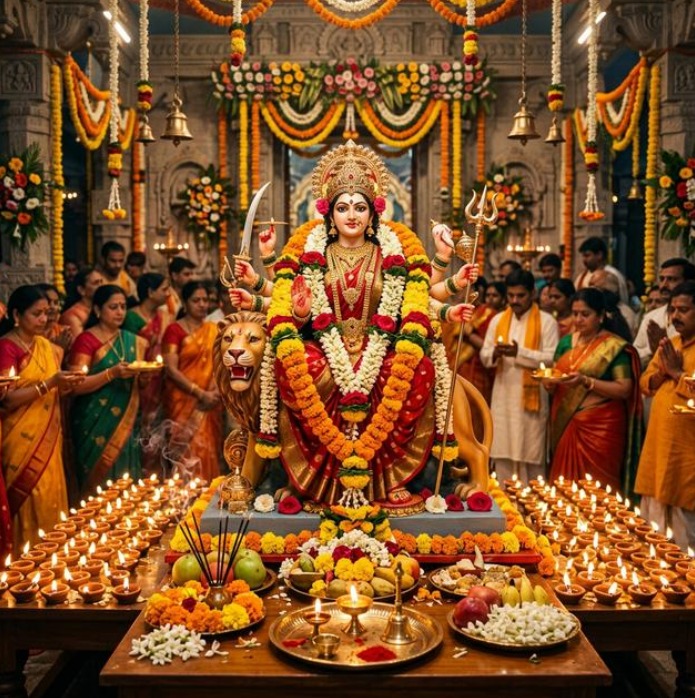
Navratri 2026 Colors
Wearing traditional colors during Navratri is popular in several parts of India, particularly Gujarat and Maharashtra. The colors may differ according to regional traditions and the weekday on which Navratri begins.
A commonly followed 2026 color sequence is:
Day | Date | Color |
Day 1 | October 11 | Orange |
Day 2 | October 12 | White |
Day 3 | October 13 | Red |
Day 4 | October 14 | Royal Blue |
Day 5 | October 15 | Yellow |
Day 6 | October 16 | Green |
Day 7 | October 17 | Grey |
Day 8 | October 18 | Purple |
Day 9 | October 19 | Peacock Green |
This color sequence is listed for the 2026 Shardiya Navratri calendar. Regional customs can vary, so families may follow their own traditional color sequence.
Navratri Puja Vidhi 2026
Navratri puja can be performed in a simple or elaborate manner depending on family tradition.
Daily Navratri Puja
A simple daily puja may include:
- Take a bath and wear clean clothes.
- Clean the puja area.
- Light a diya.
- Offer flowers to Goddess Durga.
- Apply kumkum and turmeric where appropriate.
- Offer fruits or traditional Naivedyam.
- Recite Durga prayers or Navratri mantras.
- Read or listen to Durga-related devotional texts.
- Perform Aarti.
- Pray for family well-being and spiritual strength.
Devotees may also chant Durga Suktam, Devi mantras, Lalita Sahasranama, Durga Chalisa or other prayers according to their tradition.
Navratri Fasting Rules
Fasting is an important part of Navratri for many devotees.
Some people observe a complete fast, while others follow a partial or sattvic diet.
Common fasting foods include:
- Fruits
- Milk
- Curd
- Nuts
- Sabudana
- Samak rice
- Singhara flour
- Rajgira
- Potatoes
- Certain root vegetables
- Rock salt
Regular grains, pulses and certain ingredients may be avoided according to individual tradition.
Important Note
Fasting practices differ between families and regions. People with medical conditions, children, elderly individuals and anyone who cannot safely fast should follow appropriate dietary guidance rather than fasting strictly.
Navratri is fundamentally about devotion and discipline, not about forcing the body beyond its limits.
Navratri Food and Prasad
Food offered during Navratri is generally prepared according to local religious customs.
Popular Navratri offerings include:
- Fruits
- Coconut
- Panchamrit
- Halwa
- Kheer
- Sabudana preparations
- Singhara-based dishes
- Samak rice dishes
- Dry fruits
- Traditional sweets
Many devotees also perform Kanya Puja on Ashtami or Navami and offer food to young girls as a devotional practice.
Kanya Puja During Navratri
Kanya Puja, also called Kanjak or Kumari Puja in different regions, is an important Navratri tradition.
Young girls are symbolically worshipped as manifestations of the Divine Mother. Their feet may be washed, prayers are offered and they are served traditional food.
A typical Kanya Puja meal may include:
- Poori
- Halwa
- Black chickpeas
- Fruits
- Sweets
The exact practice differs according to family and regional traditions.
The ritual emphasizes respect for feminine energy and the sacredness of motherhood and girlhood.
Durga Ashtami and Maha Navami 2026
In the 2026 calendar, October 19 is associated with Durga Ashtami and Maha Navami observances, while the tenth day, October 20, is Vijayadashami.
Durga Ashtami
Durga Ashtami is considered one of the most significant days of Navratri.
Devotees may perform:
- Special Durga Puja
- Homa
- Kanya Puja
- Special Naivedyam
- Aarti
- Chanting of Devi mantras
Maha Navami
Maha Navami marks the final major day of Navratri worship.
In several traditions, special prayers and Navami Homa are performed.
The celebration then moves toward Vijayadashami.
Vijayadashami 2026
Vijayadashami will be celebrated on Tuesday, October 20, 2026. It marks the conclusion of Sharad Navratri.
Vijayadashami represents the victory of righteousness over evil.
Different parts of India celebrate the day in different ways.
In North India, it is closely associated with the story of Lord Rama’s victory over Ravana.
In many eastern regions, the day is associated with Durga Puja and Goddess Durga’s departure.
In Karnataka and other southern regions, traditions such as Ayudha Puja and Vidyarambham may be observed.
How Navratri is Celebrated in Different Parts of India
Navratri is celebrated differently throughout India while maintaining the central theme of devotion to Shakti.
Gujarat
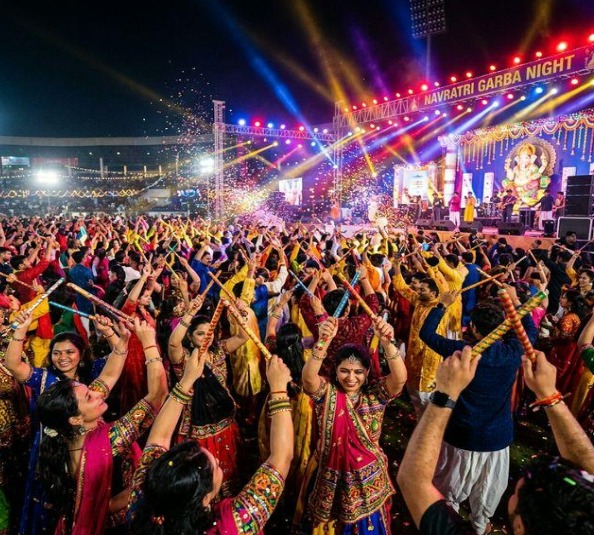
Gujarat is famous for Garba and Dandiya Raas.
Devotees gather in colorful traditional clothing and dance around a decorated representation of the Divine Mother.
Maharashtra
Maharashtra observes Navratri with devotional ceremonies, cultural programs and community celebrations.
Ghatasthapana is an important beginning ritual.
West Bengal
The final days of Navratri overlap with the grand celebrations of Durga Puja.
Large Durga idols, artistic pandals, cultural programs and devotional ceremonies form an important part of the celebration.
Karnataka
Mysuru and other parts of Karnataka are known for elaborate Dasara celebrations.
Ayudha Puja and Vijayadashami are especially significant.
Andhra Pradesh and Telangana
Navratri traditions include worship of Goddess Durga and other forms of Shakti. In Telangana, Bathukamma is an important floral festival celebrated around the same seasonal period, while various temples conduct special Devi worship.
North India
Navratri fasting, Ramleela performances, Durga worship and Dussehra celebrations are widely observed.
Spiritual Significance of Navratri
Navratri has a deep spiritual meaning beyond rituals and celebrations.
The nine nights can be understood as a period of inner transformation.
Each form of Goddess Durga represents a quality that devotees can cultivate:
- Shailputri – stability
- Brahmacharini – discipline
- Chandraghanta – courage
- Kushmanda – vitality
- Skandamata – compassion
- Katyayani – strength
- Kalaratri – fearlessness
- Mahagauri – purity
- Siddhidatri – wisdom and spiritual accomplishment
The festival encourages people to reduce negativity, practice self-control and strengthen their connection with the Divine.
Navratri Mantras
Devotees may chant different Devi mantras during Navratri according to their spiritual tradition.
One widely recited mantra is:
“Om Dum Durgayei Namaha”
It is traditionally used as a prayer to Goddess Durga for protection and divine strength.
Devotees may also recite:
- Durga Chalisa
- Devi Mahatmyam
- Durga Saptashati
- Lalita Sahasranama
- Devi Kavacham
- Durga Suktam
Those performing elaborate recitations should follow the appropriate traditional procedure.
Navratri Preparation Checklist
Before Navratri begins, devotees can prepare the following:
Puja Preparation
- Clean the home and puja room.
- Arrange the Goddess Durga idol or image.
- Purchase puja materials.
- Prepare the Kalash.
- Arrange flowers and fruits.
- Keep diyas and incense ready.
- Prepare the required Naivedyam ingredients.
Personal Preparation
- Decide your fasting method.
- Plan daily prayer time.
- Prepare a Navratri puja schedule.
- Keep traditional clothes ready.
- Decide which days you will visit a temple.
- Check the local Panchang for important Muhurats.
Navratri 2026: Do’s and Don’ts
Do’s
- Maintain cleanliness during the festival.
- Begin the day with prayer and positive thoughts.
- Follow your family’s traditional puja practices.
- Offer fresh flowers and Naivedyam.
- Respect different regional traditions.
- Maintain discipline during fasting.
- Participate in charitable activities where possible.
- Treat everyone with kindness and respect.
Don’ts
- Do not perform rituals without understanding their basic procedure.
- Do not force yourself to fast if it is unsafe for you.
- Avoid unnecessary arguments and negativity.
- Do not treat religious customs as a competition.
- Do not assume that every regional tradition is identical.
Conclusion
Navratri 2026 is a sacred festival that brings together devotion, spirituality, culture and community. Beginning on October 11, 2026, devotees across India will worship the nine forms of Goddess Durga and seek blessings for strength, prosperity, wisdom and peace.
From Ghatasthapana and daily Durga Puja to fasting, Kanya Puja, Garba, Dandiya and Vijayadashami, every tradition carries its own significance.
The true message of Navratri is the victory of good over evil, knowledge over ignorance and courage over fear. It is an opportunity to bring positive change into our lives, strengthen our spiritual practices and celebrate the divine feminine energy.
May Maa Durga bless you and your family with happiness, health, prosperity, strength and peace.
Happy Navratri 2026!