Ugadi is one of the most important festivals celebrated by Hindus, especially in Andhra Pradesh, Telangana, and Karnataka. It marks the beginning of the Hindu New Year according to the lunar calendar. The word Ugadi comes from the Sanskrit words “Yuga” meaning era and “Adi” meaning beginning, symbolizing the start of a new cycle of time. On this auspicious day, families perform Ugadi Pooja at home to seek blessings for prosperity, health, happiness, and success in the coming year.
Performing Ugadi Pooja at home is not complicated. With devotion and proper preparation, families can conduct the pooja in a simple yet meaningful way. The main purpose of this ritual is to express gratitude to the divine and welcome the new year with positive energy.
Preparation for Ugadi Pooja
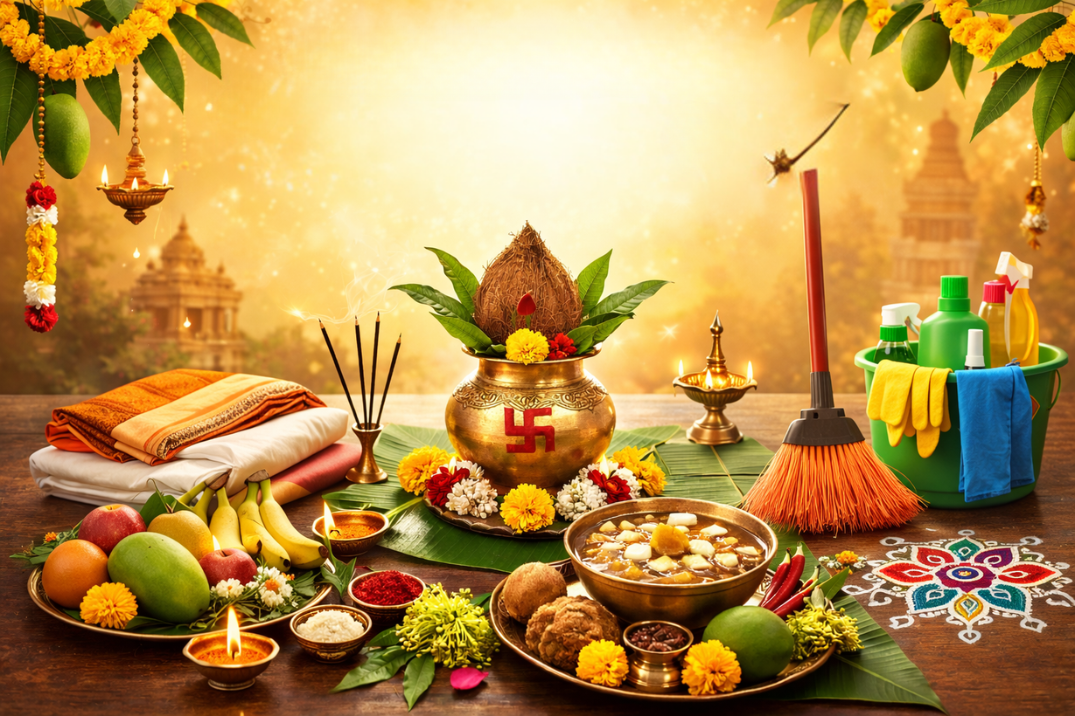
The preparations for Ugadi Pooja begin early in the morning. Traditionally, people clean their homes thoroughly to remove negativity and create a pure environment. The entrance of the house is decorated with mango leaf torans and colorful rangoli (muggu) designs. These decorations symbolize prosperity and invite positive energy into the home.
After cleaning the house, family members take an oil bath, which is considered highly auspicious on Ugadi day. Wearing new or traditional clothes is also a common custom, representing a fresh start to the new year.
Setting Up the Pooja Mandap
The next step is to prepare the pooja area. Choose a clean place in the house and spread a clean cloth on a small table or platform. Place idols or pictures of Lord Ganesha and Goddess Lakshmi or Lord Vishnu on the platform. These deities are worshipped to remove obstacles and bring prosperity.
Arrange the pooja items such as turmeric, kumkum, flowers, fruits, coconut, betel leaves, incense sticks, and a small lamp (diya). A kalash filled with water and topped with mango leaves and a coconut can also be placed near the idols, symbolizing abundance and divine presence.
Starting the Ugadi Pooja
The pooja begins by lighting the oil lamp and incense sticks. Lighting the lamp represents removing darkness and inviting divine blessings into the home. The first prayer is always offered to Lord Ganesha, who is known as the remover of obstacles.
Offer flowers, turmeric, kumkum, and fruits while chanting simple prayers or mantras. After invoking Lord Ganesha, prayers are offered to Goddess Lakshmi or Lord Vishnu for prosperity, success, and well-being in the coming year.
Offering Ugadi Pachadi
One of the most important traditions of Ugadi is preparing Ugadi Pachadi, a special dish that represents the different experiences of life. It usually contains six ingredients such as neem flowers, jaggery, tamarind, raw mango, salt, and chili.
Each ingredient symbolizes an emotion—sweetness for happiness, bitterness for sadness, sourness for challenges, and so on. Offering Ugadi Pachadi to the deity reminds us that life is a mixture of different experiences and we should accept them with balance and positivity.
After offering it to the deity, the pachadi is shared with all family members as prasadam.
Panchanga Sravanam
Another important ritual on Ugadi is Panchanga Sravanam, which involves listening to or reading the Hindu almanac for the upcoming year. It provides predictions about the year’s planetary influences, auspicious days, and important timings.
Many families either read the Panchangam at home or visit temples where priests explain the predictions for the year ahead.
Performing Aarti and Seeking Blessings
The pooja concludes with Aarti, where camphor is lit and offered to the deity while prayers are sung. Family members gather together, offer their prayers, and seek blessings for peace, prosperity, and success throughout the year.
Ugadi Pooja Date and Muhurtham
Ugadi marks the beginning of the Hindu New Year and is celebrated on the first day of the Chaitra month according to the Hindu lunar calendar. This auspicious festival usually falls in March or April every year. In 2026, Ugadi will be celebrated on March 19 (Thursday) in many parts of India, including Andhra Pradesh and Telangana.
On this day, devotees perform Ugadi Pooja early in the morning to welcome the new year with positive energy and divine blessings. The most auspicious time for performing Ugadi Pooja is usually during the morning hours after sunrise, when the environment is considered pure and spiritually uplifting.
Ugadi 2026 Muhurtham (Approximate Timings)
Ugadi Date: March 19, 2026 (Thursday)
Best Time for Ugadi Pooja: Early morning after sunrise
Pooja Muhurtham: Around 6:00 AM – 8:30 AM (varies slightly depending on location)
These timings may vary based on the local Panchangam (Hindu calendar) and geographical location. Therefore, many families consult a priest or refer to their regional Panchangam to confirm the exact muhurtham for their area.
Performing Ugadi Pooja during the proper muhurtham is believed to bring prosperity, peace, and good fortune for the entire year. Devotees start the day with a traditional oil bath, decorate their homes with mango leaf torans and rangoli, and then perform the pooja with devotion.
Another important tradition on Ugadi is Panchanga Sravanam, where the new year’s Hindu almanac is read to understand the planetary influences and predictions for the upcoming year.
Overall, observing Ugadi Pooja during the auspicious muhurtham is considered a powerful way to begin the new year with spiritual blessings, positive energy, and hope for prosperity.

Ugadi Pooja Items Required (Pooja Samagri List)
Before starting Ugadi Pooja at home, it is important to arrange all the necessary pooja items so that the rituals can be performed smoothly and with devotion. These items are used to offer prayers, perform rituals, and express gratitude to the deities for the blessings of the new year.
Here is a list of commonly required Ugadi pooja samagri:
Idol or picture of Lord Ganesha – Worship begins with Lord Ganesha, the remover of obstacles.
Idol or picture of Goddess Lakshmi or Lord Vishnu – They are worshipped for prosperity and protection.
Turmeric (Pasupu) and Kumkum – Used for applying tilak and decorating the idols.
Fresh flowers and flower garlands – Offered to the deity as a sign of respect and devotion.
Mango leaves – Used to decorate the entrance and pooja area as they symbolize prosperity.
Coconut – A sacred offering that represents purity and devotion.
Betel leaves and betel nuts – Traditional offerings in Hindu pooja rituals.
Fruits and sweets – Offered as naivedyam to the deity.
Incense sticks (Agarbatti) – Used to create a peaceful and sacred atmosphere.
Camphor – Used for performing aarti at the end of the pooja.
Oil or ghee lamp (Diya) – Lighting the lamp symbolizes the removal of darkness and negativity.
Kalash (water pot) with mango leaves and coconut – Represents divine energy and abundance.
Ugadi Pachadi – A special dish prepared on Ugadi that symbolizes the different flavors of life.
Keeping all these pooja items ready before starting the ritual helps ensure the pooja is performed in an organized and traditional manner.
Preparation for Ugadi Pooja at Home
Preparing the home and the pooja space is an important part of Ugadi celebrations. Proper preparation creates a positive and sacred environment for performing the pooja and welcoming the Hindu New Year with devotion.
The first step in preparation is cleaning the house thoroughly. Cleaning symbolizes removing negativity and making space for positive energy and blessings. After cleaning, the entrance of the house is decorated with rangoli (muggu) and mango leaf torans, which are believed to bring prosperity and good fortune.
Early in the morning, family members usually take a traditional oil bath, which is considered auspicious on festival days. Wearing new or freshly washed traditional clothes represents a fresh start and respect for the sacred occasion.
Next, prepare the pooja mandap or prayer area. Choose a clean and peaceful place in the house, preferably in the pooja room or living room. Spread a clean cloth on a small platform and place the idols or pictures of Lord Ganesha, Goddess Lakshmi, or Lord Vishnu.
Arrange all the pooja items neatly near the platform. Light the oil lamp and incense sticks to purify the surroundings and create a spiritual atmosphere. Make sure the Ugadi Pachadi and other offerings are ready before starting the pooja.
Preparing the home and pooja area with care and devotion helps create a calm and sacred environment, allowing family members to perform the Ugadi Pooja with focus, gratitude, and faith.

Ugadi Pooja Services by Veda Gayathri
Ugadi is one of the most auspicious festivals celebrated by Hindus, especially in Andhra Pradesh, Telangana, and Karnataka. It marks the beginning of the Hindu New Year and symbolizes new beginnings, prosperity, and positivity. On this special occasion, performing Ugadi Pooja at home is considered highly beneficial for inviting divine blessings and starting the year with spiritual energy. To ensure the rituals are performed correctly according to Vedic traditions, many families prefer booking professional pandit services. Veda Gayathri offers reliable and experienced Ugadi Pooja services to help devotees perform the festival rituals in the most authentic way.
Why Ugadi Pooja is Important
Ugadi is not just a festival; it is a day that signifies renewal and spiritual awakening. According to Hindu beliefs, Lord Brahma created the universe on the day of Ugadi, making it a sacred time to begin new ventures and pray for success in the coming year. Performing Ugadi Pooja helps remove negative energy, bring peace into the home, and attract prosperity and good fortune.
The pooja usually includes rituals such as Ganesha Pooja, Kalash Sthapana, Panchanga Sravanam, and offering Ugadi Pachadi to the deities. When these rituals are performed properly with Vedic mantras, they are believed to bring spiritual and positive vibrations to the household.
Professional Ugadi Pooja Services by Veda Gayathri
Veda Gayathri provides experienced and knowledgeable pandits who are well-versed in performing traditional Hindu rituals. The pandits follow authentic Vedic procedures and guide families through each step of the pooja. This ensures that the rituals are performed correctly and that devotees fully understand the significance of every step.
The services offered by Veda Gayathri include:
Ugadi Pooja at home
Panchanga Sravanam (reading of the new year almanac)
Ganesha Pooja
Kalash Sthapana
Ugadi Pachadi offering
Aarti and blessings for the new year
By booking Ugadi Pooja services from Veda Gayathri, families can experience a complete spiritual celebration without worrying about the complex rituals involved in the ceremony.
Experienced Pandits for Authentic Rituals
One of the main advantages of choosing Veda Gayathri is the availability of experienced and trained Vedic pandits. These priests have deep knowledge of Hindu scriptures and traditions. They ensure that every ritual is performed in the correct order and according to traditional practices.
The pandits also explain the meaning and significance of each ritual during the pooja. This helps family members understand the spiritual importance of the festival and participate in the ceremony with devotion and clarity.
Ugadi Pooja Services at Home
Many families prefer performing Ugadi Pooja at home because it creates a peaceful and spiritual environment within the household. Veda Gayathri makes it easy by providing home pooja services, where a pandit visits the devotee’s home and conducts the pooja.
The pandit guides the family in preparing the pooja area, arranging the pooja samagri, and performing the rituals step by step. This allows families to celebrate Ugadi in a traditional way while staying comfortable in their own home.
Panchanga Sravanam – A Special Ugadi Tradition
One of the most important parts of Ugadi celebrations is Panchanga Sravanam. During this ritual, the pandit reads the Hindu almanac and explains predictions for the coming year. This includes details about planetary movements, auspicious days, and general forecasts for the year ahead.
Listening to Panchanga Sravanam is believed to bring awareness and spiritual guidance for the new year. Veda Gayathri pandits perform this ritual during Ugadi Pooja so that families can understand what the upcoming year may hold.
Easy Pandit Booking with Veda Gayathri
In today’s busy lifestyle, finding the right pandit for religious ceremonies can sometimes be challenging. Veda Gayathri simplifies this process by offering easy pandit booking services for Ugadi Pooja. Devotees can book a pandit in advance and ensure that the pooja is conducted smoothly on the festival day.
The service focuses on providing trustworthy, experienced, and traditional pandits who perform rituals with sincerity and dedication.
Celebrate Ugadi with Devotion and Tradition
Ugadi is a time for new beginnings, spiritual reflection, and family gatherings. Performing Ugadi Pooja with the guidance of experienced pandits allows families to celebrate the festival in a meaningful and traditional way.
With Veda Gayathri Ugadi Pooja services, devotees can welcome the Hindu New Year with proper rituals, positive energy, and divine blessings. By booking a pandit in advance, families can ensure that their Ugadi celebrations are filled with devotion, tradition, and spiritual harmony.
Start the new year with faith and positivity by performing Ugadi Pooja with the trusted services of Veda Gayathri.