Introduction
Lakshmi Puja is one of the most widely observed Hindu worship rituals dedicated to Goddess Lakshmi, the divine embodiment of prosperity, abundance, auspiciousness and well-being. Devotees perform Lakshmi Puja to express gratitude, seek blessings for their homes and workplaces, and pray for peace, prosperity and positive beginnings.
Lakshmi Puja holds special importance during Diwali, when Goddess Lakshmi is traditionally worshipped during the evening on Amavasya. In many traditions, Lord Ganesha is worshipped alongside Goddess Lakshmi, as the two deities together represent auspicious beginnings, wisdom and prosperity.
For families, business owners and devotees, Lakshmi Puja is not only a religious ceremony but also an occasion to clean and decorate the home, light diyas, prepare traditional offerings and come together for prayer.
Veda Gayathri provides traditional Hindu puja services performed according to devotional practices, helping devotees conduct important ceremonies with proper preparation, mantras and rituals.
What Is Lakshmi Puja?
Lakshmi Puja is a Hindu worship ceremony dedicated to Goddess Lakshmi. The word Lakshmi is associated with auspiciousness, prosperity and abundance.
The puja generally includes:
- Invocation of Lord Ganesha
- Sankalpam or devotional resolution
- Kalasha preparation
- Invocation of Goddess Lakshmi
- Offering of flowers and Akshata
- Lighting of diyas
- Offering of fruits and sweets
- Lakshmi Mantra chanting
- Naivedyam
- Aarti
- Prasadam distribution
The exact procedure can differ according to family traditions, regional customs and the form of Lakshmi worship being performed.
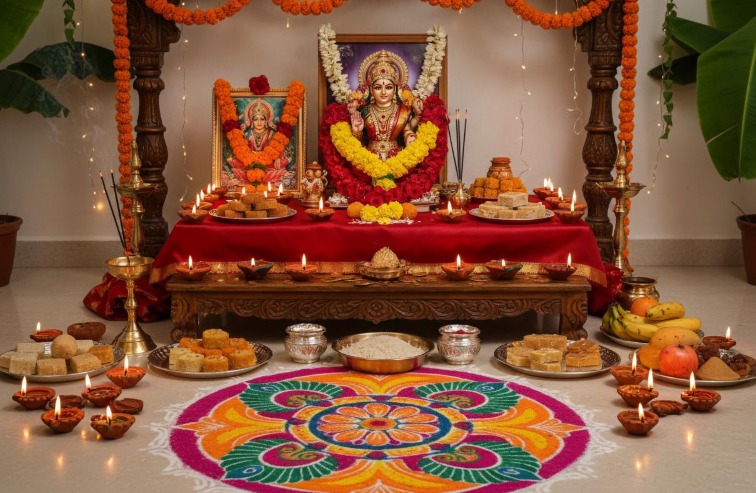
During Diwali, Lakshmi Puja is particularly prominent. Traditional Diwali preparations include cleaning and decorating homes, arranging Lakshmi and Ganesha idols and lighting lamps.
Who Is Goddess Lakshmi?
Goddess Lakshmi is one of the most revered Hindu goddesses and is traditionally associated with:
- Prosperity
- Wealth
- Fortune
- Abundance
- Beauty
- Auspiciousness
- Harmony
- Well-being
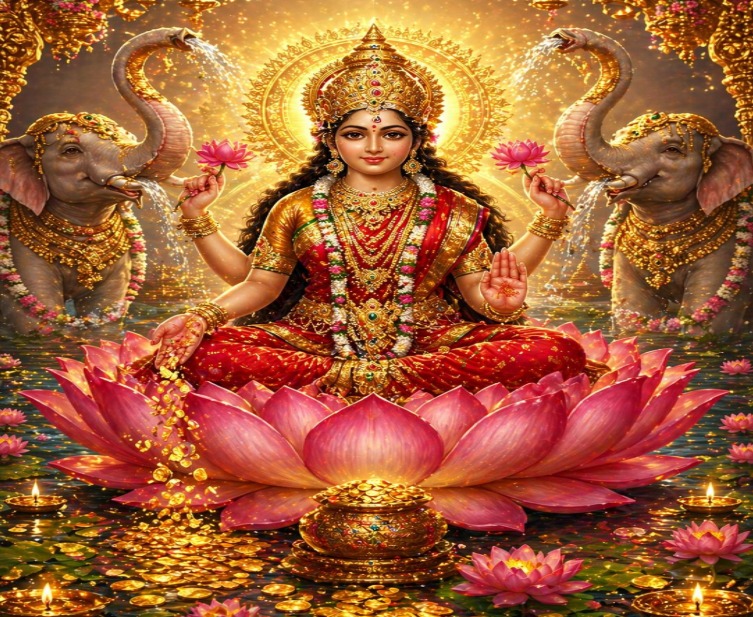
She is traditionally depicted seated on a lotus and holding lotus flowers. The lotus is often understood as a symbol of purity and spiritual growth.
Goddess Lakshmi is also traditionally regarded as the consort of Lord Vishnu. Different forms of Lakshmi are worshipped for different aspects of prosperity and well-being.
For devotees, Lakshmi worship represents more than material wealth. It can also symbolize gratitude, generosity, harmony and the responsible use of resources.
Significance of Lakshmi Puja
Lakshmi Puja has deep spiritual and cultural significance in Hindu traditions.
Devotees believe that sincere worship of Goddess Lakshmi can help create an atmosphere of auspiciousness and positive energy in the home.
The ceremony encourages devotees to:
- Maintain cleanliness
- Practice gratitude
- Respect wealth and resources
- Share prosperity with others
- Begin important activities with devotion
- Create a peaceful home environment
- Pray for family well-being
During Diwali, the significance becomes even greater because homes and workplaces are illuminated with lamps and decorated before the evening puja.
According to traditional Diwali practices, Lakshmi Puja is generally performed during the evening Pradosh period, with the exact muhurtham varying by location and year.
Why Do People Perform Lakshmi Puja?
Families may perform Lakshmi Puja for several traditional and devotional reasons.
1. Prayer for Prosperity
Devotees seek Goddess Lakshmi’s blessings for financial stability, abundance and responsible prosperity.
2. Family Well-Being
Lakshmi Puja can be performed as a family prayer for peace, harmony and happiness at home.
3. New Beginnings
People may perform Lakshmi Puja when starting a new business, opening an office, moving into a new property or beginning an important financial journey.
4. Business and Financial Worship
Business communities traditionally perform Lakshmi Puja during Diwali. Some communities also perform Chopda Pujan, in which new account books are ceremonially worshipped.
5. Spiritual Gratitude
The puja provides an opportunity to express gratitude for the resources, opportunities and blessings received during the year.
Lakshmi Puja During Diwali
Diwali is one of the most important occasions for Lakshmi worship.
On Diwali, families traditionally:
- Clean their homes
- Decorate entrances with rangoli
- Light diyas
- Prepare the puja space
- Arrange Goddess Lakshmi and Lord Ganesha idols
- Prepare flowers and offerings
- Perform the evening puja
- Recite prayers and mantras
- Perform Aarti
- Distribute Prasadam
Traditional Diwali Lakshmi Puja is performed on Amavasya, and the evening Pradosh period is commonly preferred. Exact muhurtham should be checked according to the local Panchang because timings vary by city.
Lakshmi Puja Procedure
The detailed procedure may vary depending on the tradition and the priest conducting the ceremony. A general Lakshmi Puja can include the following steps.
Step 1: Clean and Prepare the Home
The home and puja area are cleaned before the ceremony.
During Diwali, families traditionally decorate their homes with flowers, leaves, rangoli and lamps.
Step 2: Prepare the Puja Altar
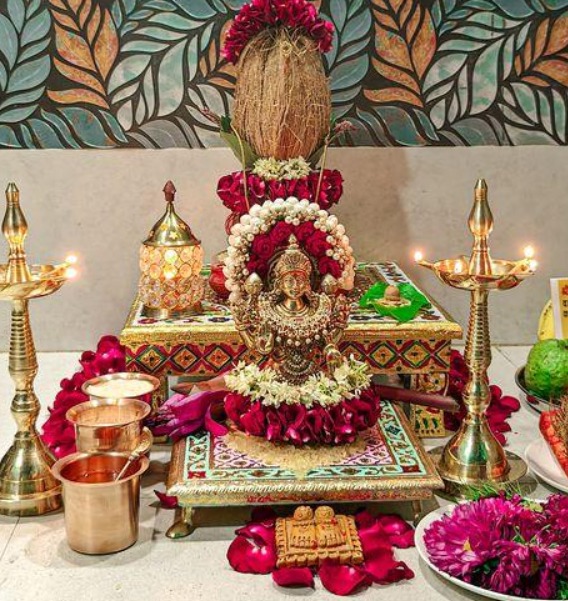
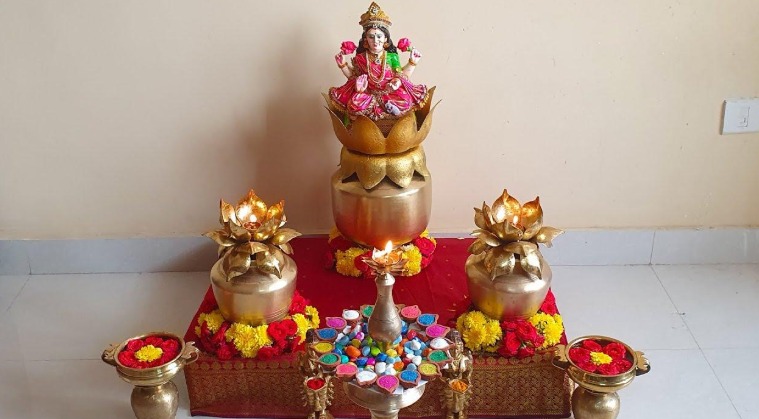
A clean platform or chowki is prepared and covered with a fresh cloth.
Goddess Lakshmi and Lord Ganesha idols or images are placed on the altar according to the family’s tradition.
Step 3: Light the Diya
A diya is lit to symbolize divine light, auspiciousness and the removal of darkness.
Step 4: Ganapati Puja
The puja traditionally begins with Lord Ganesha.
Devotees seek Lord Ganesha’s blessings before beginning the main Lakshmi worship.
Step 5: Sankalpam
The devotee makes a Sankalpam, expressing the intention and purpose of the puja.
This may include prayers for family well-being, prosperity, peace, business success or a specific devotional purpose.
Step 6: Kalasha Sthapana
A Kalasha may be prepared with water, leaves, coconut and other traditional items.
The Kalasha represents auspiciousness and is an important part of many Hindu rituals.
Step 7: Invocation of Goddess Lakshmi
Goddess Lakshmi is respectfully invoked through prayers and mantras.
The deity is offered flowers, Akshata and other traditional offerings.
Step 8: Lakshmi Mantra Chanting
Devotees may chant Lakshmi-related mantras during the puja.
One commonly recited mantra is:
Om Shreem Mahalakshmyai Namah
Devotees may repeat the mantra according to their family tradition or the guidance of the priest.
Step 9: Offer Flowers and Akshata
Flowers, particularly lotus or other auspicious flowers, may be offered to Goddess Lakshmi.
Akshata, or unbroken rice grains, are also commonly used in Hindu puja rituals.
Step 10: Offer Naivedyam
Fruits, sweets and other traditional food items are offered as Naivedyam.
Common offerings can include:
- Fruits
- Sweets
- Coconut
- Dry fruits
- Panchamritam
- Traditional homemade preparations
Step 11: Perform Aarti
The puja concludes with Aarti.
Family members may participate together while devotional songs or prayers are recited.
Step 12: Prasadam
After the puja, the offerings are respectfully distributed as Prasadam among family members and devotees.
Lakshmi Puja Samagri
The exact Samagri list can vary according to the puja tradition.
Common items include:
- Goddess Lakshmi idol or image
- Lord Ganesha idol or image
- Puja chowki
- Red or yellow cloth
- Kalasha
- Coconut
- Mango leaves
- Flowers
- Lotus flowers where available
- Akshata
- Kumkum
- Turmeric
- Sandalwood
- Incense sticks
- Camphor
- Diyas
- Ghee or oil
- Cotton wicks
- Fruits
- Sweets
- Dry fruits
- Panchamritam ingredients
- Betel leaves
- Betel nuts
- Coins
- Rice
- Water
- Naivedyam items
For a detailed traditional puja, the priest may provide a customized Samagri list according to the specific ritual.
Importance of Diyas in Lakshmi Puja
Diyas are an important part of Lakshmi Puja, especially during Diwali.
The light of the diya traditionally represents:
- Removal of darkness
- Knowledge
- Positivity
- Divine presence
- Hope
- Auspiciousness
During Diwali, families often place lamps around entrances, windows, balconies and puja areas.
The illuminated home creates a devotional and festive atmosphere for Lakshmi Puja.
Importance of Rangoli and Home Decoration
Rangoli is traditionally created at the entrance of the home during festivals.
During Lakshmi Puja, rangoli designs may include:
- Lotus motifs
- Footprints of Goddess Lakshmi
- Geometric patterns
- Floral designs
- Traditional symbols
Families also decorate the entrance with flowers and lamps.
These preparations symbolize welcoming auspiciousness and creating a clean and devotional environment.
Lakshmi Puja and Lord Ganesha
Lakshmi and Ganesha are commonly worshipped together during Diwali.
Ganesha is traditionally associated with wisdom, auspicious beginnings and the removal of obstacles, while Lakshmi is associated with prosperity and abundance.
This combination is especially important for families and business communities during Diwali.
The worship of both deities reflects the traditional idea that prosperity should be accompanied by wisdom and auspicious beginnings.
Lakshmi Puja for Homes
Lakshmi Puja can be performed at home as a family devotional ceremony.
A home Lakshmi Puja can provide an opportunity for family members to participate together in:
- Cleaning
- Decorating
- Preparing offerings
- Chanting prayers
- Lighting diyas
- Performing Aarti
- Sharing Prasadam
The ceremony can be simple for a family gathering or more elaborate when conducted by a priest.
Lakshmi Puja for Business and Offices
Business owners may perform Lakshmi Puja for their shops, offices and commercial establishments.
During Diwali, business communities may worship:
- Goddess Lakshmi
- Lord Ganesha
- Business records
- Account books
- Cash registers
- Important business documents
In some communities, Chopda Pujan is performed as part of the Diwali worship tradition.
The ritual provides an opportunity to begin a new financial year or business cycle with gratitude and prayer.
Lakshmi Puja for New Beginnings
Lakshmi Puja may be performed during important new beginnings such as:
- Starting a new business
- Opening a new office
- Beginning a new financial venture
- Purchasing a new property
- Starting a new project
- Beginning a new phase of life
The exact ritual and muhurtham can be selected according to the occasion and family tradition.
Traditional Benefits of Lakshmi Puja
According to Hindu devotional traditions, Lakshmi Puja is associated with prayers for:
- Prosperity
- Abundance
- Financial stability
- Family harmony
- Peace
- Auspiciousness
- Positive beginnings
- Business growth
- Spiritual well-being
These are traditional religious beliefs and devotional intentions, not guaranteed financial or material outcomes.
The deeper purpose of the puja is to cultivate gratitude, devotion, discipline and respect for prosperity.
When Is Lakshmi Puja Performed?
Lakshmi Puja can be performed on different occasions depending on the family’s tradition.
It is especially prominent during:
Diwali
Diwali Lakshmi Puja is one of the most widely observed forms of Lakshmi worship.
Fridays
Friday is traditionally associated with Goddess Lakshmi in many Hindu traditions, so some devotees perform Lakshmi worship on Fridays.
Festivals
Lakshmi worship may also form part of other festivals and regional traditions.
Special Family Occasions
Families may perform Lakshmi Puja during significant events or new beginnings.
The appropriate date and muhurtham depend on the specific purpose and local Panchang.
Lakshmi Puja Muhurtham
The auspicious timing for Lakshmi Puja depends on the date, location and purpose of the ritual.
For Diwali Lakshmi Puja, traditional Panchang calculations commonly consider the Amavasya Tithi, Pradosh Kaal and relevant Lagna.
For example, Drik Panchang lists November 8, 2026 as Diwali Lakshmi Puja day and provides city-specific timings, including a separate timing for Hyderabad.
Because muhurtham changes by location, devotees should check the Panchang for their city before fixing the final puja time.
How to Prepare for Lakshmi Puja
Proper preparation helps devotees conduct the ceremony peacefully.
Clean the House
Clean the rooms, entrance and puja area before the ceremony.
Prepare the Puja Materials
Keep all Samagri ready before beginning.
Decorate the Entrance
Use rangoli, flowers and diyas according to your family’s tradition.
Prepare the Offerings
Arrange fruits, sweets, flowers and Naivedyam in advance.
Keep the Puja Area Peaceful
The puja should ideally be conducted in a clean and calm environment.
Participate with Devotion
Family members can participate in chanting, Aarti and offering prayers.
Lakshmi Puja Through Veda Gayathri
Veda Gayathri provides traditional Hindu puja and devotional services designed to help families conduct important ceremonies with proper ritual preparation.
For devotees planning Lakshmi Puja for their homes, businesses or special occasions, the ceremony can be arranged according to traditional practices, with appropriate mantras, offerings and ritual steps.
Whether performed during Diwali or another auspicious occasion, Lakshmi Puja can become a meaningful opportunity for families to come together in prayer and gratitude.
Frequently Asked Questions About Lakshmi Puja
What is Lakshmi Puja?
Lakshmi Puja is a Hindu worship ceremony dedicated to Goddess Lakshmi, traditionally associated with prosperity, abundance and auspiciousness.
Why is Lakshmi Puja performed during Diwali?
Diwali falls around the Amavasya of the Hindu lunar calendar, and Lakshmi worship is traditionally performed during the evening as part of Diwali celebrations.
Can Lakshmi Puja be performed at home?
Yes. Families can perform a simple Lakshmi Puja at home according to their family tradition. A priest may be invited for a more elaborate ritual.
Is Lord Ganesha worshipped with Goddess Lakshmi?
Yes. Lakshmi-Ganesha worship is a common feature of Diwali Puja.
What should be offered to Goddess Lakshmi?
Common offerings include flowers, Akshata, fruits, sweets, coconut, Naivedyam and other items according to family tradition.
Which day is associated with Lakshmi worship?
Diwali is the most prominent occasion for Lakshmi Puja. Friday is also traditionally associated with Lakshmi worship in many communities.
What is the best time for Diwali Lakshmi Puja?
The traditional Diwali Lakshmi Puja period is generally during the evening Pradosh period, but the exact muhurtham varies according to location and year.
Can businesses perform Lakshmi Puja?
Yes. Business owners commonly perform Lakshmi-Ganesha worship during Diwali, and some communities also observe Chopda Pujan.
Conclusion
Lakshmi Puja is a beautiful Hindu devotional practice that brings together prayer, gratitude, cleanliness, traditional offerings and family participation. Dedicated to Goddess Lakshmi, the ceremony is traditionally associated with prosperity, abundance, auspiciousness and well-being.
Its importance becomes especially prominent during Diwali, when homes and workplaces are cleaned, decorated with lamps and prepared for evening Lakshmi-Ganesha worship.
Whether performed at home, in a business establishment or as part of a professionally conducted ceremony, Lakshmi Puja can be a meaningful spiritual occasion. With sincere devotion, proper preparation and respect for traditional practices, families can make the ceremony a memorable part of their religious and cultural celebrations.
Veda Gayathri helps devotees conduct traditional Hindu pujas with appropriate rituals, mantras and devotional practices, making important occasions spiritually meaningful for individuals, families and businesses.